Showing posts with label volcano. Show all posts

Saturday, October 14, 2017

Booms II

This week we celebrated Earth Science Day at Palomar College and I again helped out with the simulated volcanic explosion demos. Here's are the slow-motion videos that I shot of our three volcanic explosions.

Yeah, I rotated my phone during the explosion. Sorry about that.


 Explosion # 2. Check out the deformation in the trash barrel as it blows.


The third one I shot vertically, in an attempt to capture the ping-pong ball action.

Here's my post showing similar explosions from last year. 

Tuesday, October 11, 2016

Booms!

It is Earth Science Week and at Palomar College today we celebrated with a demonstration (well, three of them actually) of a simulated volcanic eruption. I shot video of the three explosions. The first one in real time and the next two (which were bigger booms) in slow motion. Have a look:
Yes, the third one (complete with ping pong balls) broke the trash barrel.

Sunday, August 10, 2014

Volcano! (Part 2)

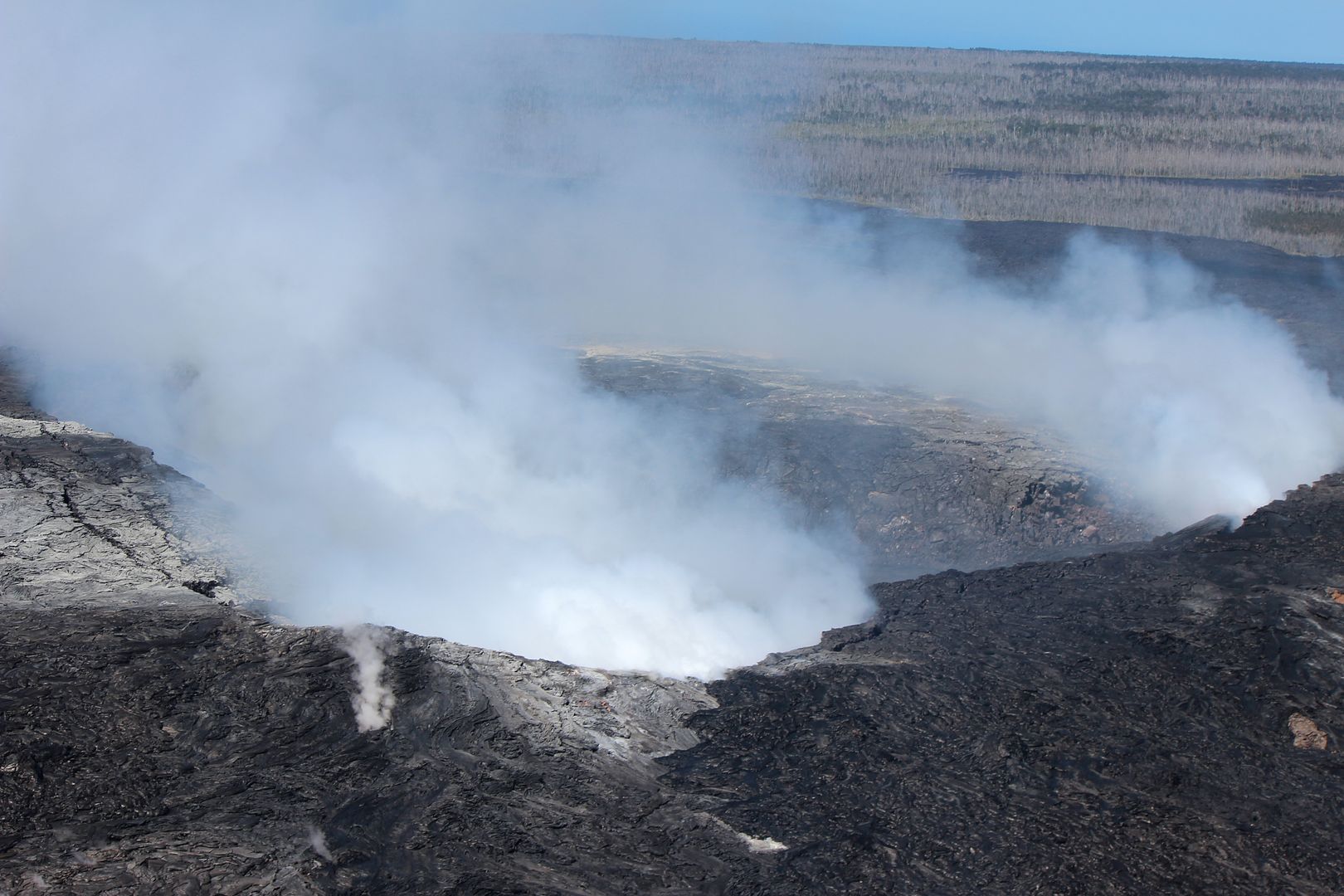
While in Hawai'i we were especially interested in viewing the current volcanic activity. I reported on some of this in my post yesterday. We also took a no doors helicopter ride to see over to see Puʻu ʻŌʻo, the volcanic area that is erupting on Kīlauea's East Rift.
Above: our view as we were approaching Puʻu ʻŌʻo.

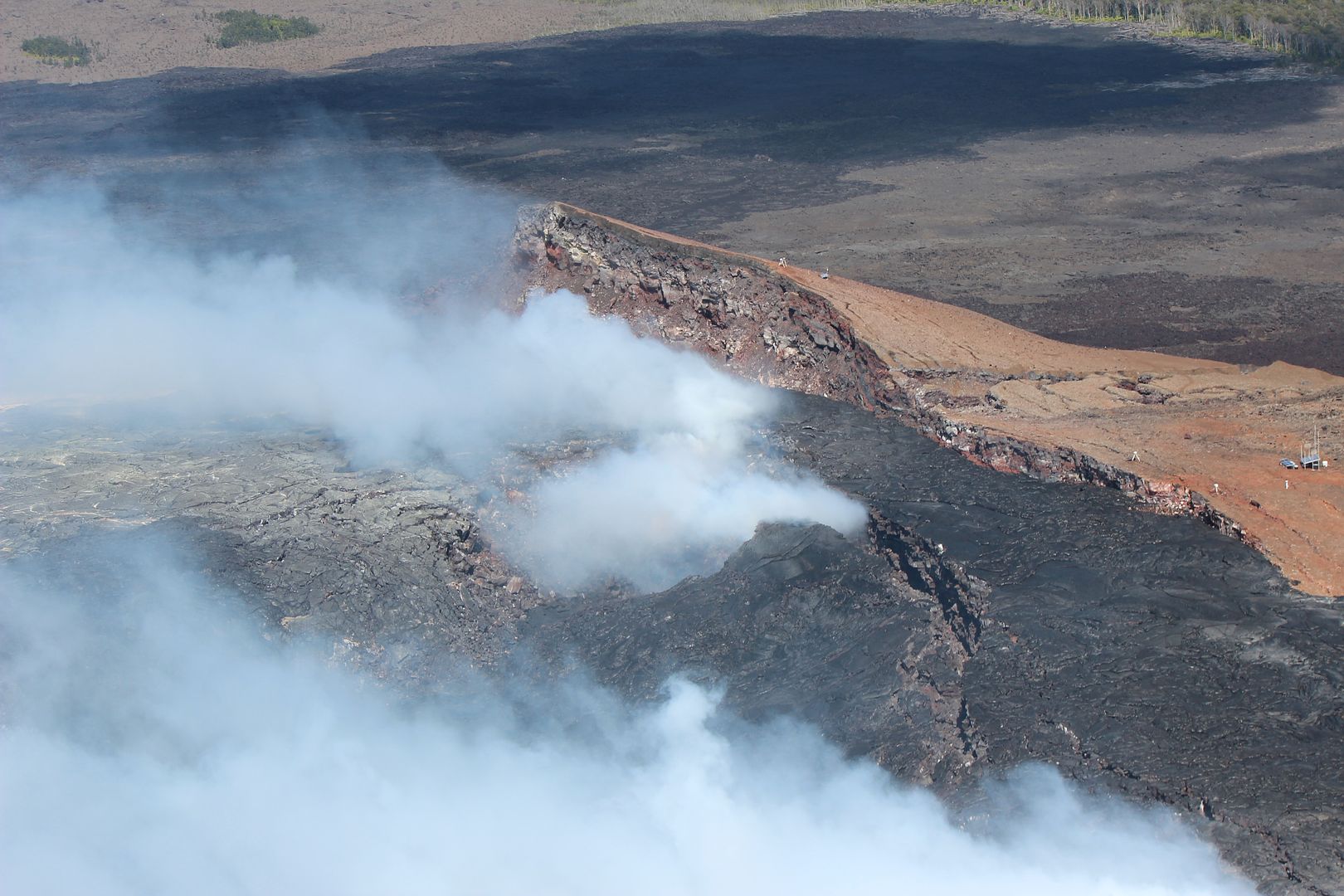
Here are two close shots looking into the volcanic cone, which at the time of our visit had two lava ponds within. The lava ponds were hidden, but marked, by twin plumes of volcanic gasses. 
The USGS Hawaiian Volcano Observatory maintains a suite of solar powered instruments and transmitters that monitor the volcanic activity. You can seen them on the right in the shot above and in greater detail below.
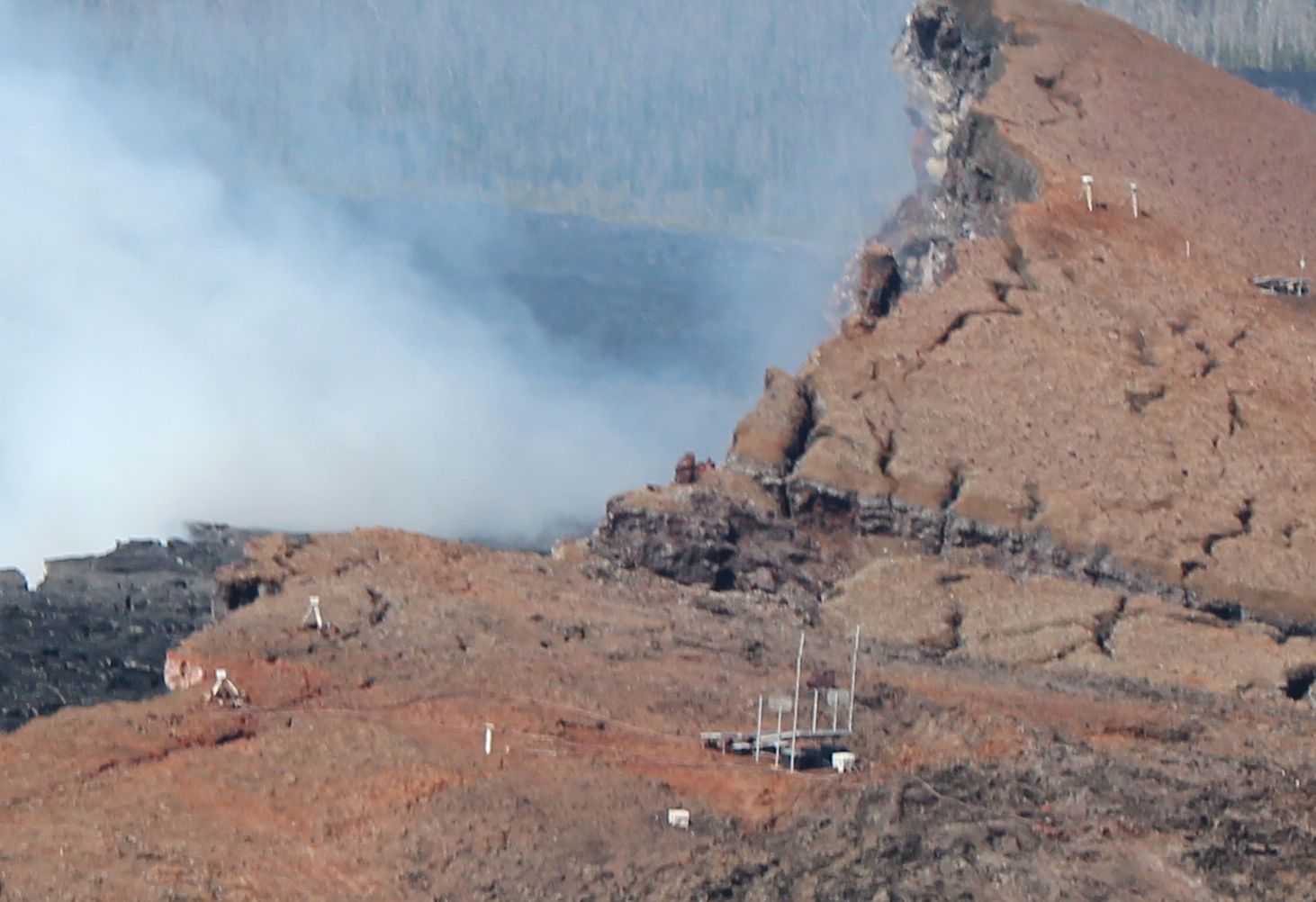
Your tax dollars at work studying an active volcano.
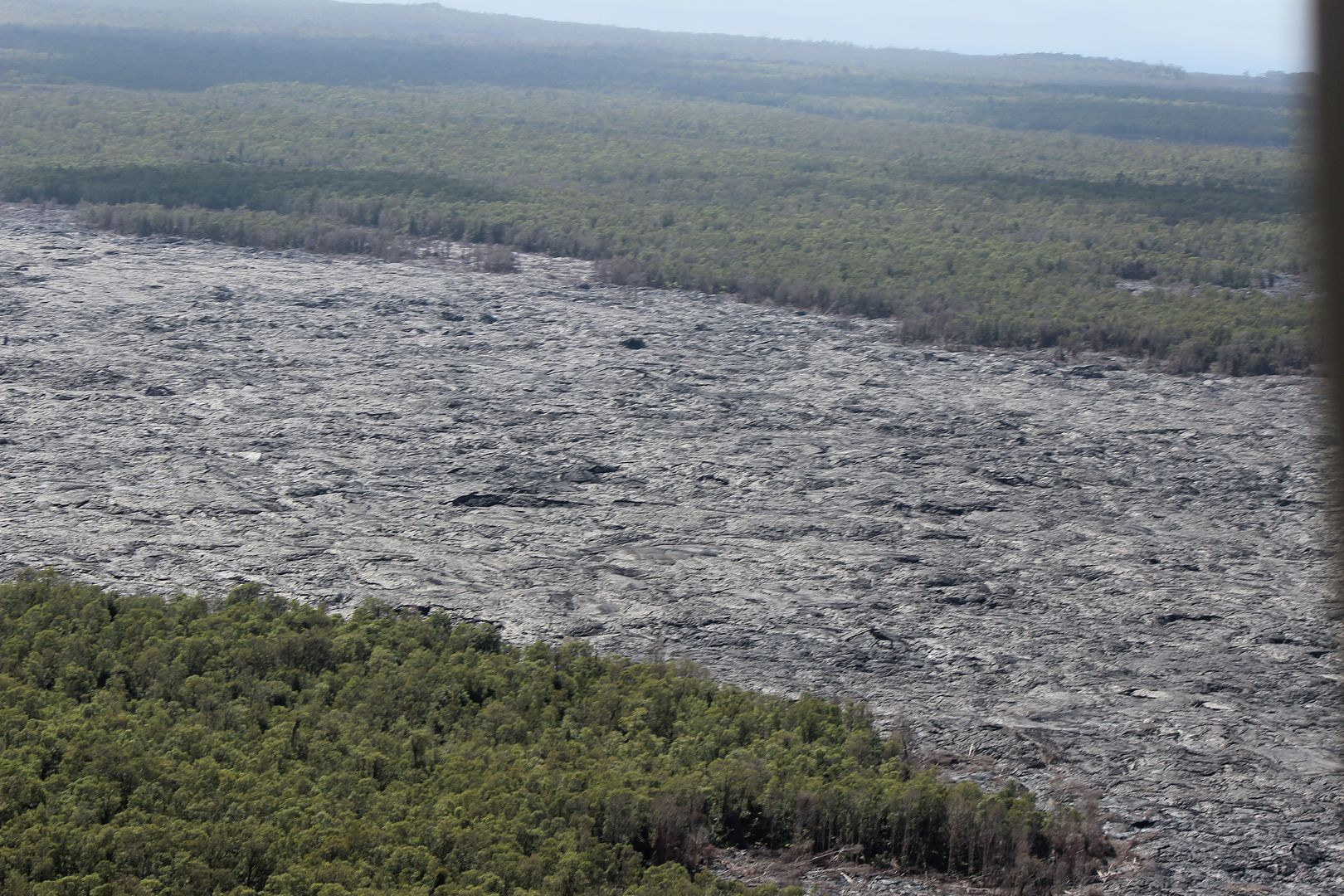
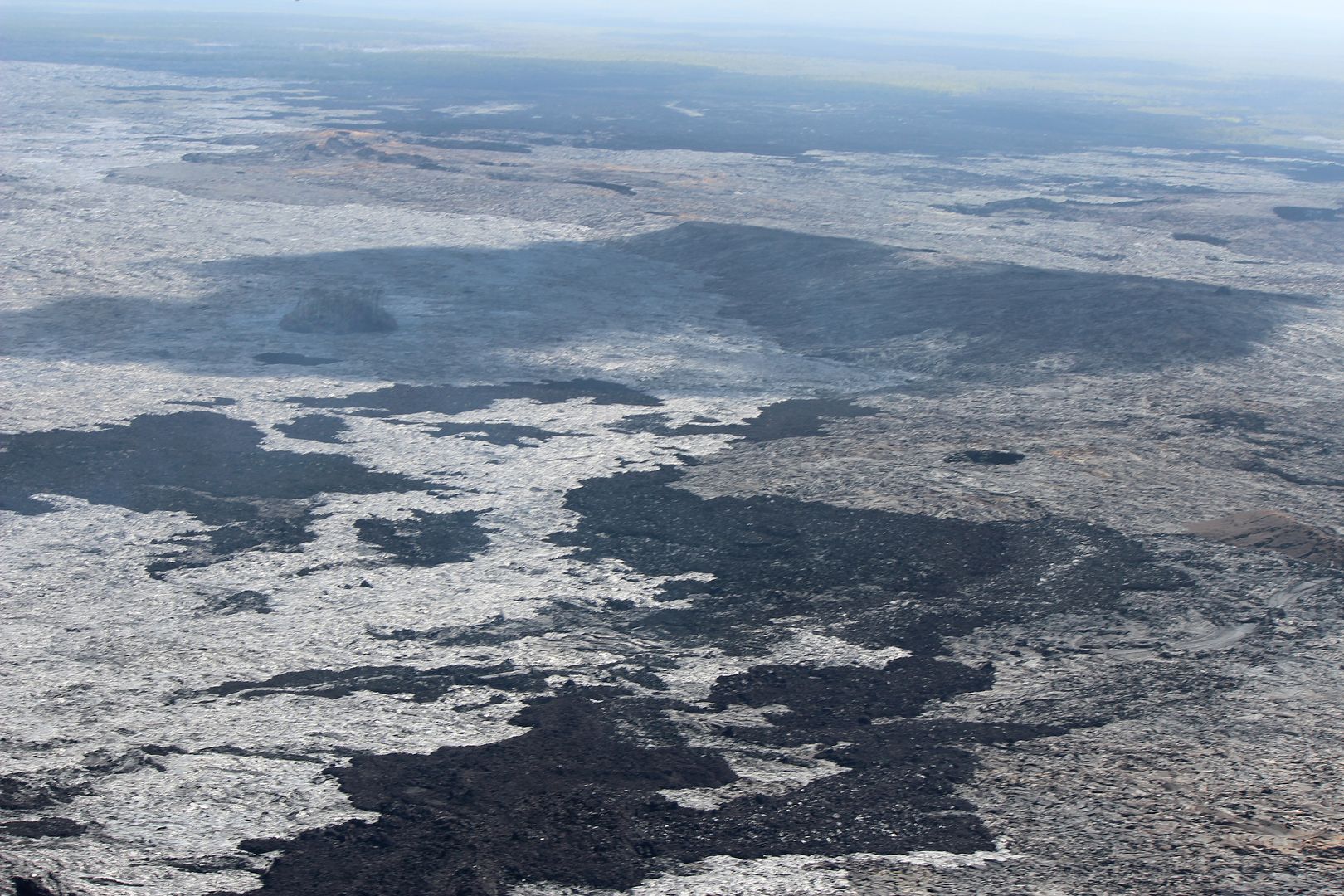
There was also an active lava flow, that at the time of our flyover, was moving to the northeast (red & pink areas in the map below).
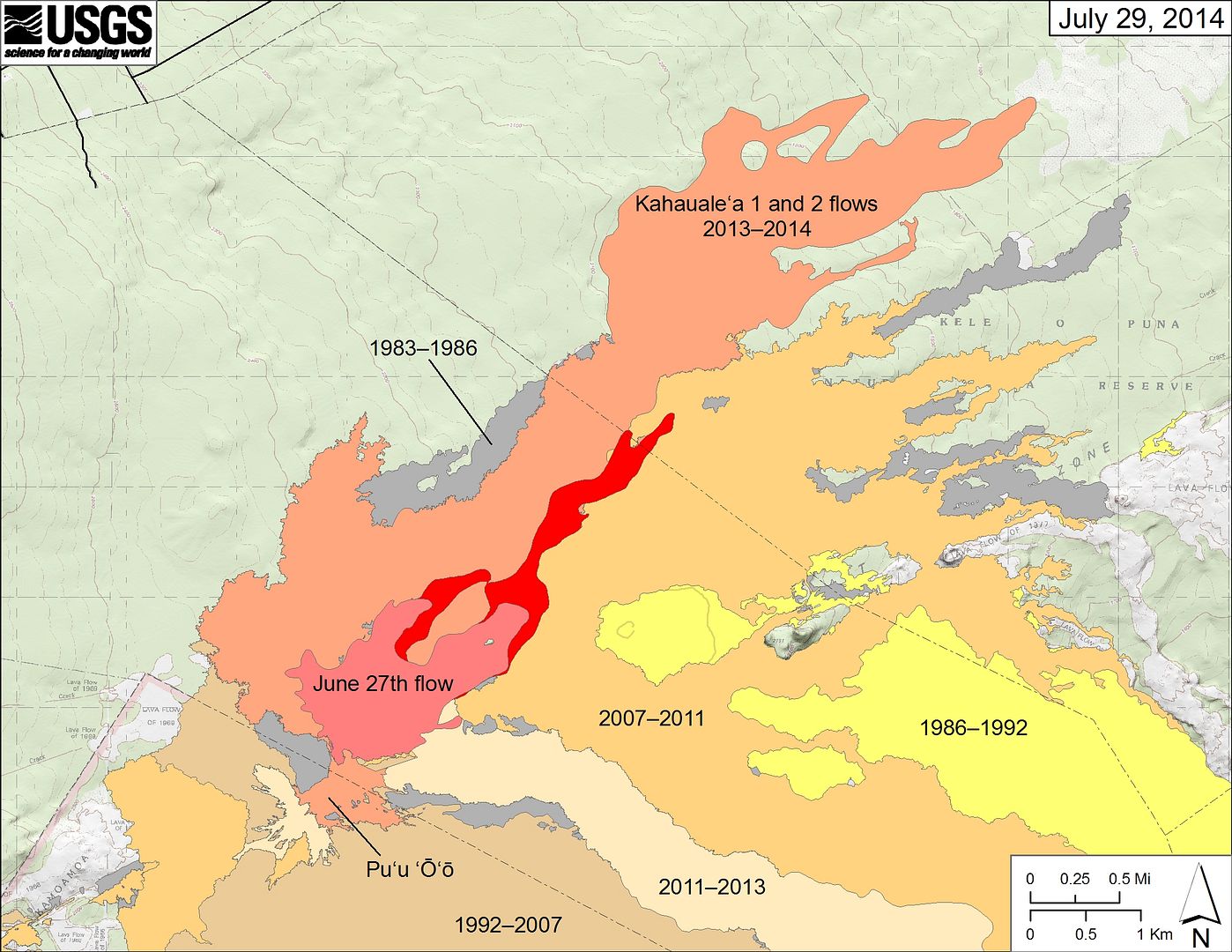
A map of Puʻu ʻŌʻō and its lava flows from the USGS Hawaiian Volcano Observatory
Here are a pair of wide angle USGS HVO photos taken the same day as our helicopter flight. The first is looking toward the cone.
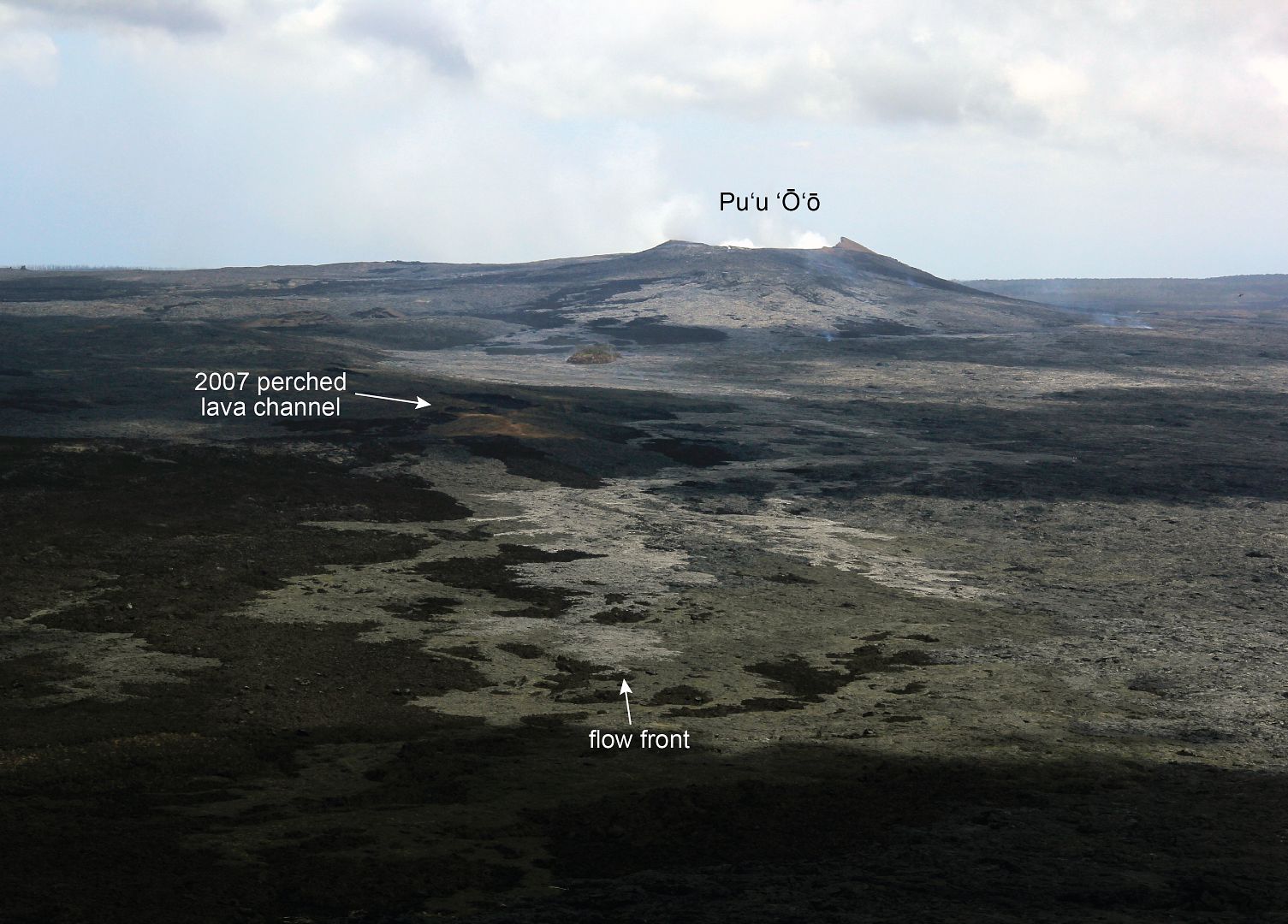
USGS Hawaiian Volcano Observatory photo
The shot below is with the cone behind the photographer:
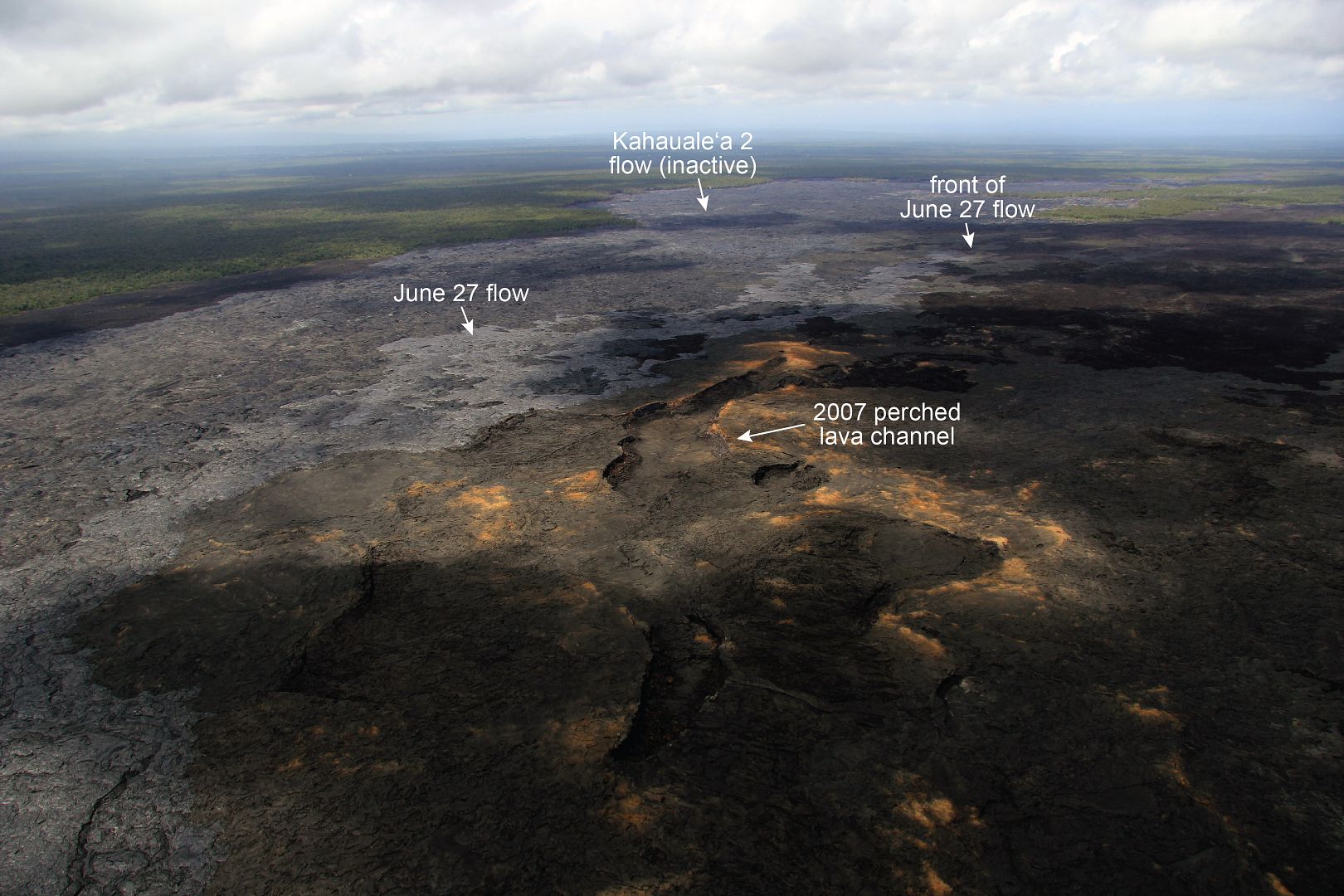
USGS Hawaiian Volcano Observatory photo
Even though the volcano wasn't putting on some of the spectacular displays that it has in the past, the helicopter flight was still an amazing experience. The flight was very smooth and, yes, you could feel the heat of the lava below.

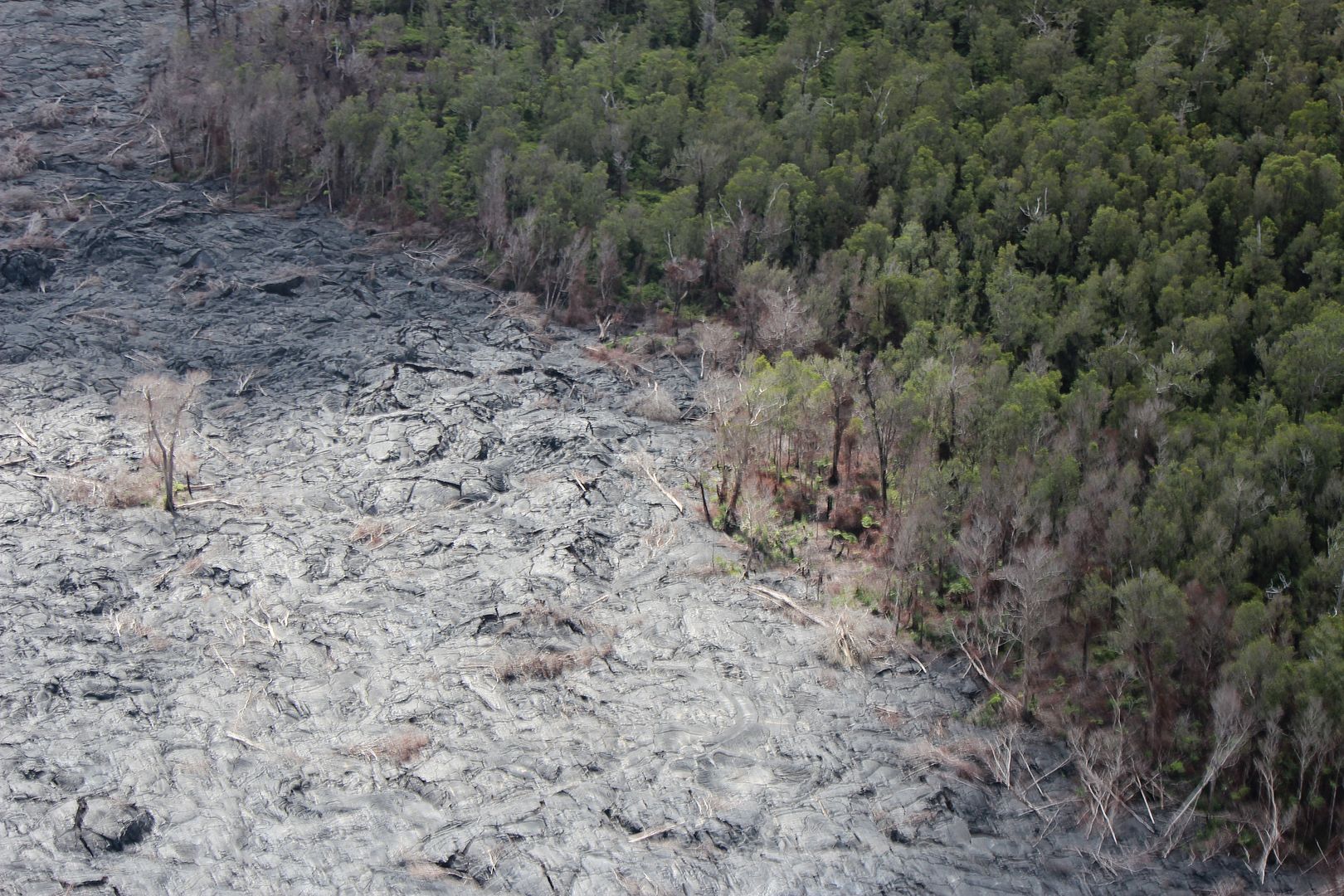
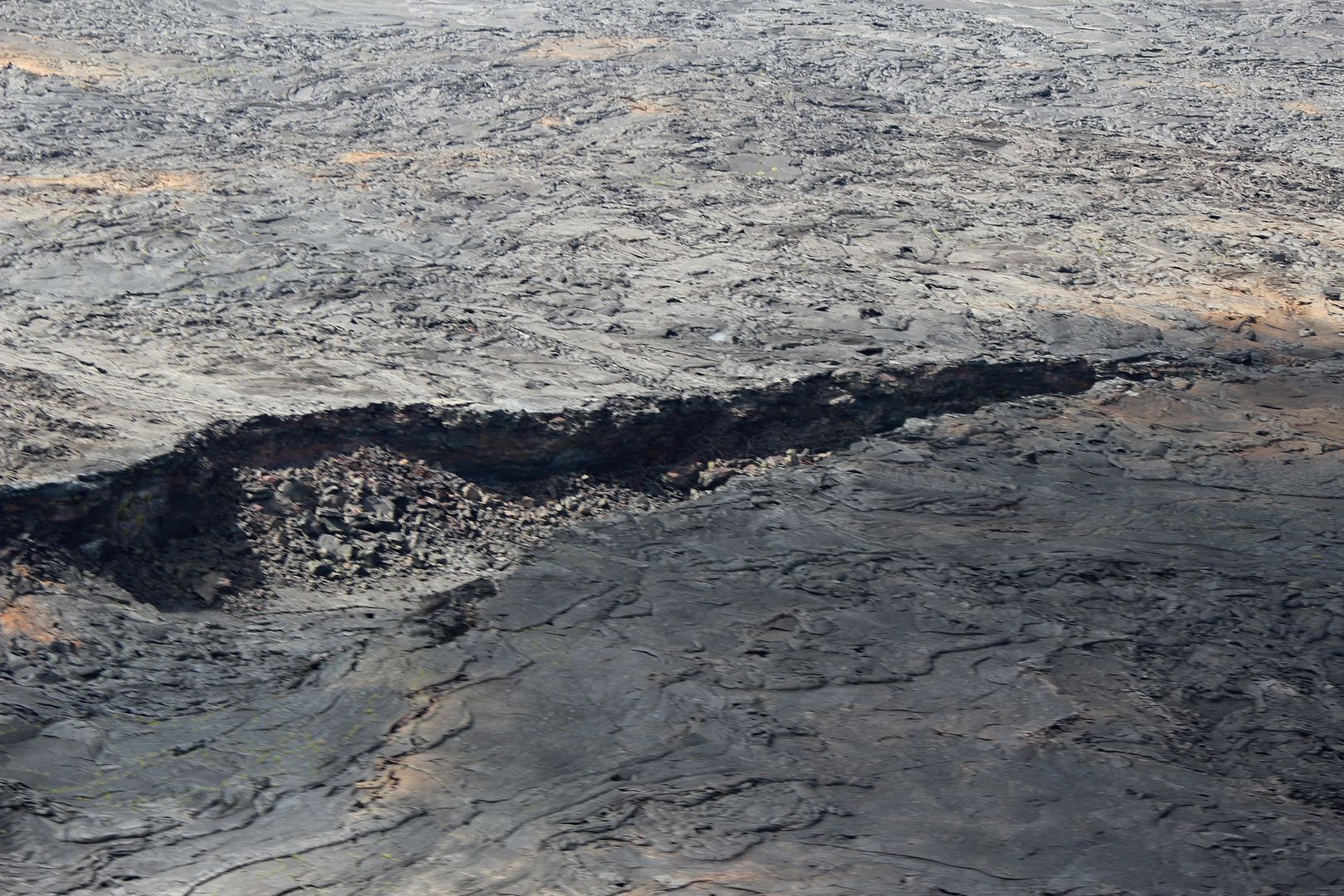
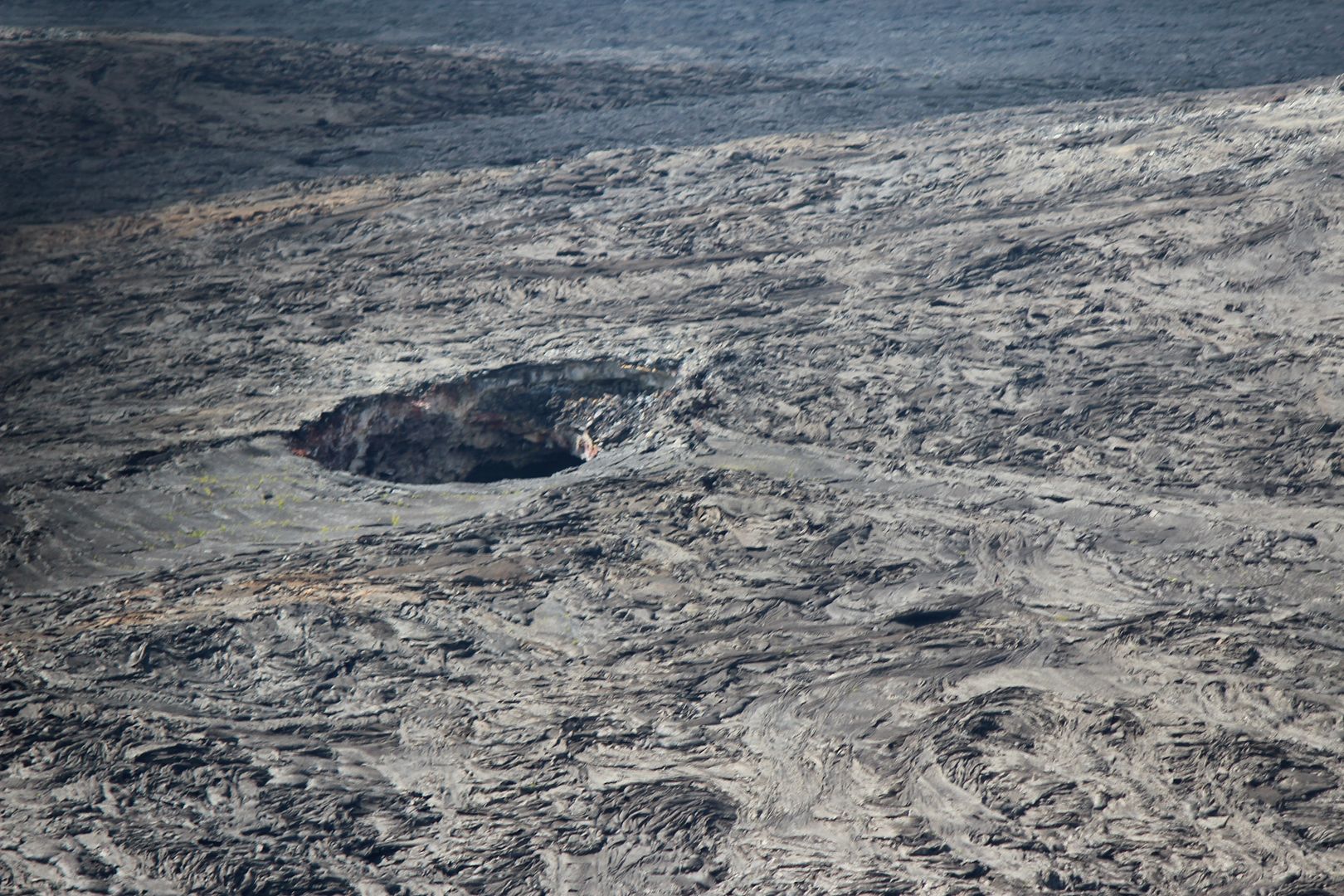
The volcanic landscape surrounding the cone is stark, with dramatic cuts through the rainforests on the southeast side of the Big Island.
 Signs of its previous eruptive activity were everywhere.
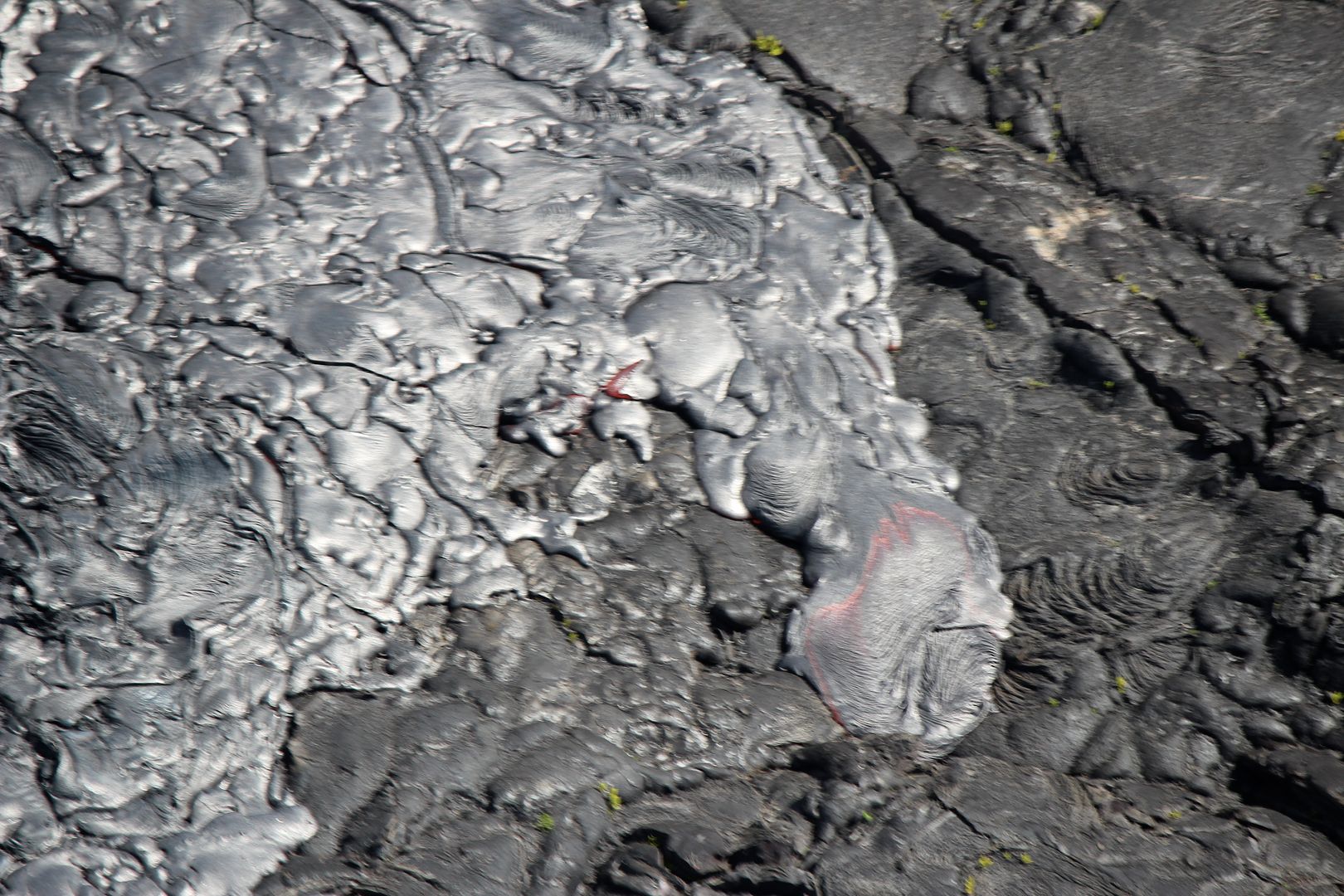
We eventually headed right over the actively flowing lava. Just about all of it had a thin, somewhat shiny crust of hardening lava that insulates the molten rock within.
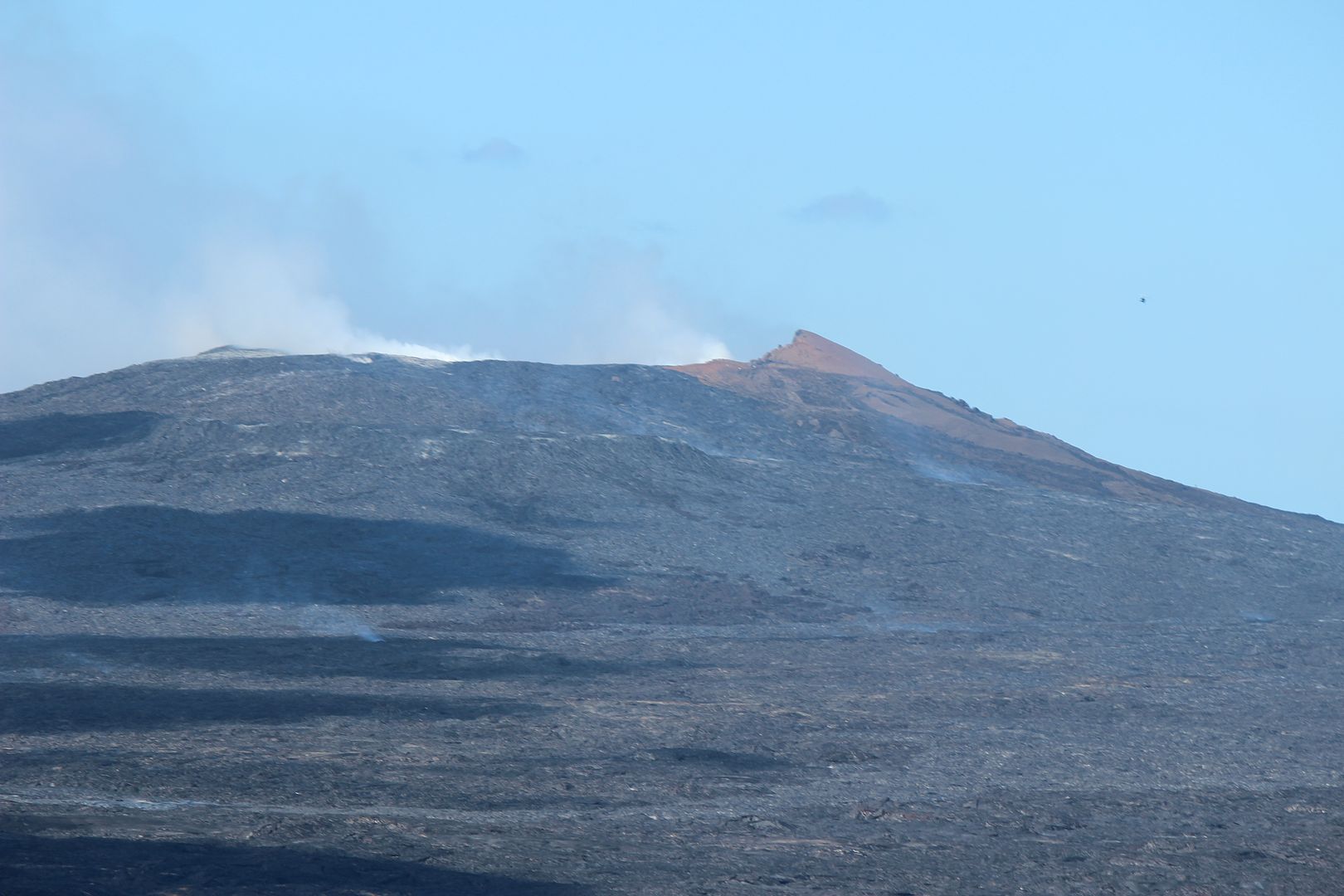
We did see some of the lava glow poking through. You can see it in this shot:
Pele's fires of creation are one of Nature's most impressive sights. I am confident that my wife & I will return when the volcano is more active, specifically to see her in action.

Saturday, August 9, 2014

Volcano! (Part 1)

My wife and I visited Hawai'i in 2004 and were fortunate enough that we were able to view lava from Puʻu ʻŌʻō, erupting on Kīlauea's East Rift,  flowing into the ocean at night. The experience was one of the most amazing sights in Nature that we'd ever seen.

I didn't have much of a camera then or even a tripod with me, but I did manage to record a few decent photos of the site. Here's one of them:
As we were planning our 2014 trip I knew that I needed to bring my DSLR and a decent tripod to be able to record any nighttime lava action.

Of course Pele does what she wants and there was no lava flowing into the ocean during our recent visit. Lava is still erupting from Puʻu ʻŌʻō, but was not easily accessible during our visit. We later paid a visit to Puʻu ʻŌʻō but that will be in Volcano! Part 2.

Fortunately, there is Hawai'i Volcanoes National ParkWithin the park is the Kīlauea caldera and within that is Halemaʻumaʻu crater. There's a lava lake in Halemaʻumaʻu and, while the lava isn't directly visible, after dark the glow of the lava illuminates the volcanic gasses. It makes for a wonderful show.

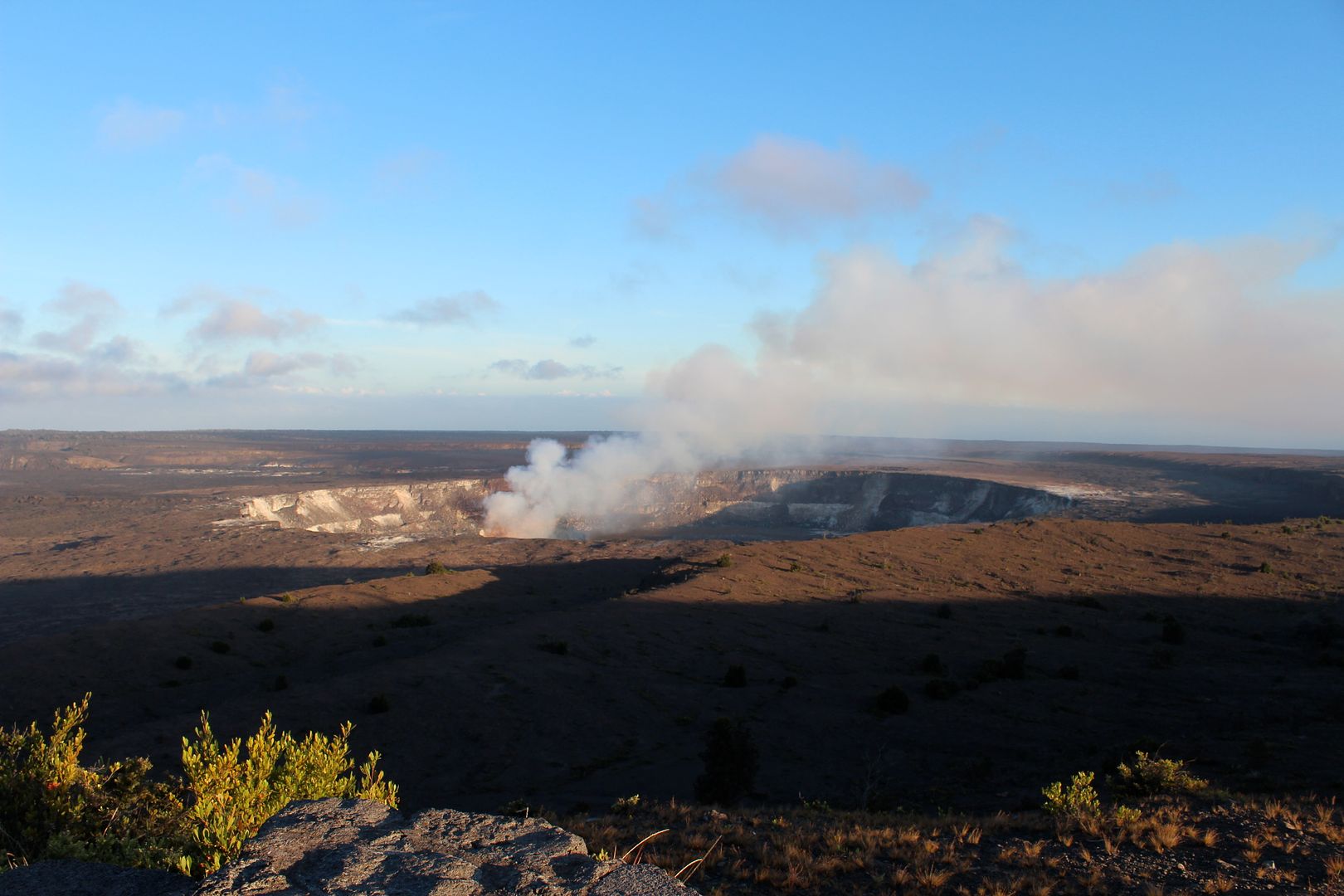
 Even in the daytime the crater is an impressive sight. 

We headed up twice (July 26 & 28) to see Halemaʻumaʻu--both times just before sunset. I did some time-lapse photography. I adjusted the position of the camera a bit now and then, but the results aren't too bad. 
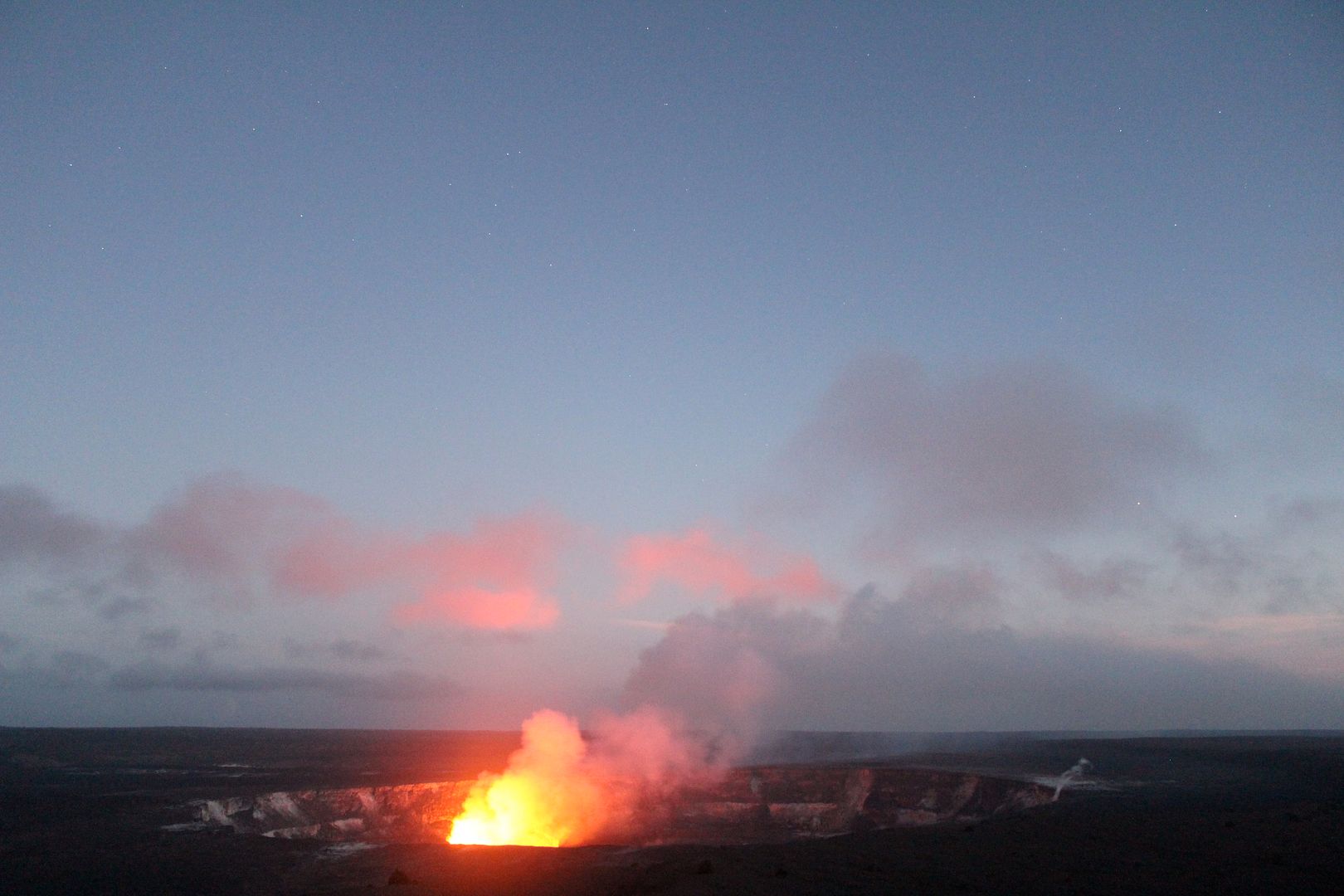
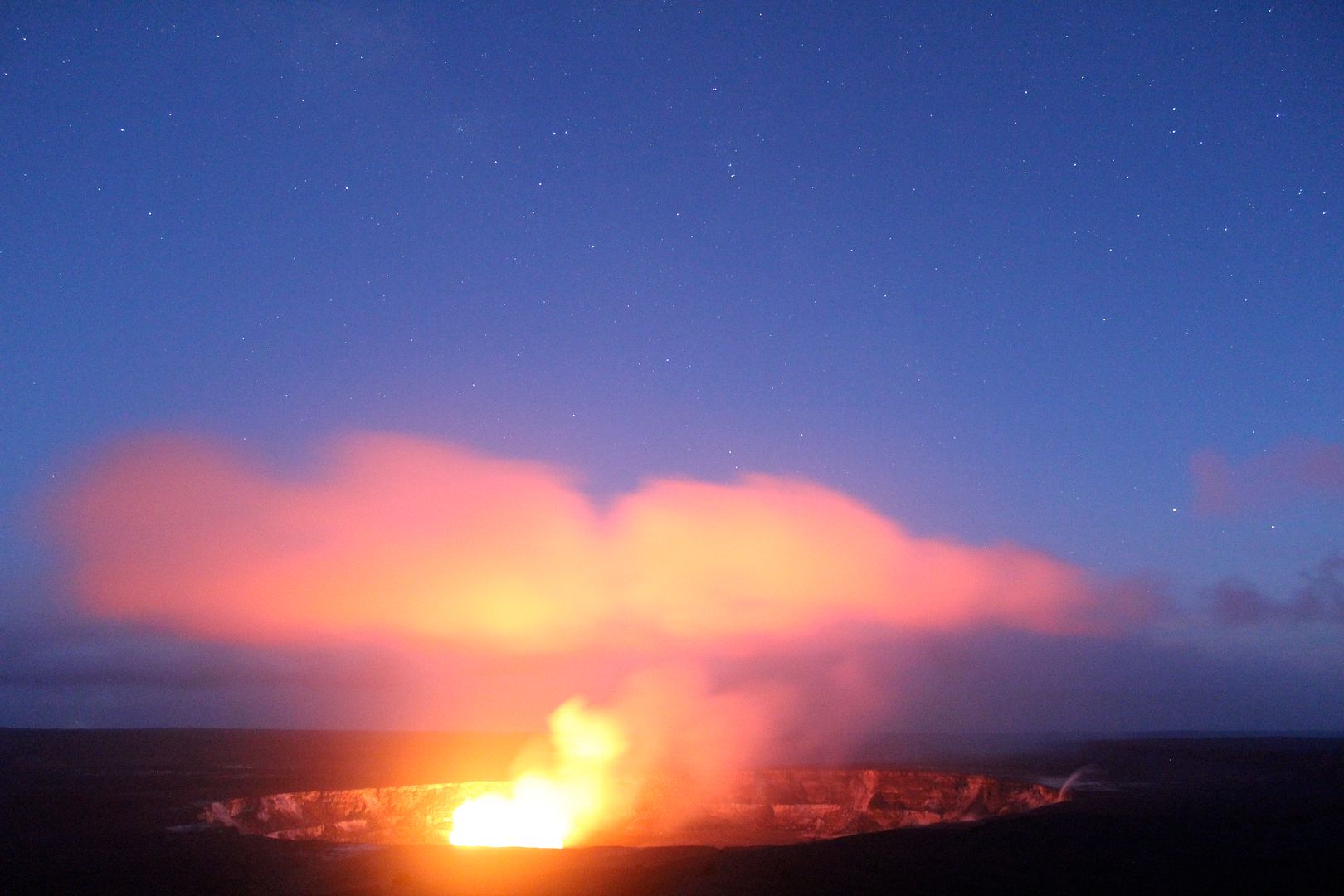
Here are some stills that I shot from the second evening.
There were low clouds streaming just over the crater, adding to the effect of the volcanic glow. 

As darkness fell, I was starting to get pretty worried that we wouldn't end up with clear skies at all.
Look closely and you'll see that there are stars in the photo above. Two in particular were of special interest to me. Look on the right just above the darker clouds. That's Alpha Centauri (the leftmost of the two) and Beta Centauri (to the right). Alpha Centauri is, of course, famous for being the brightest member of the system of stars that is closest to our own solar system. It is too far south to be seen from Arizona, so catching it was a thrill.

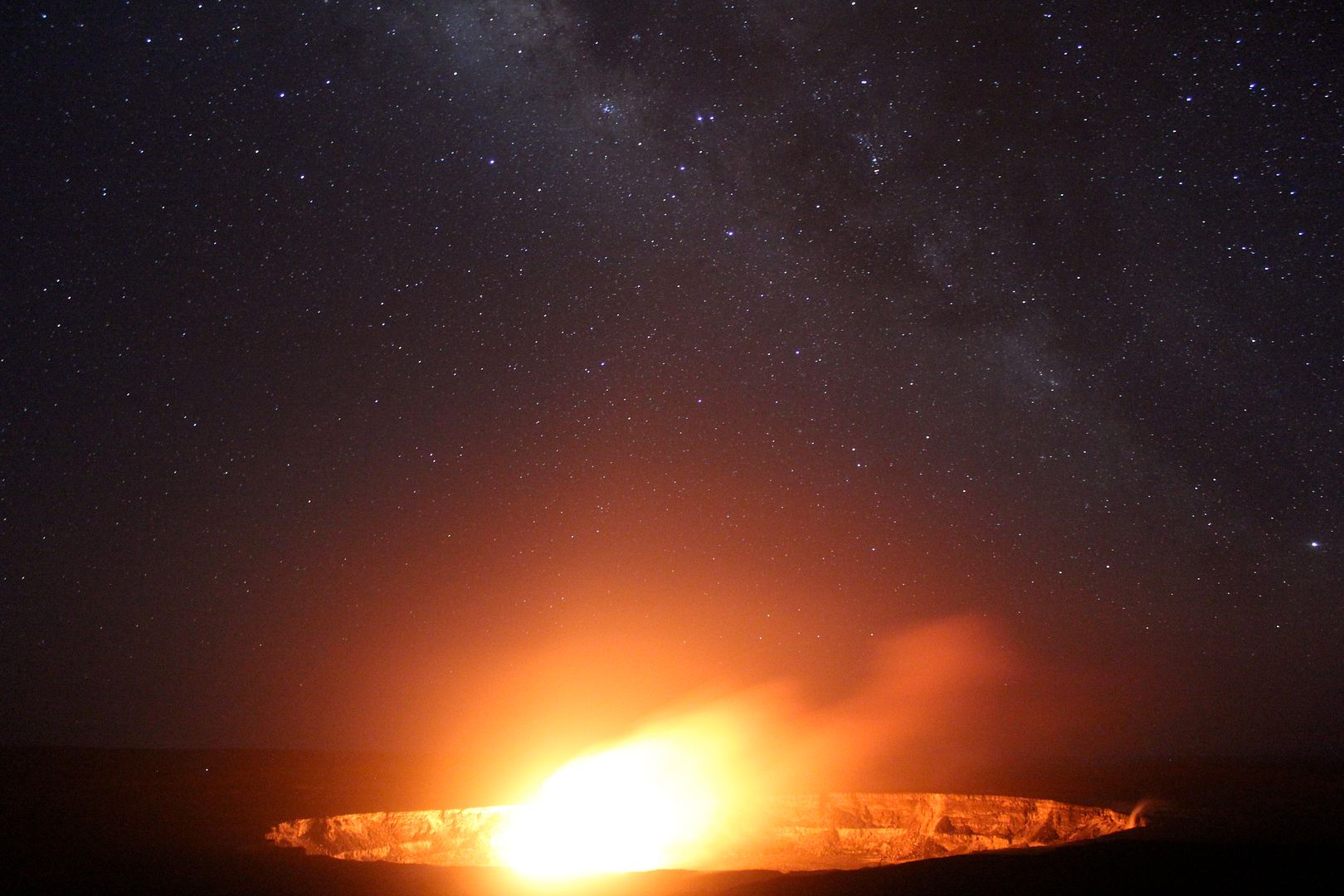
As the sky grew darker the low clouds cleared away leaving a magnificent star-filled dark sky, free of all artificial light.
Only the glow of Halema'uma'u itself competed with the stars. Well....the annoying people trying flash photography of the crater were causing their own periodic light pollution too but I digress.

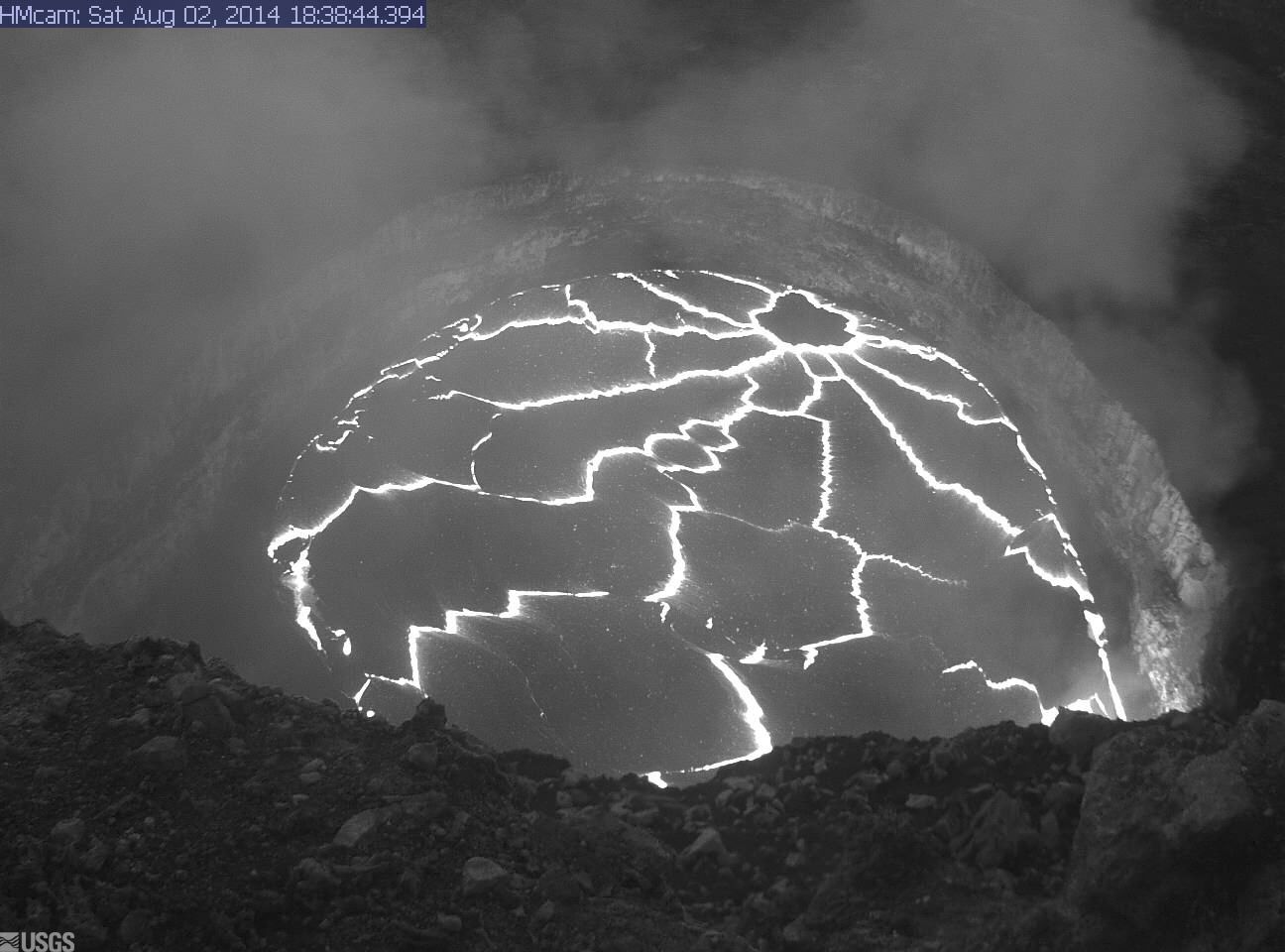
One way to catch the volcanic action without making the trip to Hawai'i is to look at the USGS Hawaiian Volcano Observatory's website. They have a live webcam pointed looking down at the lava lake. Here's a shot I grabbed from last Saturday:
It looks like the recent hurricane has kept the webcam from updating right now but it provides dramatic look into the crater showing the darker crusted over lava sheets floating on the bright molten lava lake. 

While we were in Hawai'i we had another volcano adventure which will be the subject of my next blog post.