Saturday, July 10, 2021

Denizens of the Kuiper Belt

R.I.P Pluto
Pluto, not a planet, but still super interesting
 The Kuiper Belt is an icy swarm of objects that lie beyond the planet Neptune. As you likely know the first member of the Kuiper Belt to be discovered was Pluto back in 1930. At the time it was given planetary status and was for decades was thought of as being a lone, unique object on the edge of the Solar System. That changed with the discovery of 1992 QB1 (now known as 15760 Albion). Since that discovery several thousand objects have been discovered out beyond Neptune. The discovery of Eris, an object that initially was thought to be larger than Pluto brought the question of Pluto's planetary status into focus. Should it remain classified as a planet or be regrouped with its many thousand neighbors? Pluto really is much more similar to the other worlds that orbit the Sun in the Kuiper Belt than it is to any of the other eight planets of our Solar System.

With that in mind in 2006 the International Astronomical Union decided to take on the issue and in the process invented a new category - Dwarf Planet. They named (promoted?) five worlds to dwarf planet status. One of them comes from the asteroid belt (Ceres) and the other four are members of the Kuiper Belt. They are Pluto, Eris, Haumea and Makemake. (By the way, there are other worlds that should also be given this status, but the IAU shows no interest in adding worlds to the "official" list at this time.)

Eris, Haumea and Makemake were all discovered using the 48-inch Schmidt telescope at Palomar Observatory, a telescope considerably bigger than my little Unistellar eVscope, yet all three of these worlds can be found photographically with small telescopes. 

Earlier this year I realized that I should be able to photograph not only Pluto (the brightest of the bunch), but Haumea and Makemake too. The trick in capturing these worlds is to have a good set of coordinates, a good finder chart (I use SkySafari Pro) and to look at the worlds on two different dates so as to capture their motion in the sky. This makes them easy to distinguish from a star.

By the way, these worlds are far from the Sun, which means that they don't move very fast, so much of their motion that we see is really due to Earth's orbital motion. This changes our perspective on these objects relative to their position as seen against the background stars. A thing that astronomers call parallax.

My first target was Makemake. At the time it was 51.7 times farther from Earth than Earth is from the Sun. That's almost 4.8 billion miles. It's just 888 miles in diameter and has a surface of reddened frozen methane.


Can Makemake be photographed with the 4.5" eVscope? Yes, it can. I observed it on April 1st (no fooling!) and 2nd of this year. I made two exposures of 15 minutes, aligned the images with Photoshop and produced this animated gif showing its motion against the starry background. Can you spot it?

Okay, that's tricky, but it is there. I'll make it easier with this version that is both cropped and annotated:


Bingo!

That gave me the confidence I needed to move on to Haumea. Haumea is an amazing world that is somewhat football shaped, coated with water ice and makes one complete rotation in just 3.9 hours. None of those features would be easily detectable with my little telescope, but they are interesting.

I looked for Haumea on April 9 & 10 of this year when it was 49 times farther from Earth than Earth is from the Sun. That's around 4.5 billion miles away.


Though fainter, it was certainly detectable.


This  image has been cropped from the full frame, but there it is.

Pluto was my next target, but I needed to wait until summer to catch it because I need my sleep. 

Pluto is both larger and closer than Haumea and Makemake, making it much brighter. It's the brightest Kuiper Belt Object, which is certainly why it was the first one discovered.


When I imaged Haumea and Makemake I used 15-minute exposures to catch them. Pluto was obvious with just a two minute exposure. Here it is. Can you spot it?

This image (and the ones of Haumea and Makemake too) is essentially a recreation of the technique that was used by Clyde Taumbaugh at Lowell Observatory when he found Pluto back in 1930, but things were much, much tougher for Mr. Taumbaugh. He had to be outside in the cold Flagstaff air while I was inside my comfortable home. His images were recorded on glass photographic plates that had to be developed and then he had to compare images to look for a moving object on the hundreds of images he took over nearly a year. I had the tremendous advantage of knowing exactly where to look. 

In case you couldn't find Pluto in the image above, here's one that has been zoomed and annotated:

As far as I am able to determine Pluto, Haumea and Makemake are the only members of the Kuiper Belt that can be imaged with an eVscope. The only other dwarf planet that can be seen with an eVscope is asteroid Ceres, which is a very easy target. I have imaged Ceres, but will perhaps post that in a later post on asteroids.

Thursday, July 8, 2021

And We're Back...

After a break of just over a year and a half it is time for me to start blogging again.

Since mid November of 2020 I have been spending a lot more time under the night sky imaging astronomical objects from my backyard (also while I sit comfortably inside too).  The main reason for my change in behavior has been because I decided to purchase an eVscope from Unistellar Optics.

The telescope, pictured at left with the constellation Orion in the background, is a 4.5" telescope with an imaging system fully integrated into it. It is controlled by an app from a smartphone or tablet and it is amazingly easy to use. It is every easy to set up and its low weight makes it extremely portable (though I pretty much never go anywhere except my backyard). 

My yard is small and there are many tall trees nearby which can block large portions of the sky. This means that some parts of my yard have a good view of the east, others the south and there's one particular spot that has a limited view of the west. For any traditional backyard observing this would be a huge challenge, but not for the eVscope. It is not uncommon for me to finish looking/imaging at one part of the sky and then pick up my telescope to move it to another part of the yard. It is then a simple matter for the telescope to figure out where I've moved it to (an operation that takes less than a minute) and then we're off to the next target. 

With this telescope I have been able to successfully image the Moon, stars, galaxies, asteroids (including making citizen science observations of an asteroid occultation), comets, Kuiper Belt Objects, supernovae and more. 

I post a lot of my pics on social media, but I'll be using this space to put some of them here where I've got the room to talk about whatever moves me. 

So I figure I can't get away from this post without leaving at least one astrophoto here, so have a look at the galaxy known as Centaurus A:

Centaurus A is a peculiar galaxy which lies over 10 million light years away. It is possibly a giant elliptical galaxy, but it has a major dust lane cutting across it, which is not a thing that giant elliptical galaxies usually have. Like most big galaxies Centaurus A has a supermassive black hole at its center (this one has a mass 55 million times greater than our Sun!), but this one is quite active emitting radio waves, X-rays and jets of gas moving at relativistic speeds (none of which are visible here).

I had only seen this galaxy though a telescope just once before and I was a little worried that I might not be able to pick this up with my new telescope as it is a southern object that never gets very high in the sky for northern observers. I looked the best possible time, but even so it less than 15 degrees above the horizon and just over a big hill (some might call it a small mountain) that almost blocked my view. I am happy that my eVscope delivered a nice view of this mysterious galaxy though its electronic eyepiece and I was able to capture the image above. 

I've taken a great many images of astronomical objects in the eight months that I've owned this telescope, so expect to see more of them here soon.

Tuesday, January 1, 2019

My Top Books of 2018

2018 was a bad year for blogging, but another good year for reading. Like last year I managed to read 60 books, though not quite as many pages as I hit in 2017.

I use Goodreads to keep track of what I've read, so if you are interested here's the full list of what I read in 2018. My "best books of the year" are drawn from titles that I read that also came out this year. I read a lot of science fiction and science books, so my list comes from a pretty narrow spectrum of books.

In the realm of science books my top two were We Have No Idea: A Guide to the Unknown Universe by cartoonist Jorge Cham and physicist Daniel Whiteson. It's a very friendly look at the big mysteries of modern science and I enjoyed the heck out of it.  Even better though is Alan Stern and David Grinspoon's Chasing New Horizons: Inside the Epic First Mission to Pluto. It is the inspiring story of how the New Horizons mission was created, funded, cancelled, re-born and eventually sent for its 2015 flyby of Pluto, giving us our only look at the most famous of dwarf planets.

By the way, New Horizons just completed a successful flyby of another and more distant object, but as of this writing the data is only now being returned to Earth.

I also very much enjoyed Adam Frank's Light of the Stars: Alien Worlds and the Fate of the Earth.

Another non-fiction book that I very much enjoyed was Michael Benson's Space Odyssey, which looks at the making of the classic film 2001: A Space Odyssey. 

There were so many good science fiction books out in 2018. John Scalzi gave us two (Head On and The Consuming Fire). Becky Chambers Record of a Spaceborn Few was very enjoyable, but my favorites were How to Stop Time by Matt Haig and Mary Robinette Kowal's two Lady Astronaut books: The Calculating Stars and The Fated Sky.

How to Stop Time is wonderful, quotable and profound, while MRK's two Lady Astronaut books are adventurous, tragic, inspiring and important. They tackle head on issues of inclusion, race and discrimination. I highly recommend them.

2019 should be another good year for reading. I got a nice pile of books for Christmas that is getting me off to a good start.

Monday, January 1, 2018

My Top Books of 2017

2017 wasn't much of a good year for blogging, but I did read a lot of books--60, which is the most I have ever read as an adult. My trend has been going upward as I read 46 books in 2016, 24 the year before and just 18 in 2014.

I use Goodreads to keep track of what I've read and to collect the titles of the books that I want to read. For anyone who might care, here is the full list of what I read this year.

As I look to my "best books of the year" I'm going to include titles from 2016 as well. My reading tastes tend to focus primarily on science fiction, science (including history of science), and a bit of history and politics too.

In Science Fiction, Artemis by Andy Weir and The Collapsing Empire by John Scalzi were both good and fun books, but I especially liked All Our Wrong Todays by Elan Mastai and Death's End (the third and final book in the series begun with The Three Body Problem) by Liu Cixin. Liu Cixin always takes me to unexpected places. Also of note (but published in 2014, so it's a bit "old" to be considered here) was Becky Chambers The Long Way To A Small, Angry Planet which I really loved. It's sequel was good too, but not as awesome.
In the realm of non-fiction I read two astronaut biographies: Mike Massimino's Spaceman and Leland Melvin's Chasing Space. I enjoyed both of them, but I much preferred Spaceman, though Leland Melvin's book is a good read.

I really enjoyed Al Franken's Al Franken, Giant of the Senate, but I suspect the recent sexual harassment charges made against him are going to kill both the paperback edition of the book and his political career. 

Other good science titles (some of which are a bit historical) are Margot Lee Shetterly's Hidden Figures which was made into a wonderful motion picture. The film got essentially every historical fact wrong, but appropriately gets the message right. Paul Bogard's The Ground Beneath Us looks at just what it says-the ground, focusing on our essentially ignored relationship with it. It is a book that should be getting more attention than I think it has gotten as it highlights some of the big environmental problems that are coming (nope, it's not just global warming).

I read six books on topics related to the Search for Extraterrestrial Intelligence (SETI) and probably to the best of them was a biography: Sarah Scoles's Making Contact: Jill Tarter and the Search for Extraterrestrial Intelligence.
I also enjoyed The Pope of Physics, a look a the life of physicist Enrico Fermi by Gino Segrè and Bettina Hoerlin, but Bonnie Burratti's Worlds Fantastic, Worlds Familiar was another standout as it shows off many interesting planets and moons of our solar system, while also giving a personal look at how science is done as these places are explored.

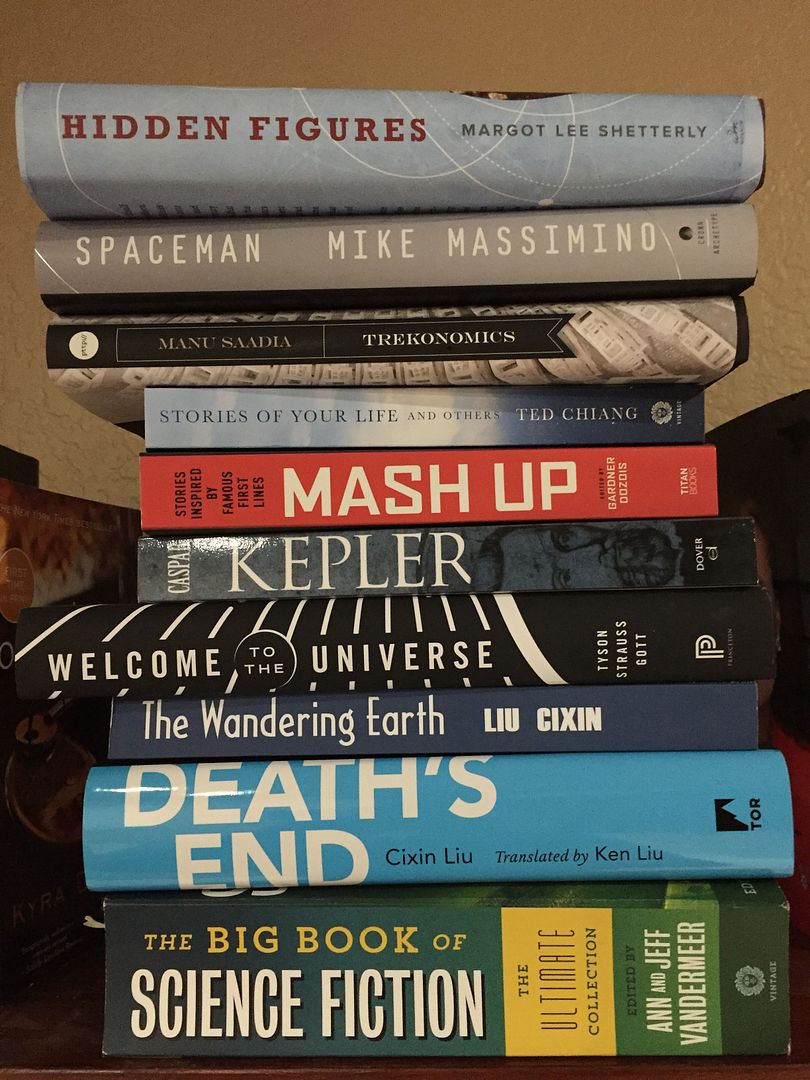
I like to end these posts with a look at my to-be-read pile of books. Here's my pile from a year ago:
I read all of the books on the pile except for The Big Book of Science Fiction.  That one continues to task me, but I did read a few of the stories in it. Perhaps I'll get it done in 2018. Aside from The Big Book of Science Fiction, here's my to-be-read pile as it stands now:
I'm currently reading Friends Divided at left. The pile is pretty evenly split with four science fiction novels and five non-fiction science books. With these to start with 2018 should be a good year for reading.

Saturday, October 14, 2017

Booms II

This week we celebrated Earth Science Day at Palomar College and I again helped out with the simulated volcanic explosion demos. Here's are the slow-motion videos that I shot of our three volcanic explosions.

Yeah, I rotated my phone during the explosion. Sorry about that.


 Explosion # 2. Check out the deformation in the trash barrel as it blows.


The third one I shot vertically, in an attempt to capture the ping-pong ball action.

Here's my post showing similar explosions from last year. 

Saturday, August 12, 2017

27 1/2 Songs For Your Solar Eclipse Playlist

The August 21st solar eclipse will soon be here and I am preparing for it in a variety of ways. My camera and eye protection (including solar binoculars) are all ready and I'm just finishing up on one final thing, my somewhat eccentric music playlist to get ready for the eclipse.

Since it has been far too long since I've made a blog post, I thought I'd post it here, along with a few comments for each song.

1) We start off with Heaven and Hell by Vangelis. This was the theme music for Carl Sagan's classic TV series Cosmos. It always makes me think of voyaging through space and time.


2) Solar eclipses are all about an alignment of the Sun and Moon and clear weather is essential to see and enjoy the experience. On the day of the eclipse I'll be getting an early start and Bruce Springsteen's Waitin' on a Sunny Day is a good title for what I'm hoping to have.


3) I follow that up with Here Comes the Sun by The Beatles:


4) While the eclipse is a pretty unique event, I'm keeping the Sun and clear skies theme going, so I follow it up with Another Day of Sun from the La La Land soundtrack:


5) That brings me back to The Beatles and Good Day Sunshine, as the song captures exactly the kind of emotions I hope to have during the eclipse:


6) One more from The Beatles, I'll Follow the Sun:


7) Here's the first of two Carly Simon songs (I'll bet you can guess the other one), Touched by the Sun:


8) Sticking with some more pre-eclipse references to the Sun, next up is Elton John's Don't Let the Sun Go Down on Me:


9) Eclipses are not just about the Sun. The Moon ultimately plays a central role in blocking the Sun's rays, an event the has for centuries been steeped in fear and superstition. In spite of its reference to "nasty weather," Bad Moon Rising by Credence Clearwater Revival makes my list:


10) Jonothon Coulton's Always the Moon is a beautiful creation myth song about love and the Moon:


11) Keeping the 'Moon' theme going, the next piece is an instrumental one, William Ackerman's Conferring With the Moon:


12) Solar eclipses can only occur when the Moon is in its "new" phase. This year's solar eclipse happens on a Monday, so Duran Duran's New Moon on Monday is a natural choice:


13) Another 'new moon' song, New Blue Moon by the Traveling Wilburys:


14) Moving toward the actual eclipse,and the music to celebrate it, we come to the grandmother of eclipse songs, Carly Simon's You're So Vain:


15) It gets dark during a total solar eclipse and in the past many people wondered if the Sun really was going away, so Neil Diamond's The Sun Ain't Gonna Shine Anymore is an appropriate choice:


16) Bill Withers wonderful Ain't No Sunshine keeps that idea going:


17) I follow that up with Invisible Sun by The Police:


18) Invisible Sun is a dark song, but total solar eclipses should be celebrated, so I begin the celebration with Moondance by Van Morrison:


19) and follow that up with another song by Bruce Springsteen, Dancing in the Dark:


20) There wont be any light from the Moon during the eclipse, but this still works for me, Dancing in the Moonlight by King Harvest:


21) That's followed up by a song that's actually about stargazing, Tom Petty's The Dark of the Sun:


22) I'm not sure if this is a great fit or not, but next up is Black Hole Sun by Soundgarden:


23) Love it or hate it, Bonnie Tyler's Total Eclipse of the Heart has to be played at least one for the solar eclipse, doesn't it?


23 1/2) Actually, I prefer this version of Total Eclipse of the Heart, as it is actually about eclipses (and since it is the same song, it's the 1/2 song in the title of this post):


24) Another almost required choice, Pink Floyd's Eclipse from their Dark Side of the Moon album:


25) Okay, this is what used to be called a "deep cut." The Moon's A Window to Heaven from the soundtrack to Star Trek V. Yes, really.


26) If all goes well with your eclipse viewing at the end of the event you'll be overjoyed. I am hoping that Katrina & The Waves' Walking on Sunshine accurately describes how I'll be feeling at the end of the solar eclipse:


27) After the solar eclipse is over the Moon will leave it's new phase and soon return as a thin sliver in the evening skies, so I'll end this with KT Tunstall's Crescent Moon:


There are lots of other songs about the Sun and Moon that I could have included and maybe I missed some obvious choices, but

Sunday, March 19, 2017

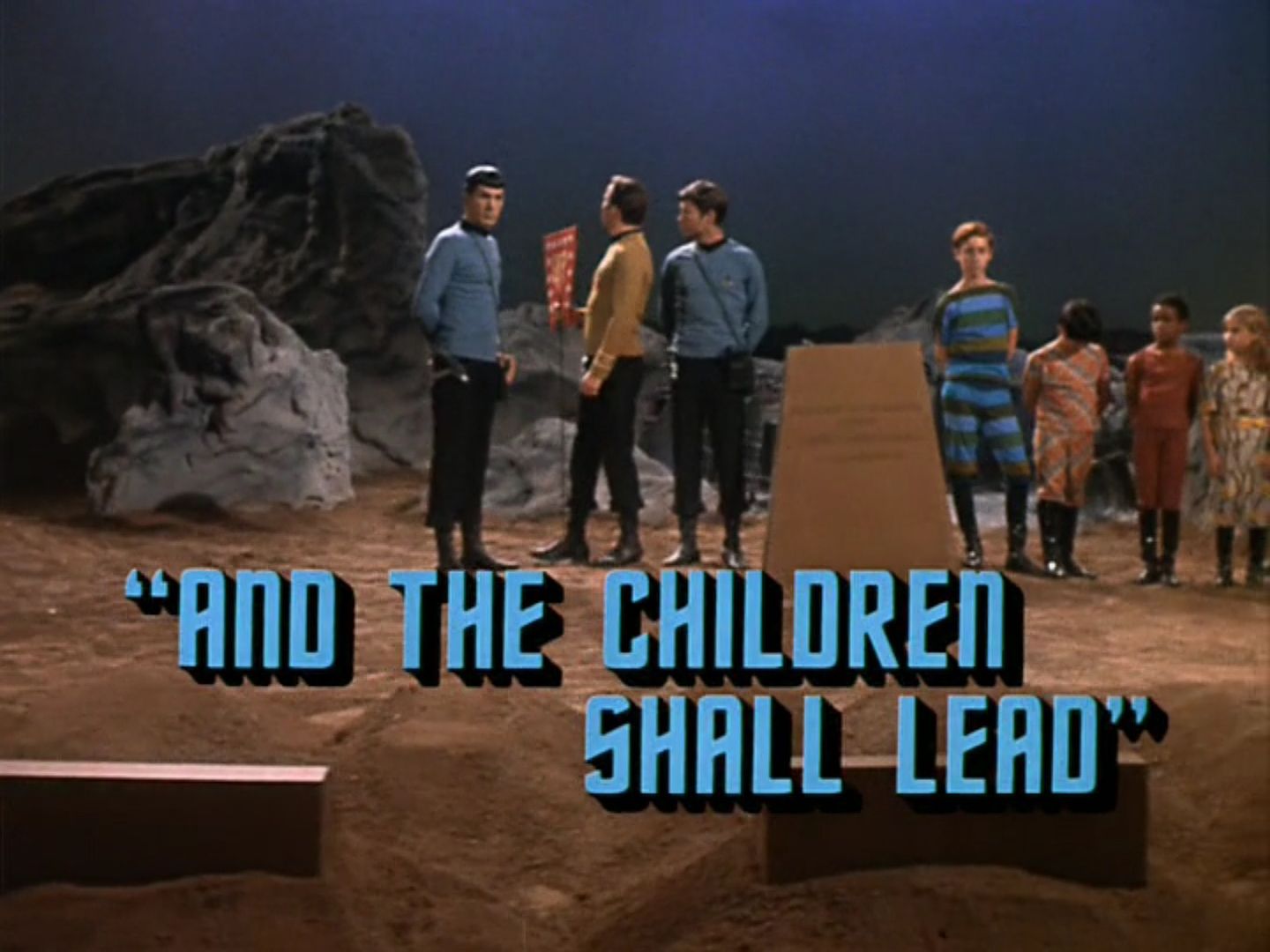
Star Trek: And the Children Shall Lead

It has been quite a while since I've done any blogging, but today I am back to look at another episode of classic Star Trek:
And The Children Shall Lead is not a good episode of Trek. It's the kind of episode that gives season three of TOS Trek a bad name. It's bad enough that I watched it two months ago and am only now able to bring myself to write about it. Really (okay, I've been busy too).
If you loved the kids in the first season episode Miri (I didn't), then you were probably thinking Trek was overdue for another kid-heavy episode. So here it is.

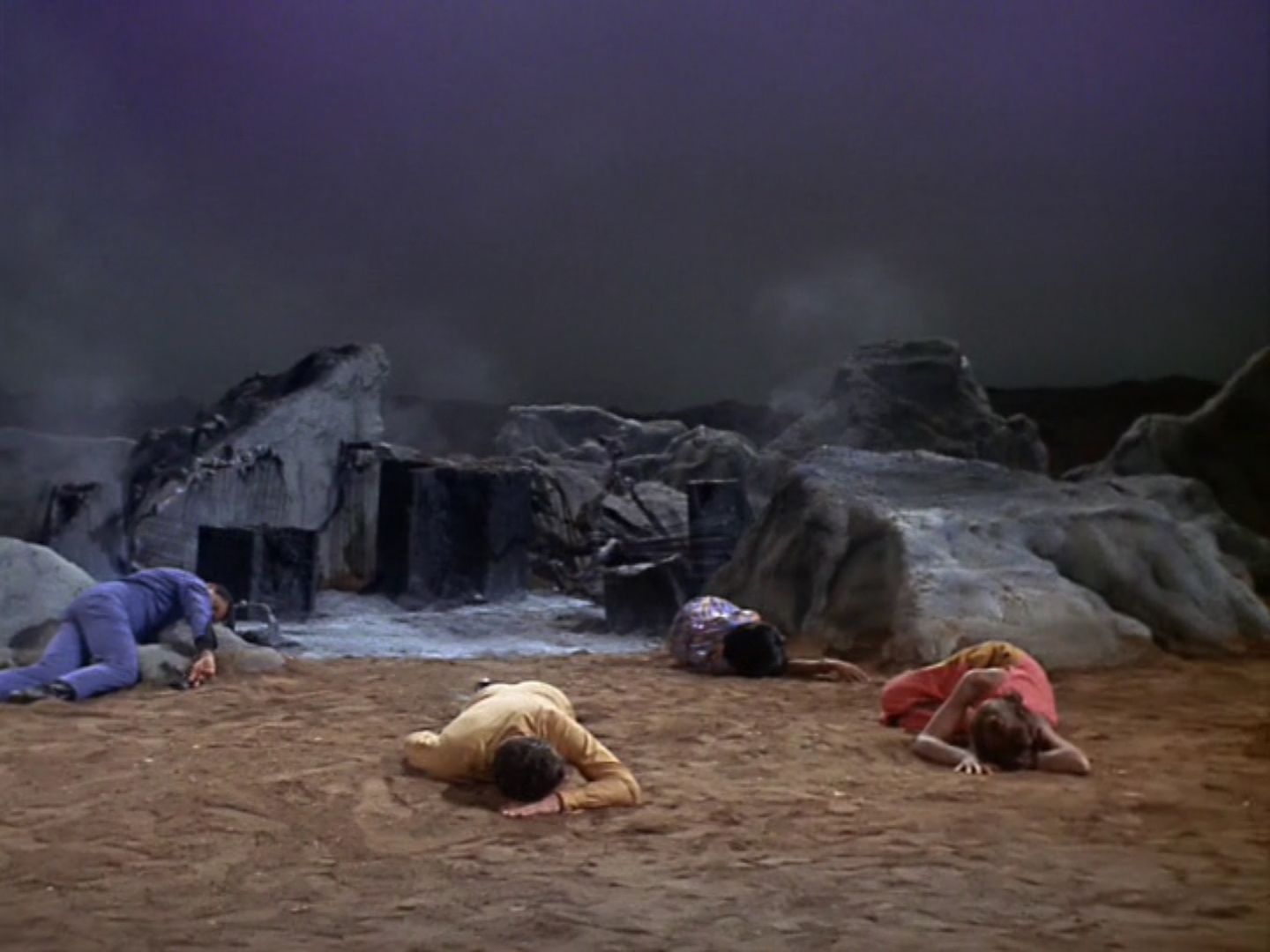
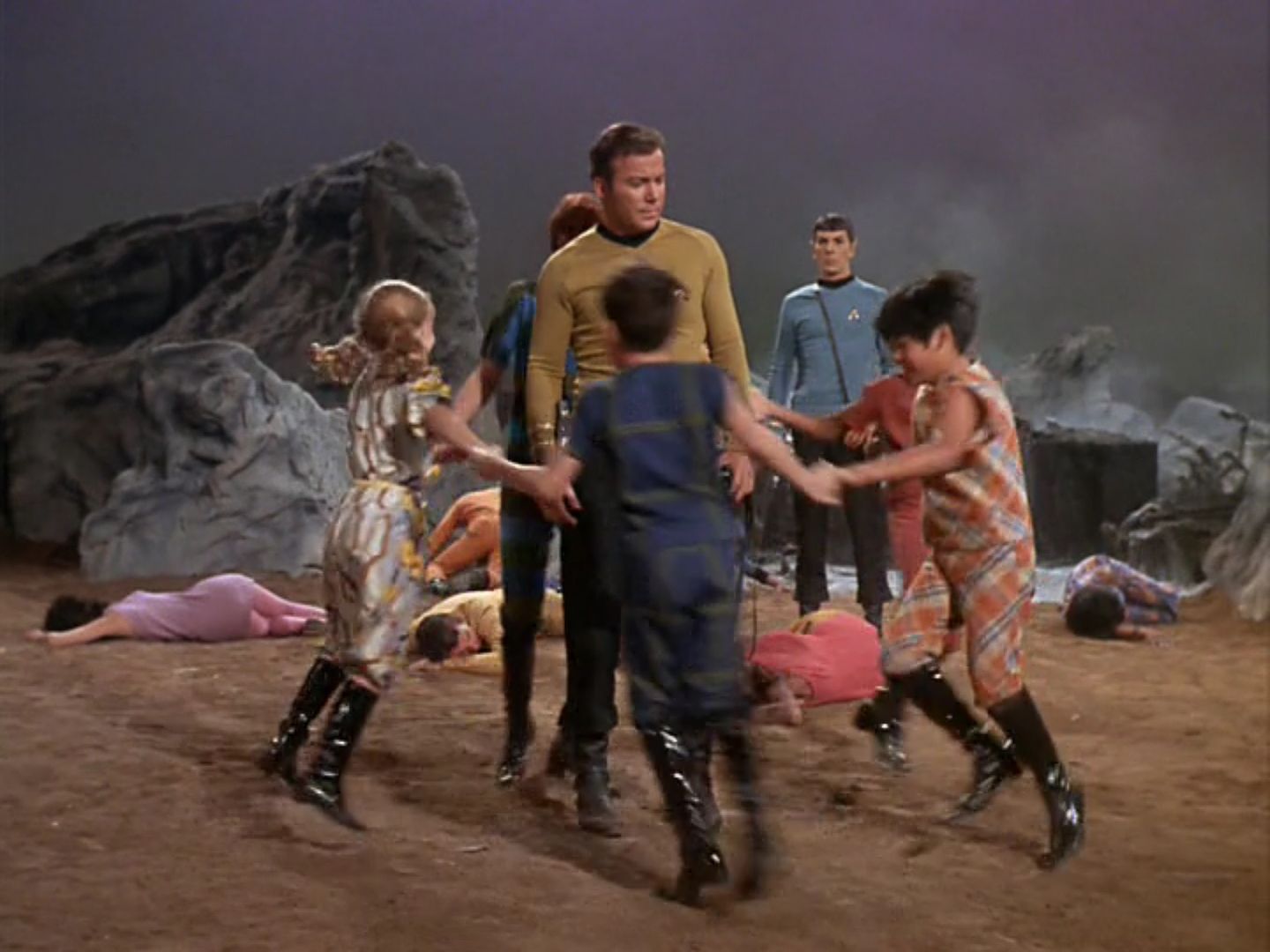
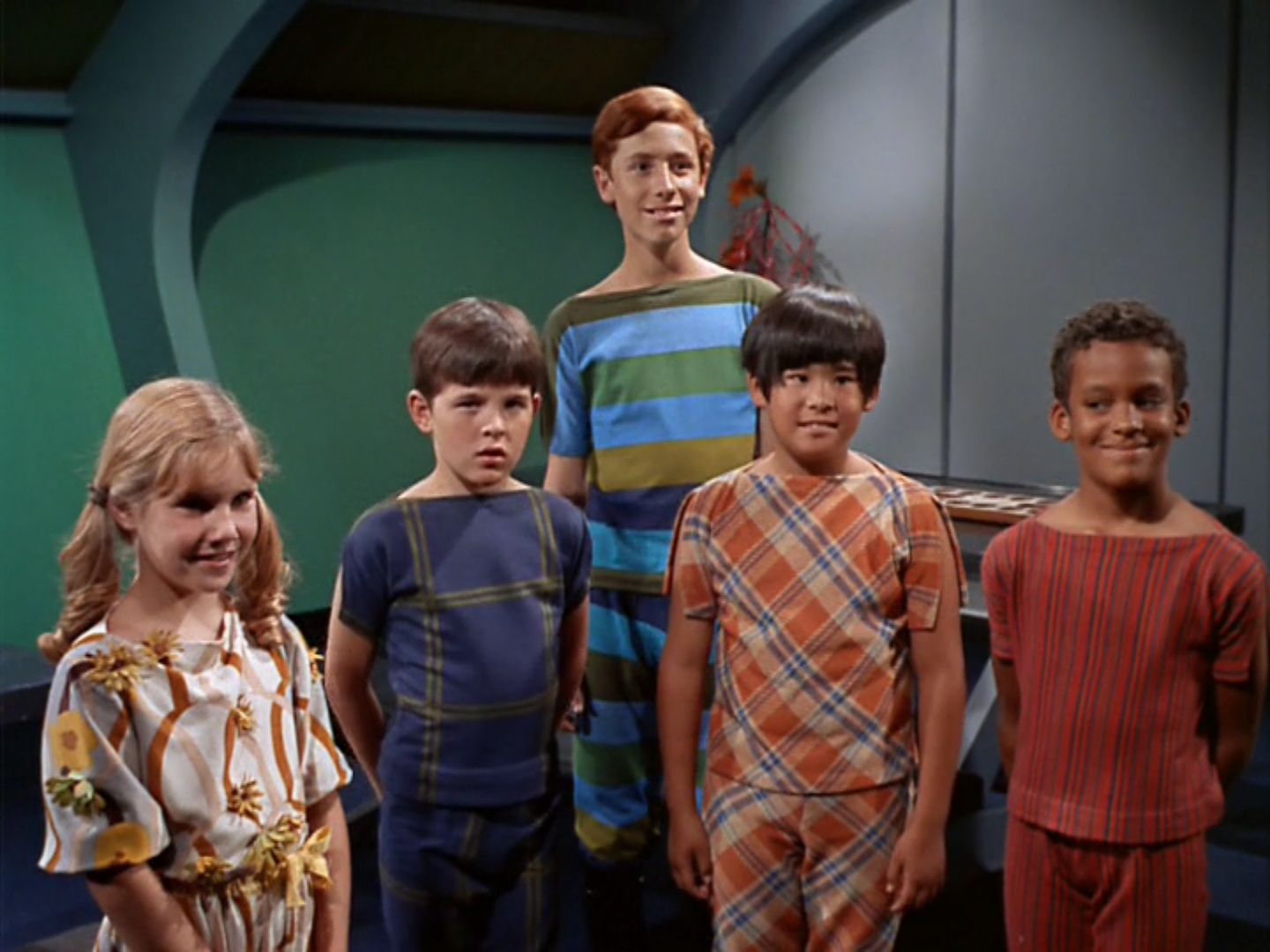
In this one we get kids playing Ring Around the Rosie, Kirk & the kids eating ice cream, and more! It begins with the Enterprise, responding to a distress call from the planet Triacus, finds that all of the adults in the "scientific colonoy" there are dead, but their children are strangely unaffected. They show no remorse or even awareness of their parents' deaths. McCoy is worried that the children could receive permanent psychological damage if the situation isn't handled well.
The children are brought aboard the Enterprise where we soon learn that they are under the influence of the "friendly angel," who instructs them to seize control of the starship and send it on to Marcus 12 where they will make more friends.
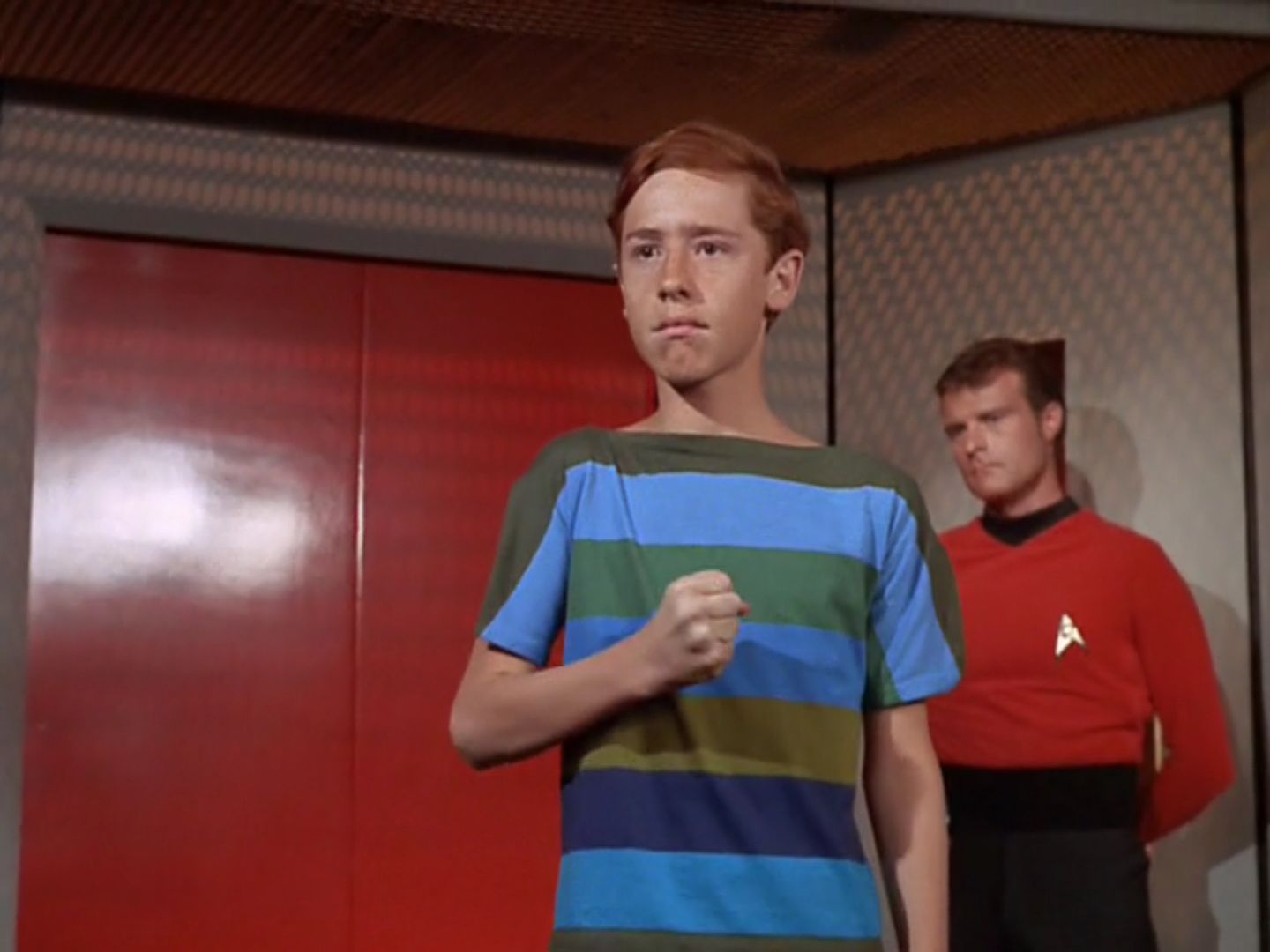
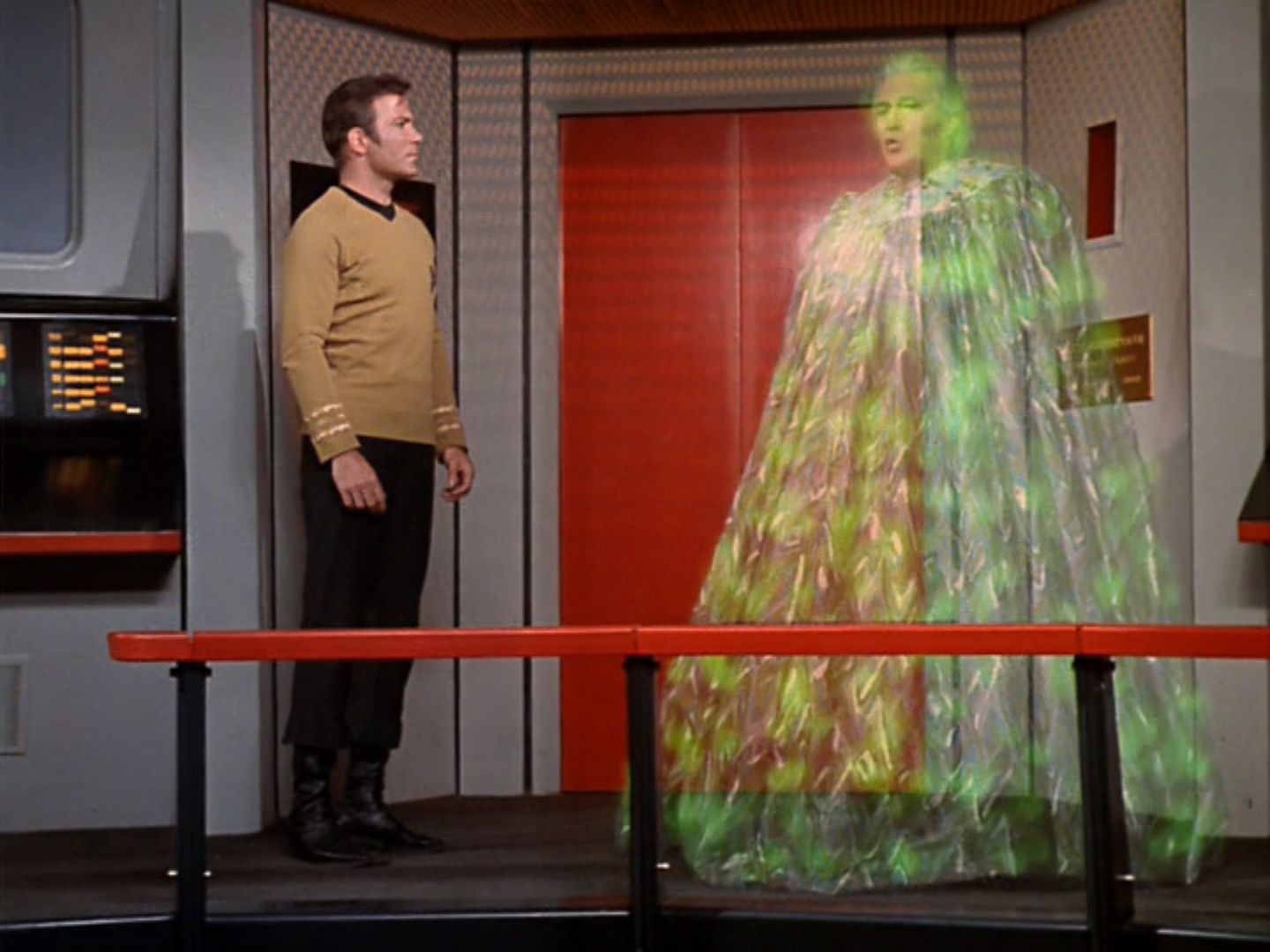
They take over, exerting their control over the Enterprise crew by shaking their fists. Maybe they do that because the friendly angel can't - he's got no arms!

It takes Kirk and Spock a while to figure out what is going on. Spock, as usual, has done his homework explaining:
According to the legend, Triacus was the seat of a band of marauders who made constant war throughout the system of Epsilon Indi. After many centuries, the destroyers were themselves destroyed by those they had preyed upon... like so many legends, this one too has a frightening ending. It warns that the evil is awaiting a catalyst to set it again into motion and send it marauding across the galaxy.
Hmmm... maybe that's happening here.

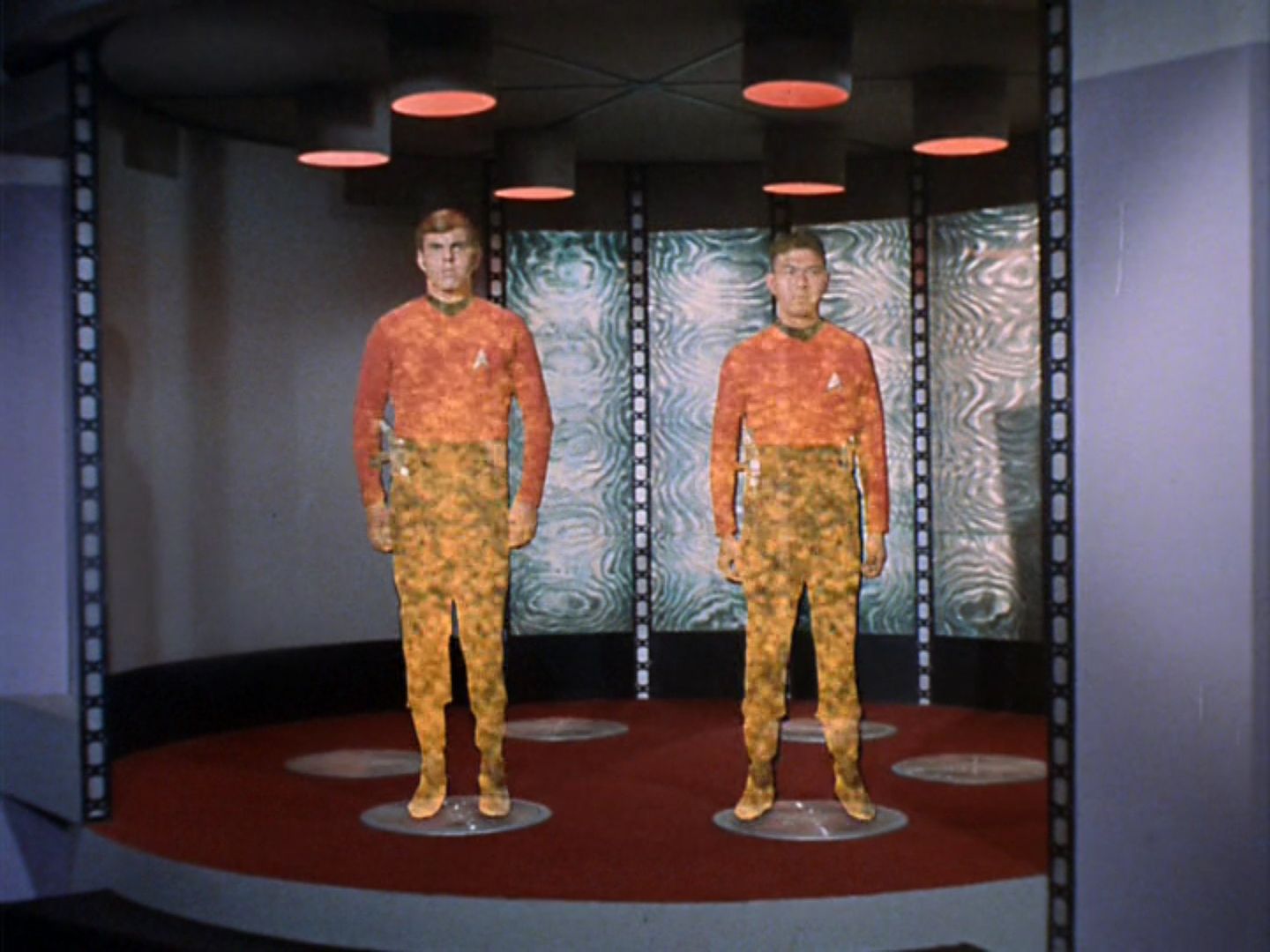
Under the influence of the children the Enterprise breaks orbit before Kirk even realizes it, which was very unfortunate for these two Red Shirts. Instead of being beamed down to the planet they were beamed into empty space. Doesn't anyone scan the beam-down site first?
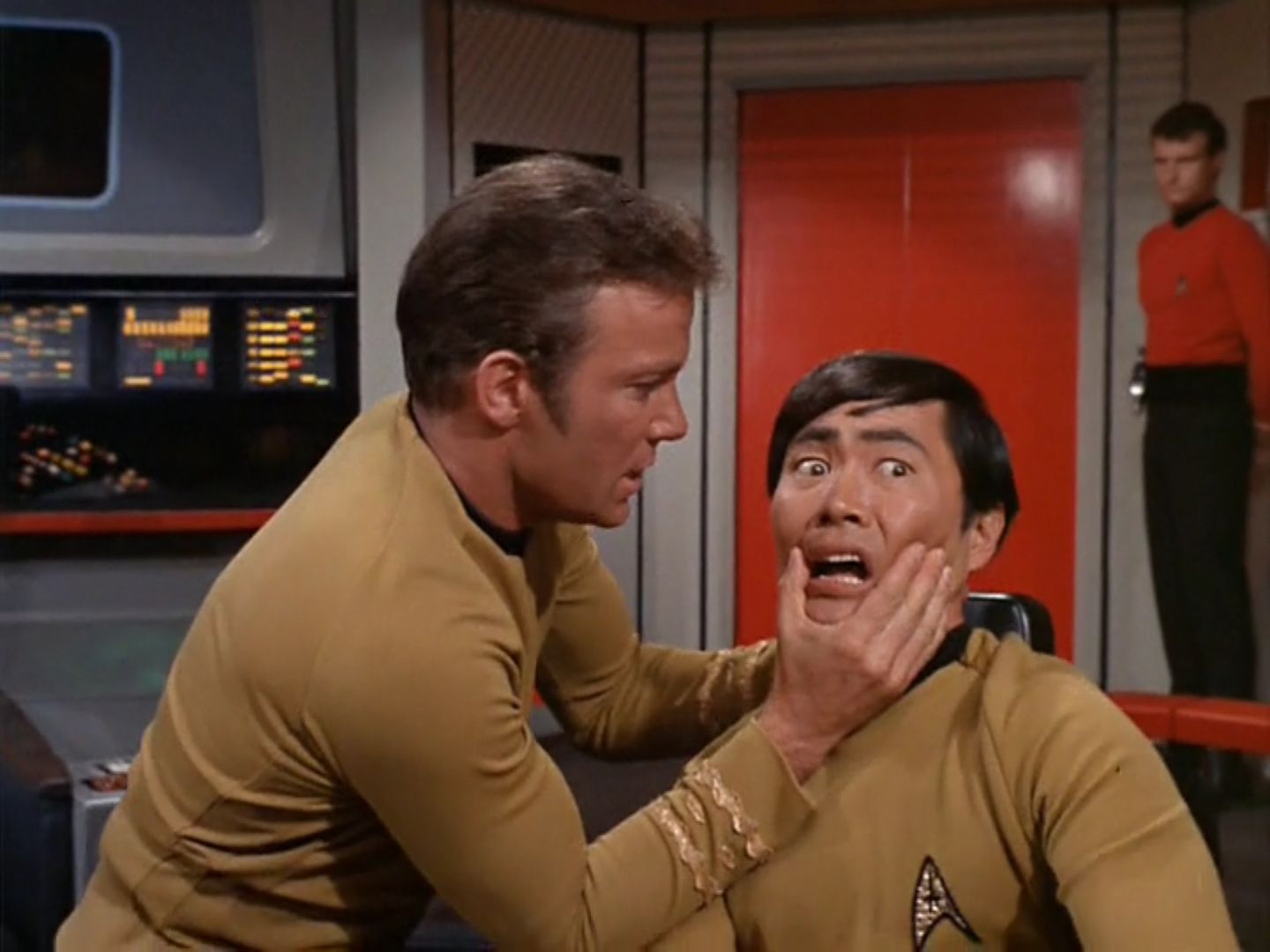
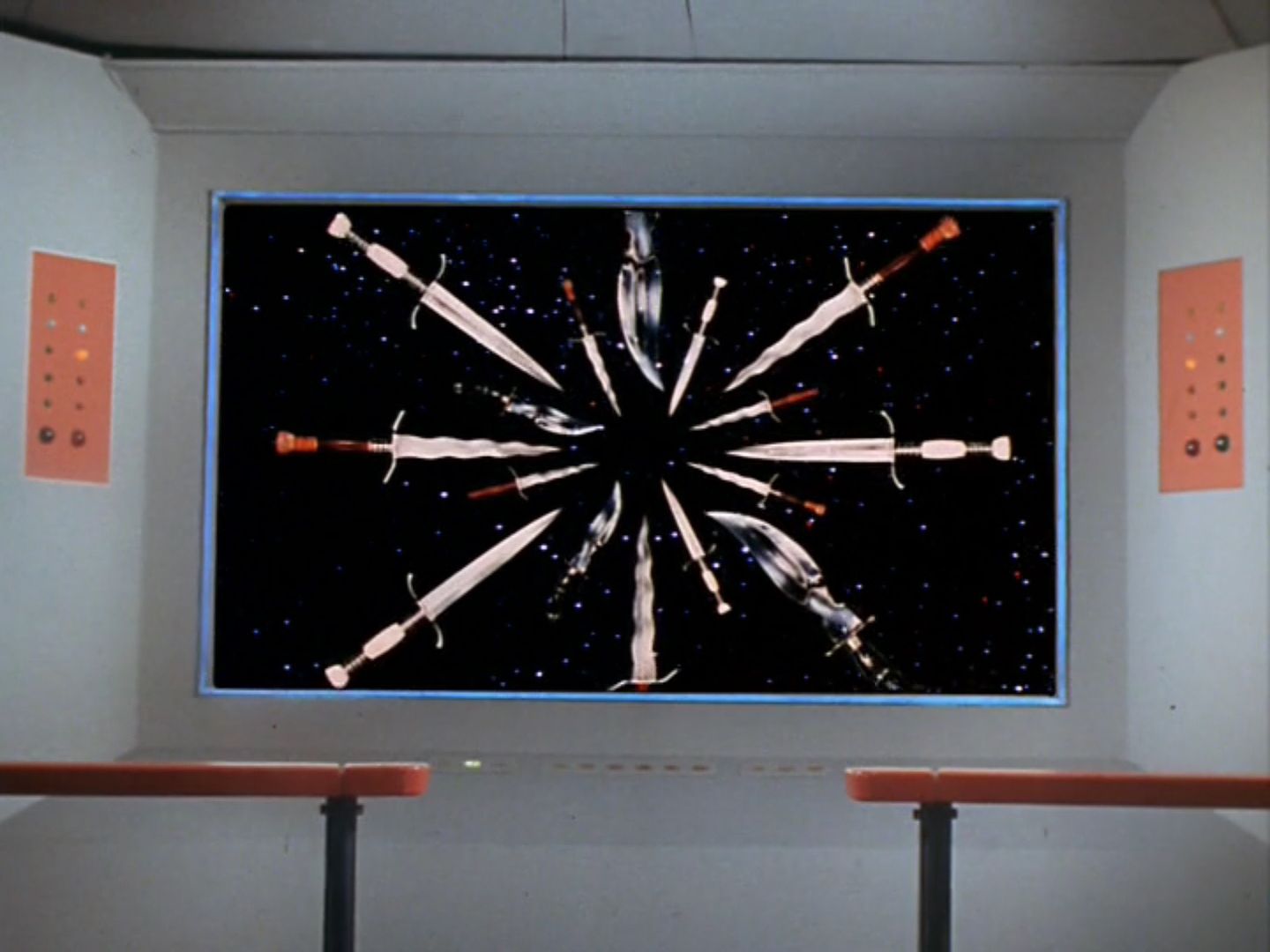
After Kirk figures out what is going on, he tries to get Sulu to change course, but the helmsman thinks he's navigating the Enterprise through a bunch of giant space swords: "Captain, stay away from the controls! If you touch them, we'll be destroyed."

Kirk soon finds that virtually the entire crew, except for Spock, has turned against him.


Curiously, Spock then begins to refer to the being controlling the children not as an alien or an entity, but as evil. That's unusual for Spock, but then this isn't a well written episode.
Kirk wonders why Gorgan has no arms.
Finally, Kirk has had enough and wants his ship back so he asks Spock to "playback the chant the children sang to summon up the Gorgan." I'm not sure where or when they recorded the children doing this, why they didn't step in when they did, or when they knew that Goran was the name of the being, but whatever.

After some tough talk from the Gorgan they display a recording showing the children playing with their parents and then shots of their parents dead on Triacus
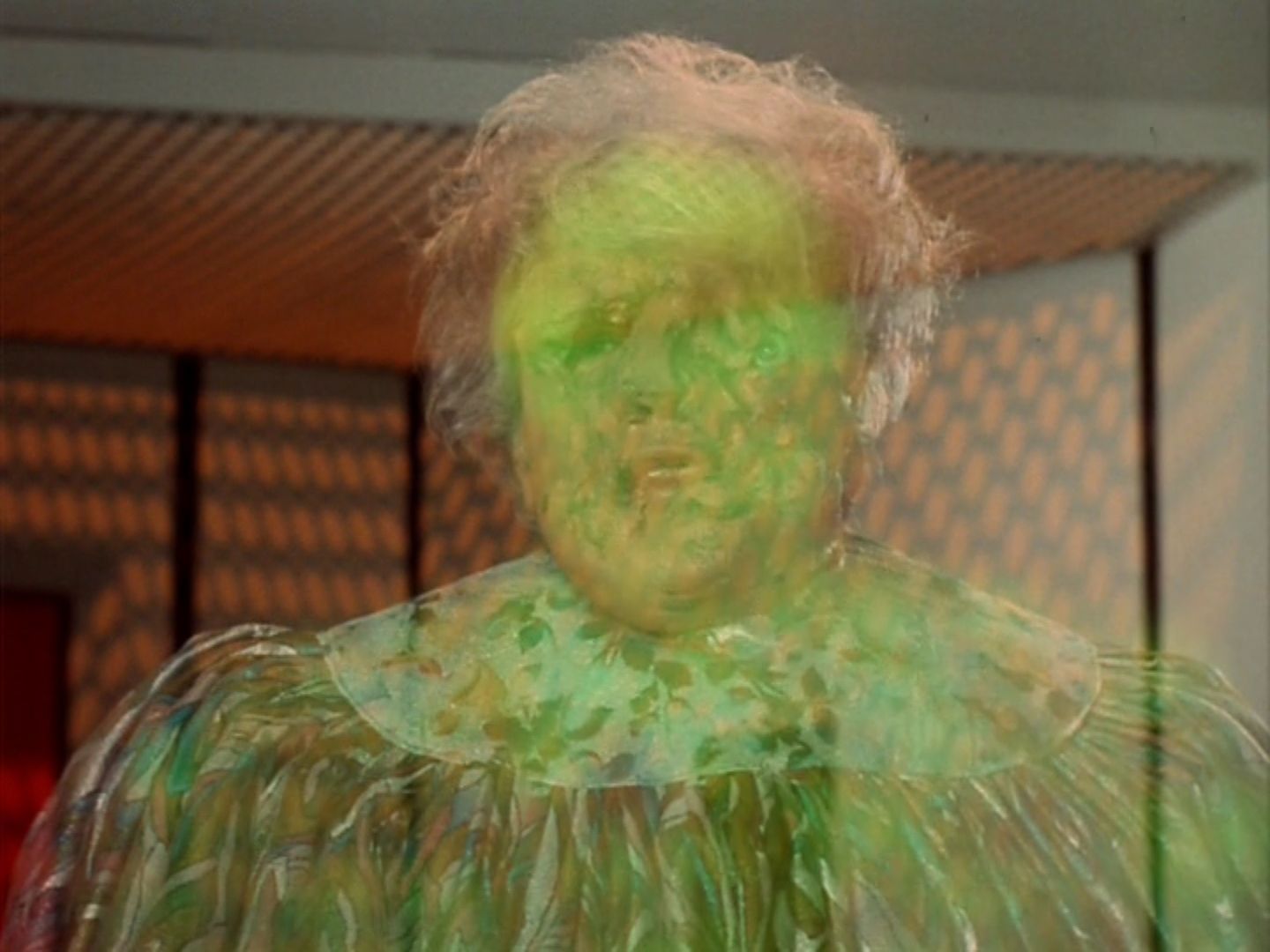
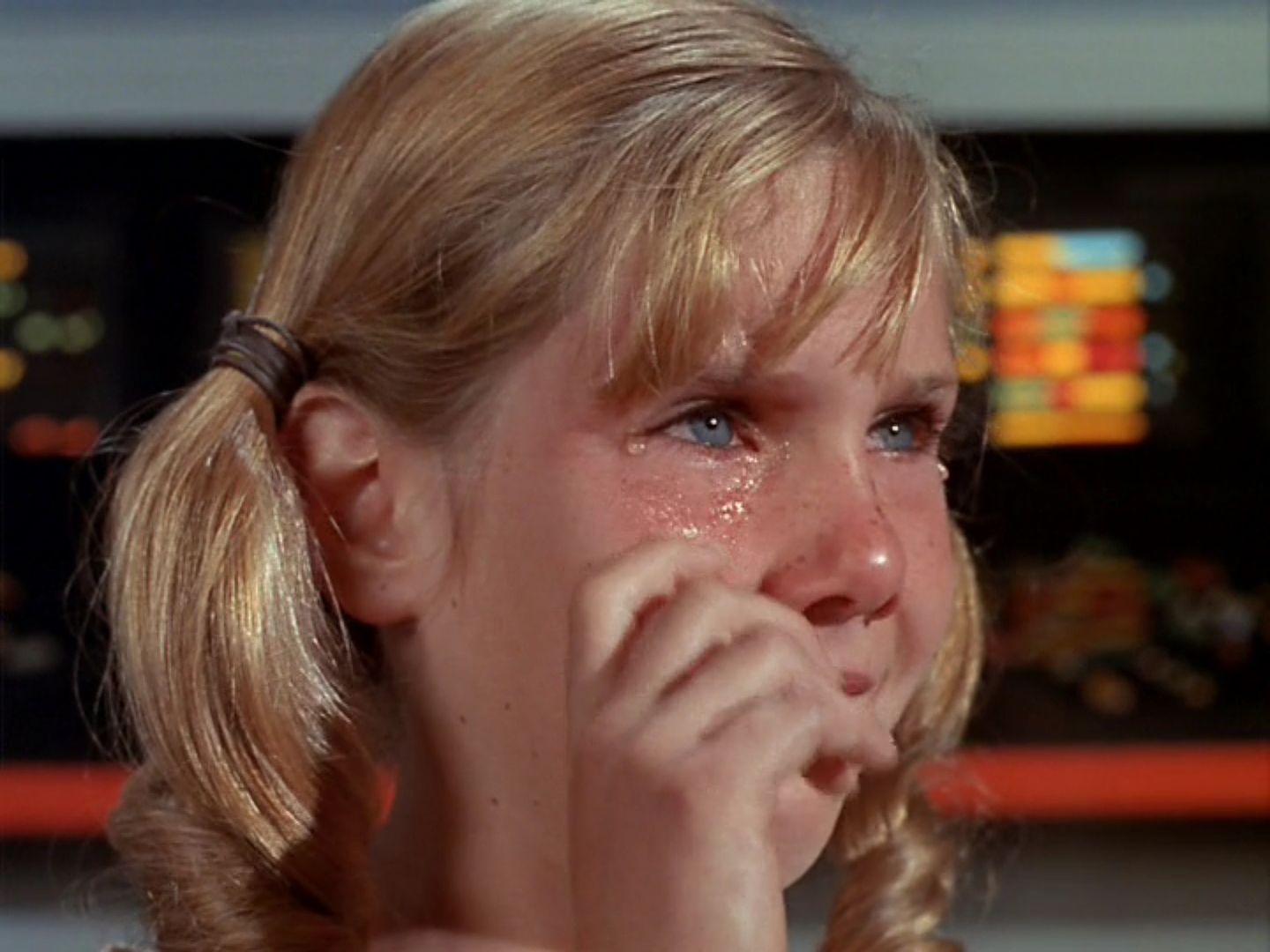
It ends with Kirk calling Gorgan out and saying to the children "Look at him. Without you children, he's nothing. The evil remains within him... Look how ugly he really is. Look at him and don't be afraid." Yes, because ugliness must be evil and .... actually I don't really understand the ending at all. It all just sort of happens and doesn't make any sense. The kids cry, Gorgan leaves and all is well again if you ignore the fact that the kids helped to murder their parents.
Anyway, McCoy is happy because the kids are crying and can now be helped. By the end of the episode the audience is crying too because they had to sit through it all, but then this is third season Trek, so get used to it.

Composer George Duning wrote the music for the episode. He previously wrote music for Metamorphosis and Return to Tomorrow. His music for this episode works, but unlike a lot of Trek music it isn't something that I enjoy listening to.

The next episode for me is the classic that people love to bash as possibly the worst ever episode of Star Trek: Spock's Brain.