I'm back with another look at an episode of the original
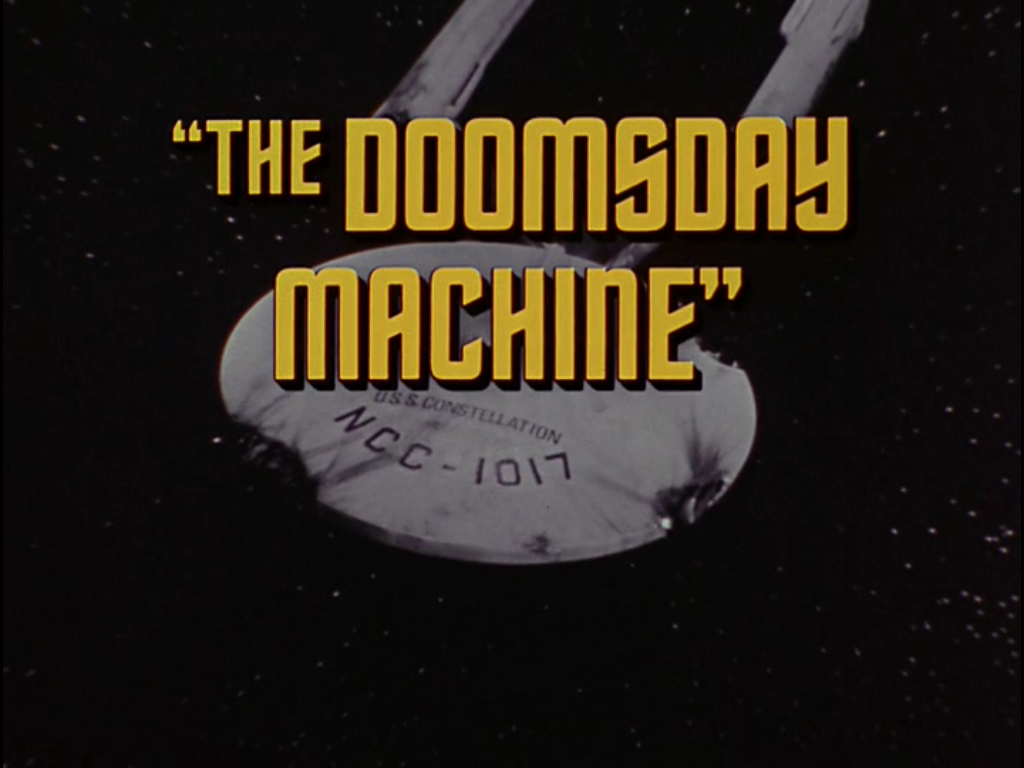
Star Trek TV series. Today it's one of my favorites:
As the story begins, there's a shocking revelation -
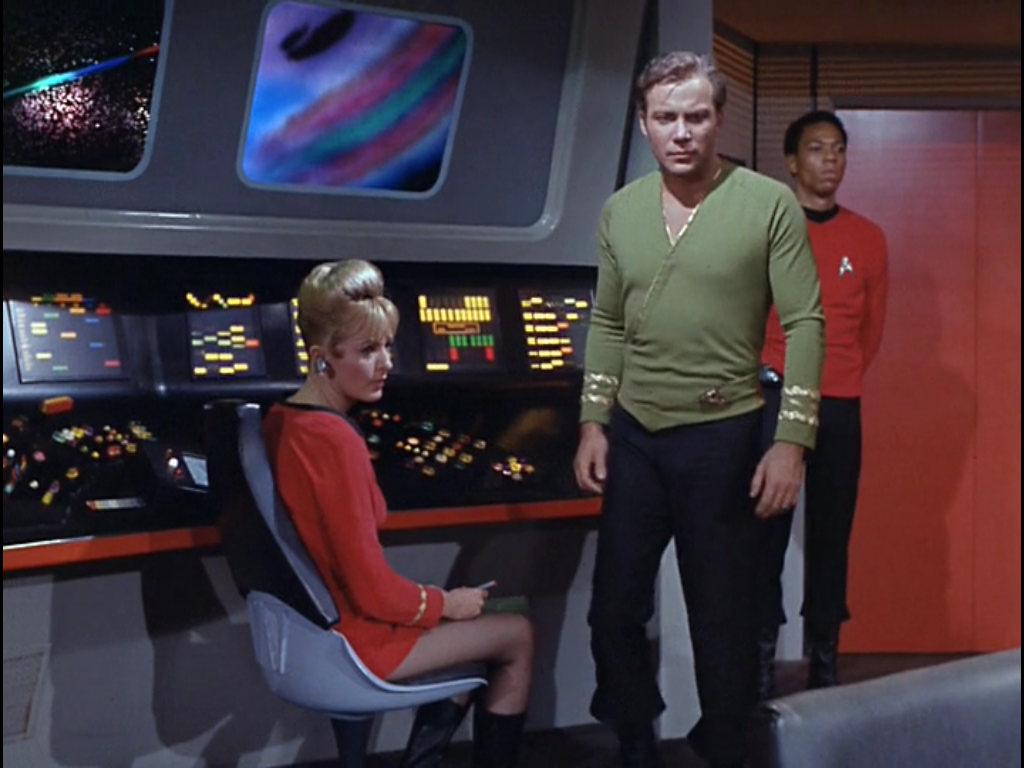
Someone other than Uhrua is staffing the communications station. What's up with that? I thought Uhura worked 24/7 like most of the rest of the bridge crew. It's too bad she wasn't here, as the communications officer got a lot of lines in this episode.
Still, there's a cool looking graphic above Lt. Palmer. It kind of reminds me of a zoomed in false-color image of Jupiter. Maybe something like
this shot of Jupiter from the Gemini Observatory (of course taken years later):
The story begins with the
Enterprise receiving a distress call and following a path of destroyed solar systems. As they enter System L-374 they find their sister starship, the
Constellation (NCC-1017). It's been badly damaged, but parts of it remain habitable.
Kirk leaves Spock in command and beams over with Dr. McCoy, Scotty, and an engineering team. The ship's bridge is destroyed, so they make their way to Auxiliary Control to play back the captain's log.
There they find Commodore Matt Decker who has recently made The Worst Command Decision Ever. I mean seriously, it was the worst command decision ever made. He brings in his starship to investigate some destroyed solar systems, only to find a thing that's chopping up the 4th planet in the system. It attacks the
Constellation, leaving it dead in space. So what does Decker do? He has his entire crew beamed down to the 3rd planet, only to have destroyed by the planet killer while he watches helplessly from space. Dude, no.
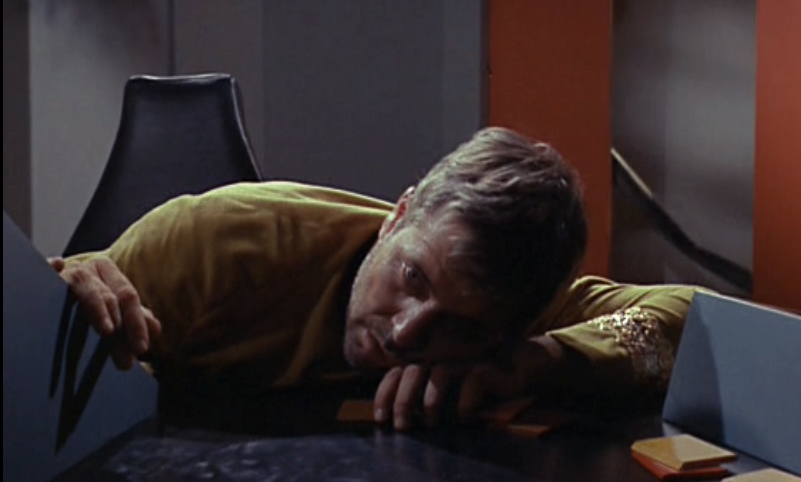
Decker was wonderfully played by
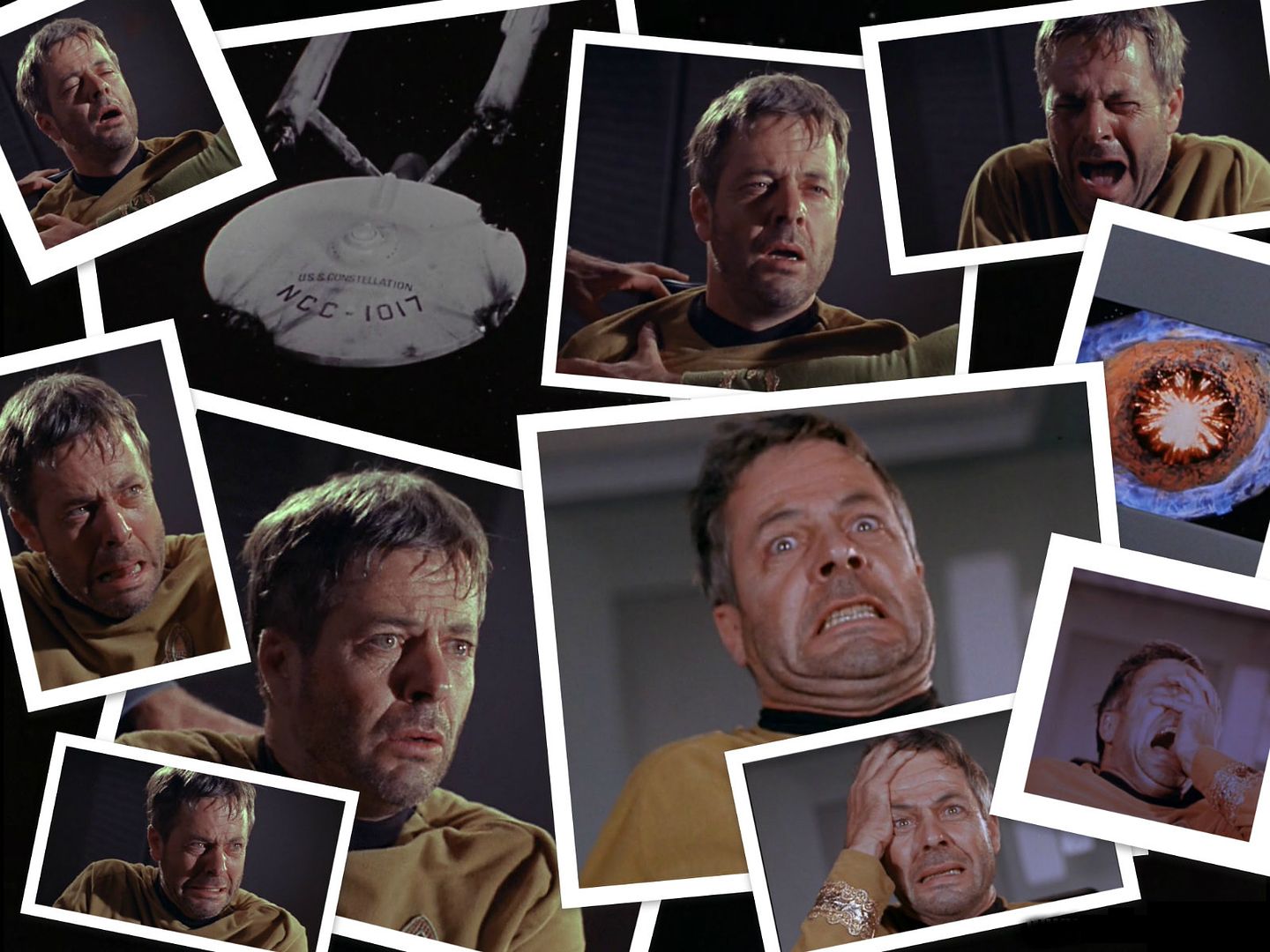
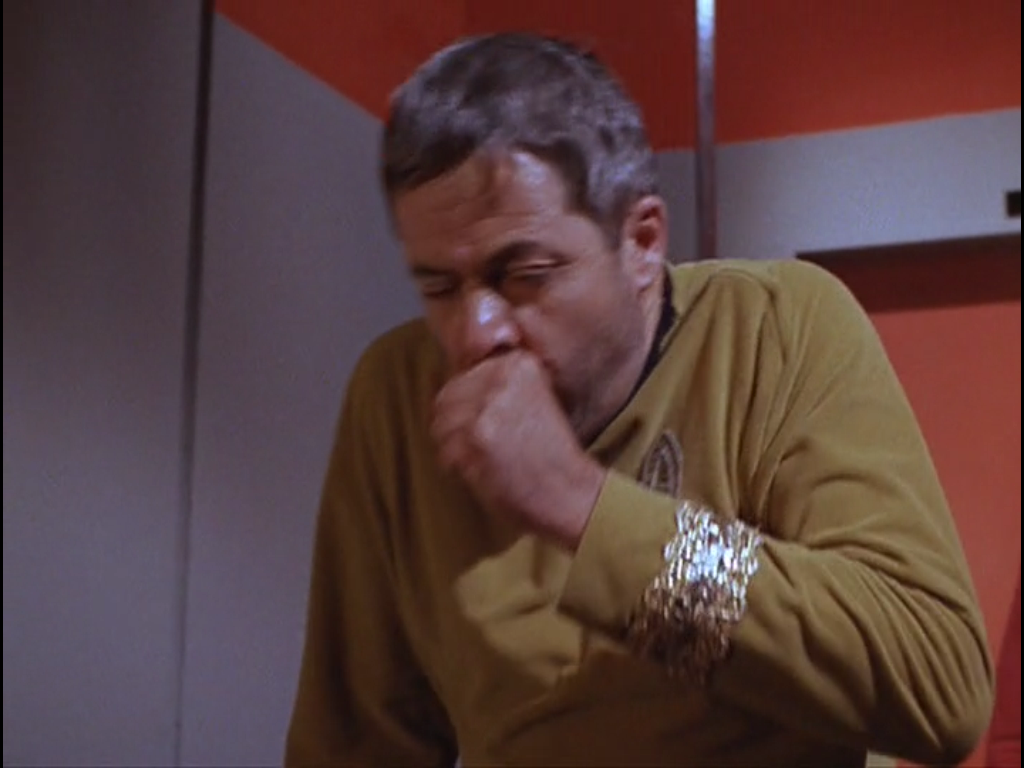
William Windom. He gave this character a wide-range of mostly distressed facial expressions. Enough for me to create this Commodore Decker Polaroid synopsis of the episode:
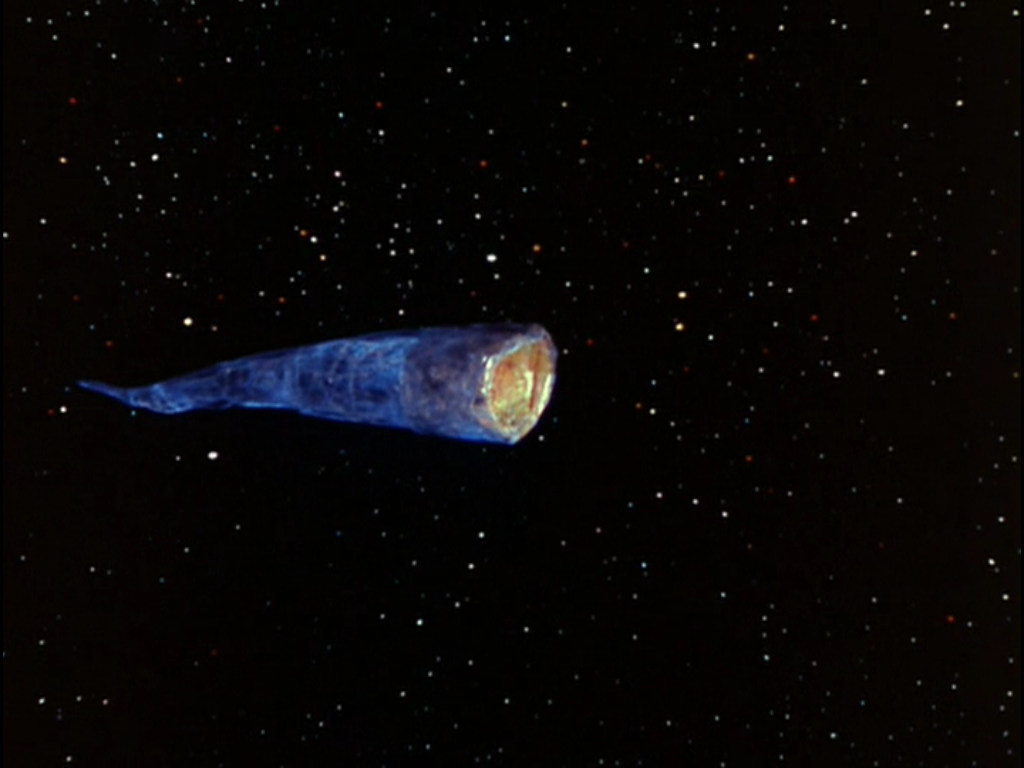
There you have it. William Windom's Decker facial expressions provided better visuals than the actual Doomsday Machine did. Wouldn't you agree?
Apparently the "special effects" team created it with a windsock coated in cement. I never minded the look of it too much, but seeing stars pass through it was always a problem for me.
The Doomsday Machine does bear some resemblance to real objects in space. Here's a
nebula surrounding a protostar imaged by the Hubble Space Telescope that at least sort of has the same shape:
The cloud is just over a light year in length and is being eroded away by the radiation of hot, massive stars nearby. Follow the link to read about it.
Decker & McCoy beam back to the
Enterprise to find that the planet killer has returned. Decker wants it destroyed and isn't too pleased with Spock when he points out, "
You tried to destroy it once before, Commodore. The result was a wrecked ship and a dead crew." When Spock refuses to take action, Commodore Decker seizes command of the
Enterprise.
 |
| Commodore Decker with Pretzel Insignia |
Things go from good to bad when Kirk, who had been out of contact, discovers that Decker's actions have been threatening the
Enterprise. Protecting his ship is kind of important to Kirk. He orders Spock to take back command.
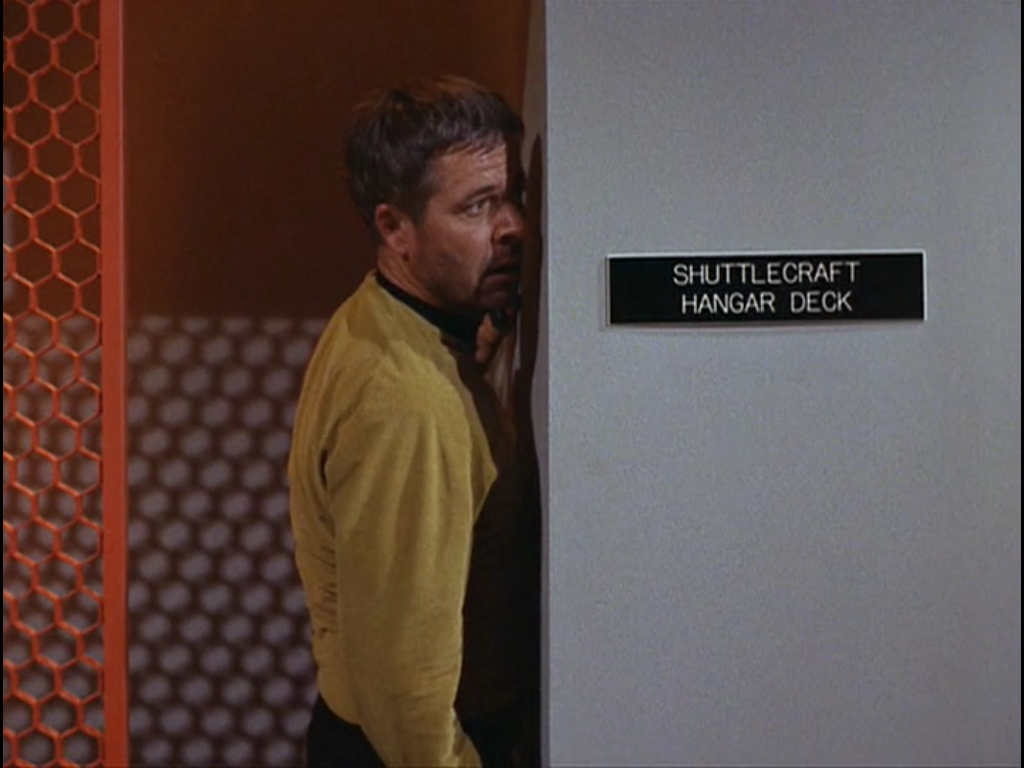
Spock has a security guard escort Decker to Sickbay, when Decker uses the ol' Coughing Commodore Trick to surprise and overpower the guard. He then sneaks off to steal a shuttlecraft, because as a starship captain, he knows those things are never guarded.
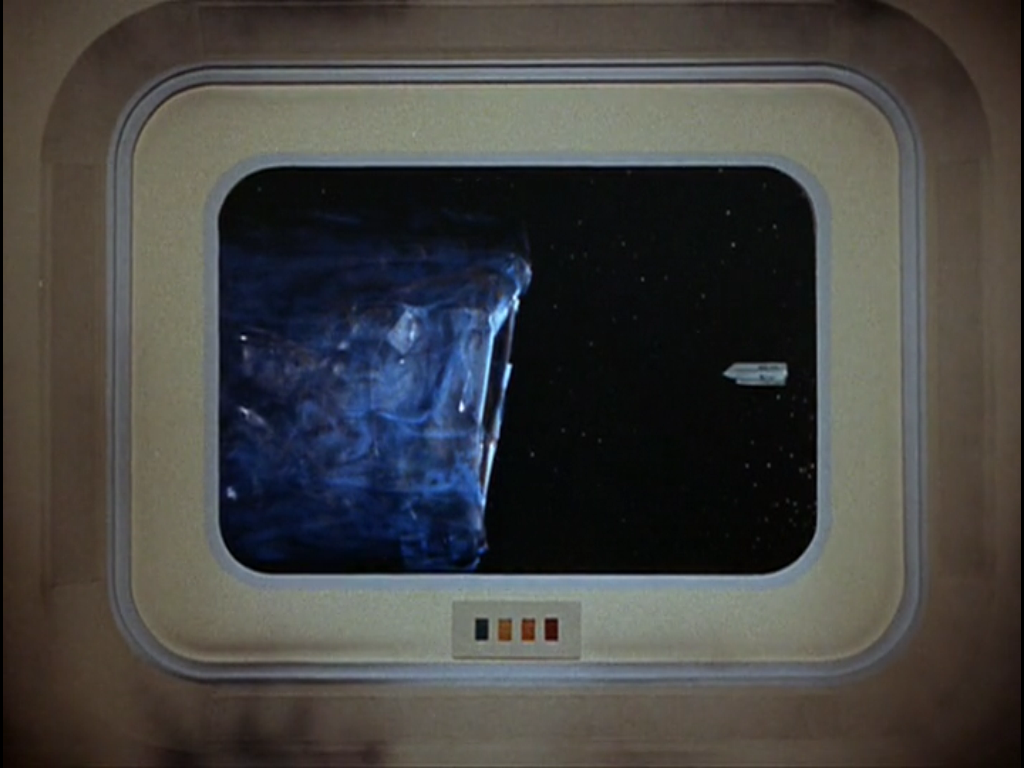
Decker was hoping that eating a shuttlecraft might kill the planet killer, it doesn't work, but it does give Kirk the idea that eventually does the trick--overloading the Constellation's impulse engines so that they blow up right as it swallows the shuttlecraft.
At the end, Kirk points out that they used something like an old 20th Century doomsday device, the H-bomb, to destroy the planet killer making it a thinly veiled, but nicely done, commentary on very real issues facing the world of the 1960s.
One thing that really adds to the episode was the musical score provided by composer Sol Kaplan. Tragically Kaplan only scored two episodes for
Trek, the other being
The Enemy Within, but he really nailed both of them. His score for Doomsday Machine is pretty nearly perfect for the episode, with musical themes for the planet killer, the
Constellation and more -- a kind of development not heard in
Star Trek. For more on it you'll want to watch this
great video that discusses the score.
Don't forget, as I often say in these posts, the whole thing is available in the
complete release of Star Trek TOS music available from La-La Land Records. There's nearly 32 minutes of music from this episode. I think I'll listen to it again now.
If you haven't seen
The Doomsday Machine in a while, go track it down. It's not up at
the official Star Trek website right now. I'm not sure why as it has been there in the past.
Next up for me is
Wolf in the Fold.