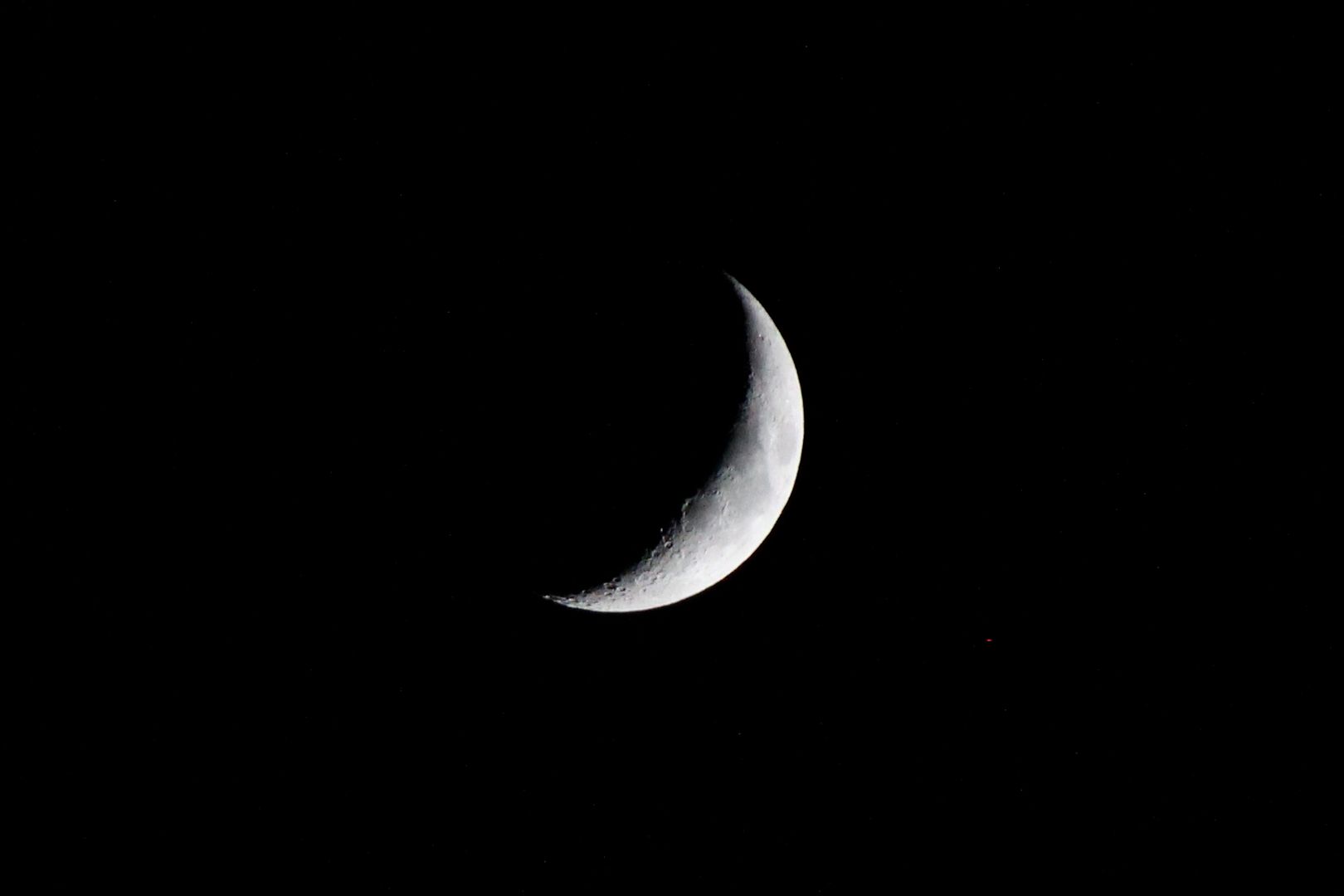
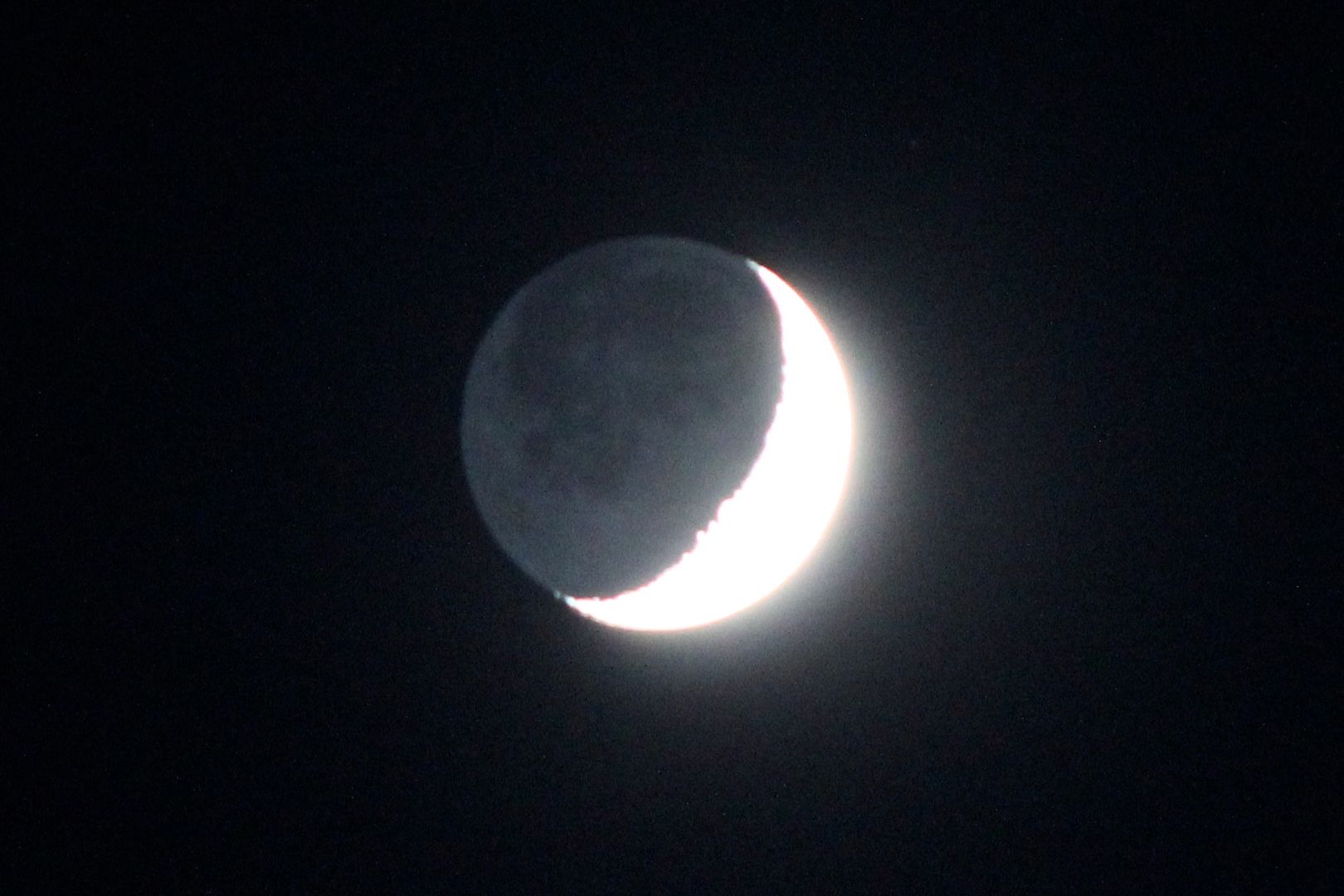
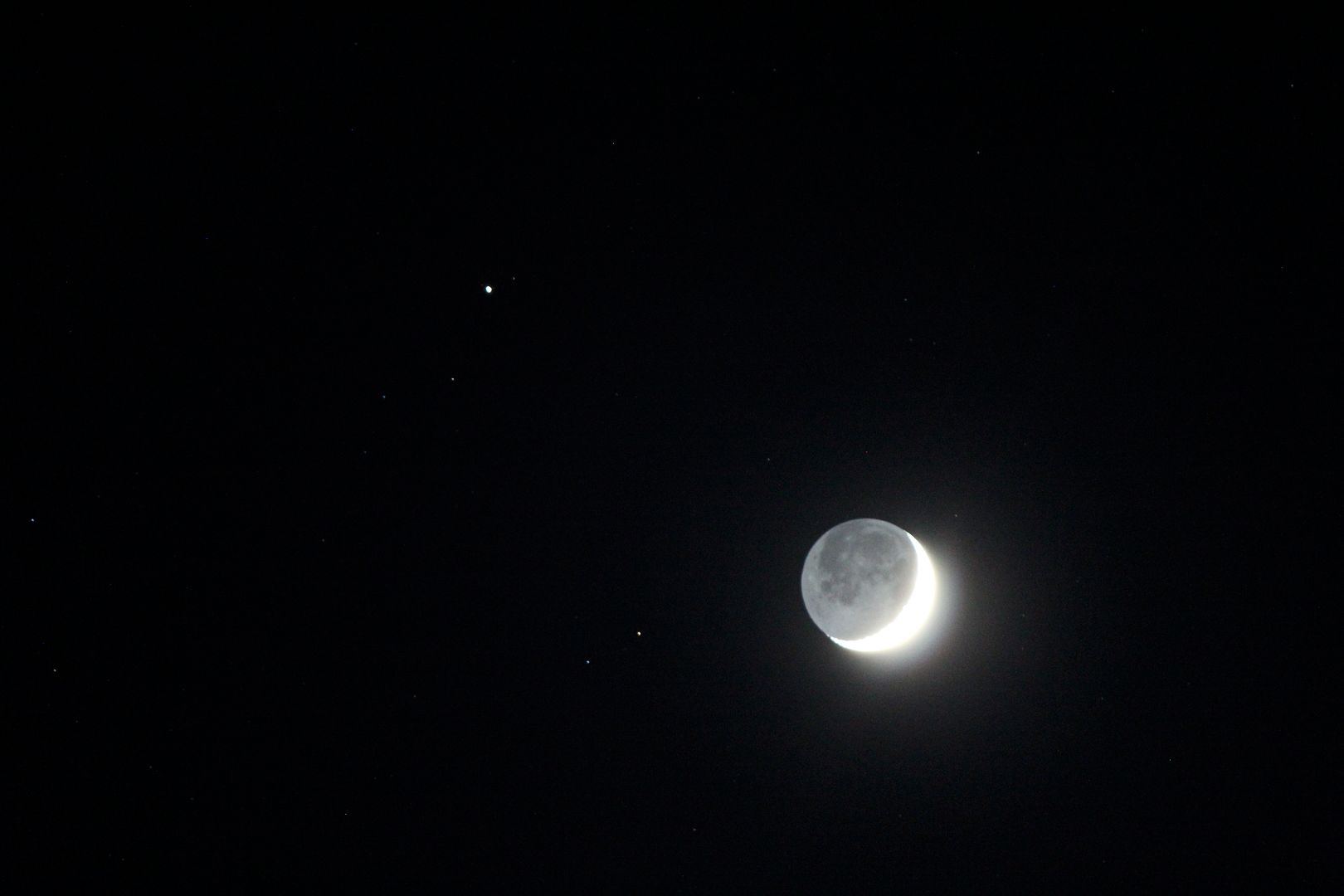
The Moon has returned to the evening sky. Tonight it is close to the planet Saturn. Here's how they looked to my camera:
 |
| Canon 3Ti 1 second, 250mm ISO 3200 f/5.6 |
That's Saturn to the upper left. The fainter
Nu Librae is just left of the Moon. The exposure here was long enough to bring out the
earthshine - where the reflected light of the daytime Earth illuminates the portion of the moon where the sun has not yet risen.
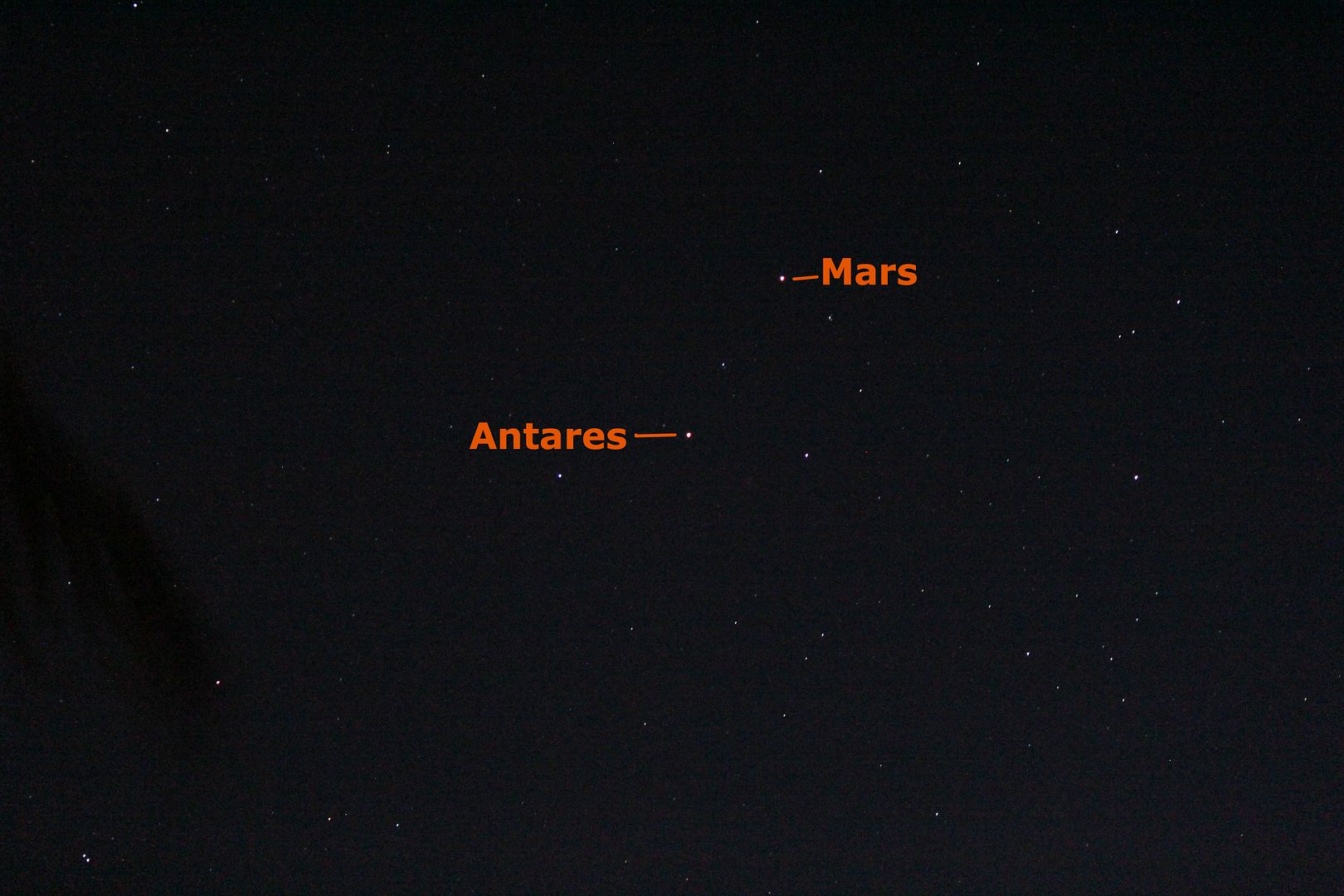
By tomorrow night the moon will be on the other side of Saturn and heading towards the red planet Mars. Mars is currently is close in the sky to the red supergiant star
Antares.
Mars and Antares are of similar brightness and color, so much so that the name Antares means 'rival of Mars'. In the sky Mars is now moving gradually eastward relative to Antares. They are in the southwest sky in the early evening. Take a look and see if you can notice them getting farther apart as the nights advance.
The moon will swing to the other side of them by the 29th.
Bright Jupiter doesn't rise in the east until just after 2 am, but if you want to catch another planet you might consider waiting until the early morning hours of October 8th. There will be a total lunar eclipse that night and the planet Uranus will be relatively close to the moon. Uranus is almost as bright as Nu Librae and should be visible during the total phase of the eclipse. You'll need dark skies that are relatively free from light pollution to see Uranus, but if you are heading out to enjoy the lunar eclipse, it is worth seeing if you can spot our solar system's seventh planet.
I'll have more on the October 8 total lunar eclipse and the partial solar eclipse that will follow 2 weeks after that in a future blog post.
 A wider view takes in the whole show:
 Look for the Moon to be nearer to Venus tomorrow (Saturday) morning - a sight that's worth getting up early to see.