Saturday, August 27, 2016
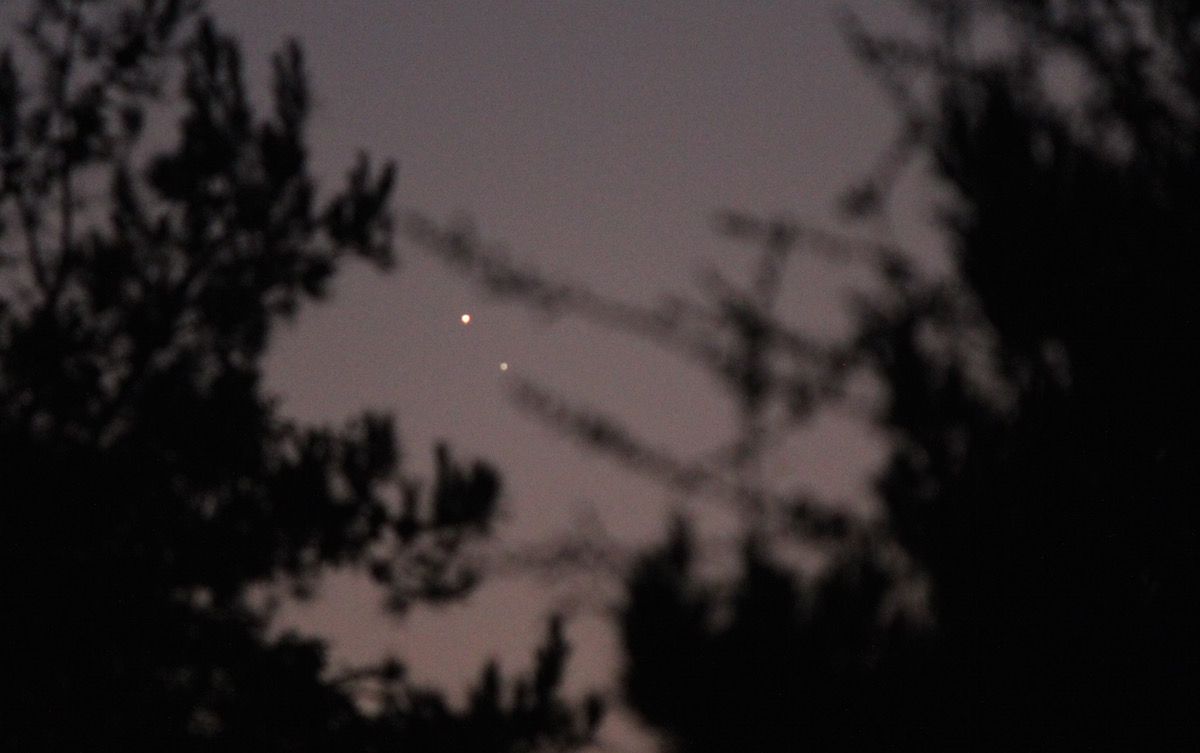
Venus Jupiter Conjunction

Saturday, August 6, 2016
Alien Moons
I gave a talk, Alien Moons of the Solar System, last night at Wavelength Brewing Company. You can watch it here:
Monday, July 4, 2016
Star Trek: Elaan of Troyius
It is time for for me to look at another episode of classic Star Trek, today I bring you my thoughts on:
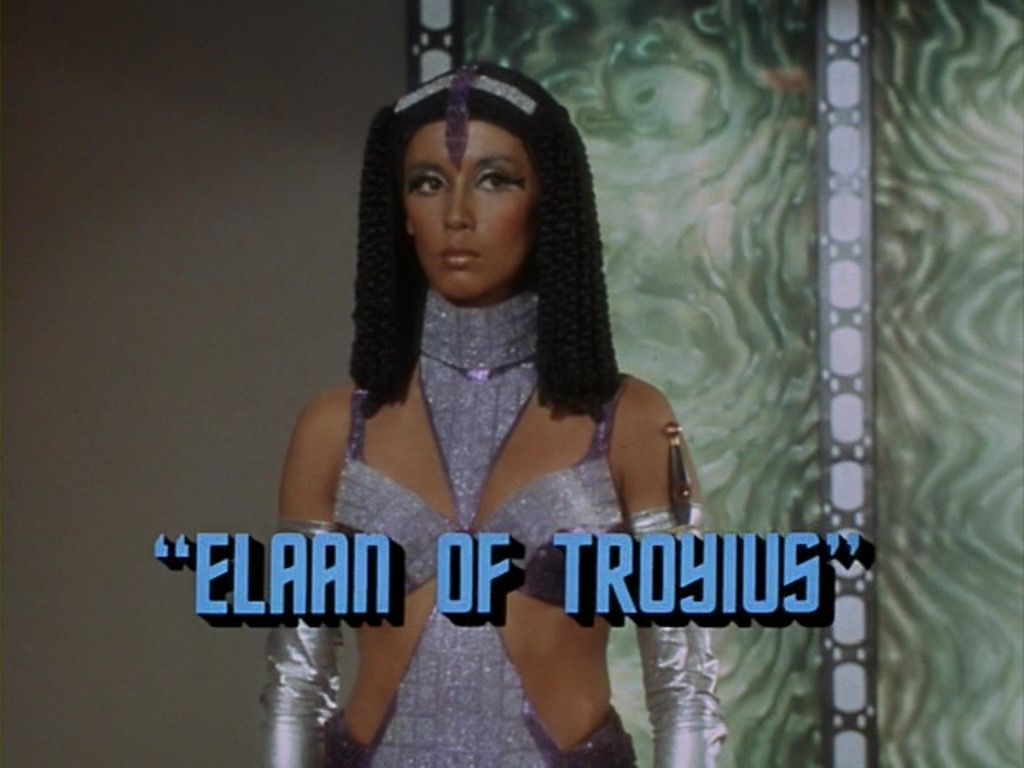
Trek borrows from Shakespeare's The Taming of the Shrew in this season three episode. It has a few bumps, but otherwise is a good episode where we see a green-skinned alien that's not an exotic dancing girl, sabotage, green chicken, Kirk teaching manners and courtesy, dilithium crystals, and a space battle with (finally) a cool looking Klingon Battle Cruiser.
There's to be an arranged marriage that will bring peace to two neighboring planets and the Enterprise is to escort the Dohlman Elaan to the planet Troyius.
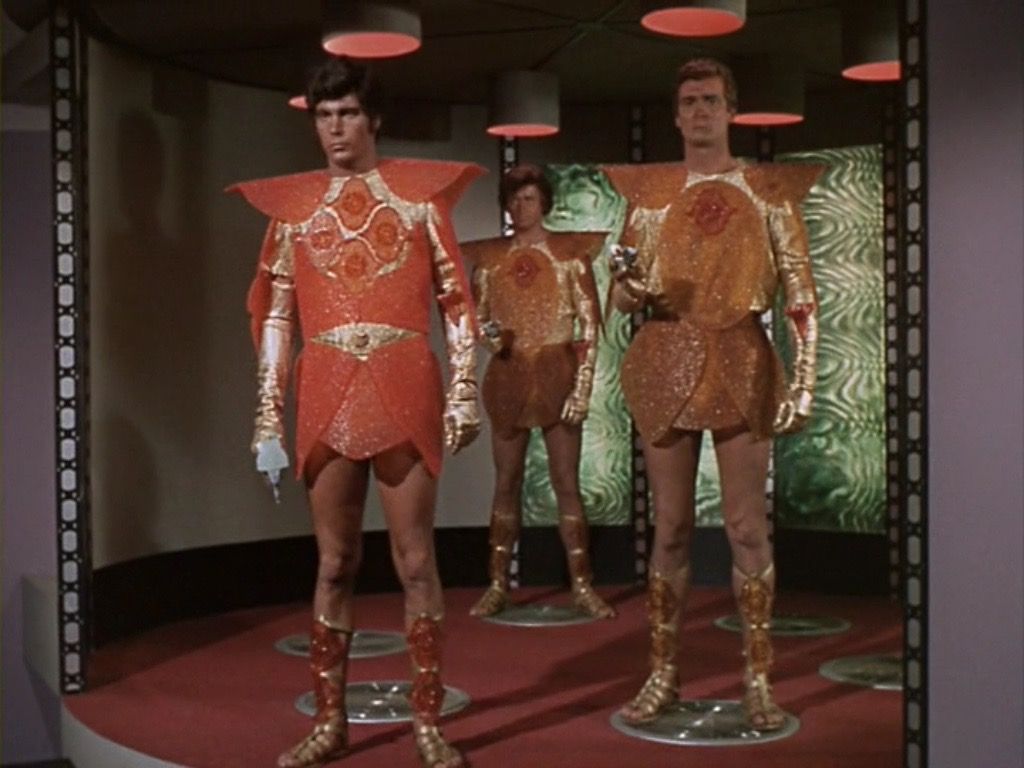 Members of Elaan's royal guard look pained by the terrible costumes they are forced to wear. I can't say as I blame them.
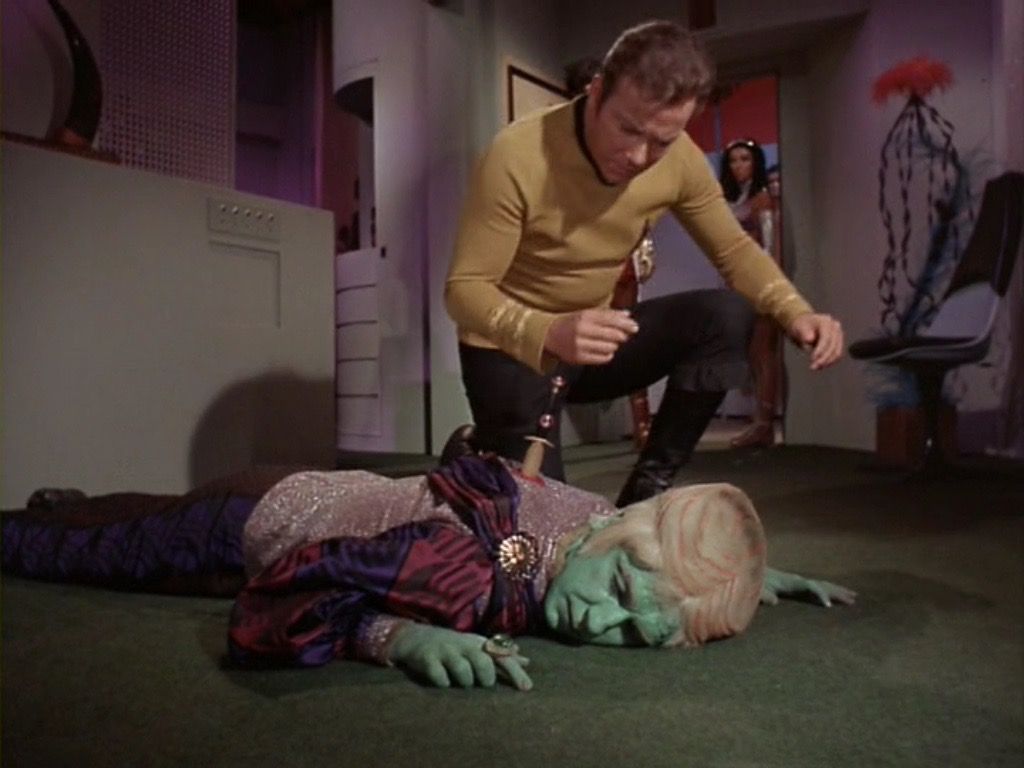
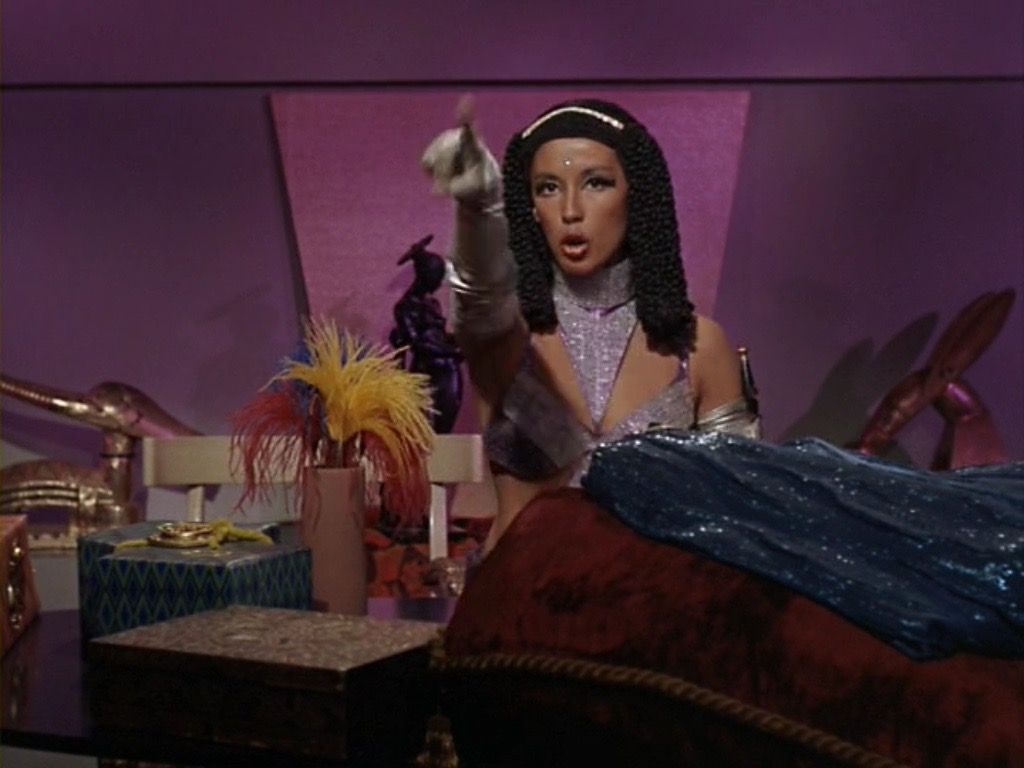 As they slowly make their way to Troyius, the green-skinned Ambassador [Rob] Petri is to instruct the spoiled and uncouth Elaan in "Troyian customs and manners." As you can see (above, left) Elaan didn't take too kindly to Ambassador [Rob] Petri's instructions.
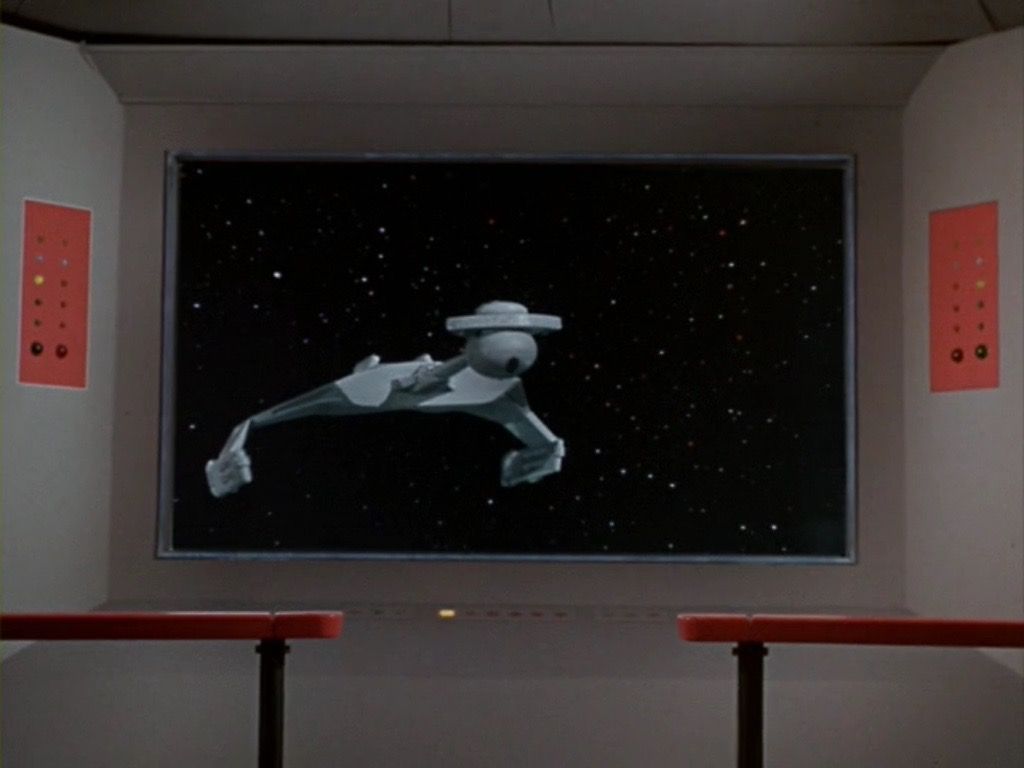
The task of instructing Elaan falls to Kirk, who must also keep a careful watch on the Klingon Battle Cruiser that is following them.
The Enterprise has had space battles with Klingons before and, interestingly enough, they were mostly not shown. For instance, in the excellent season one episode Errand of Mercy, which introduced the Klingons, we never see their ship even though there's an impending space battle with them. In season two's Friday's Child we finally see a Klingon ship of sorts.
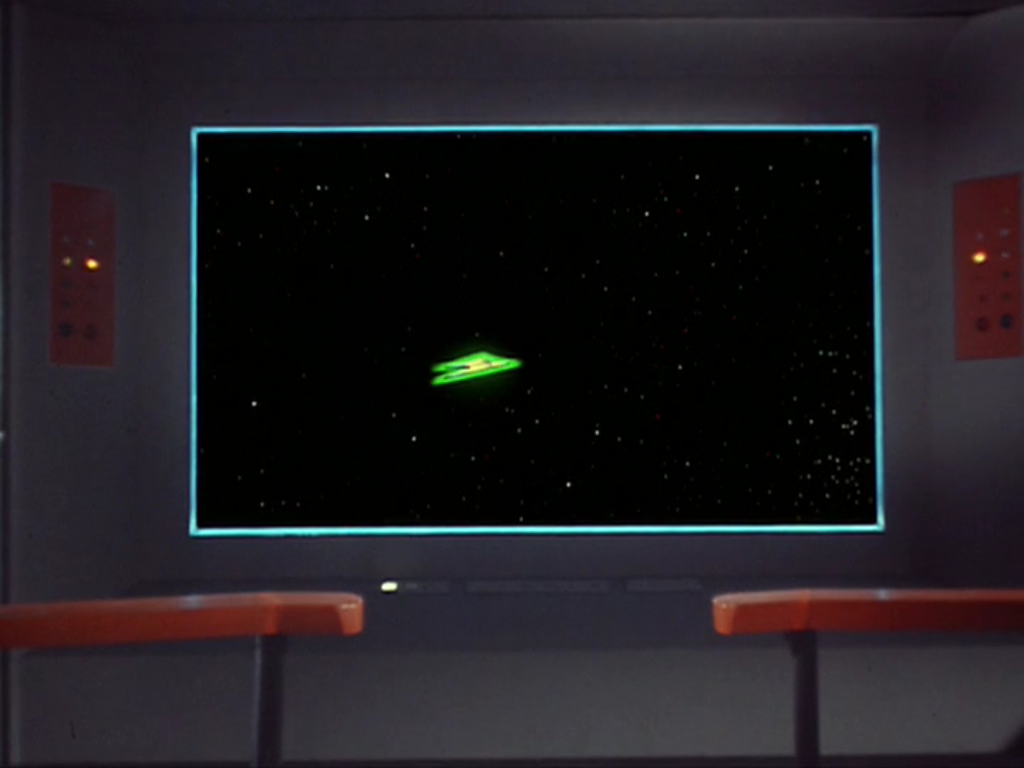
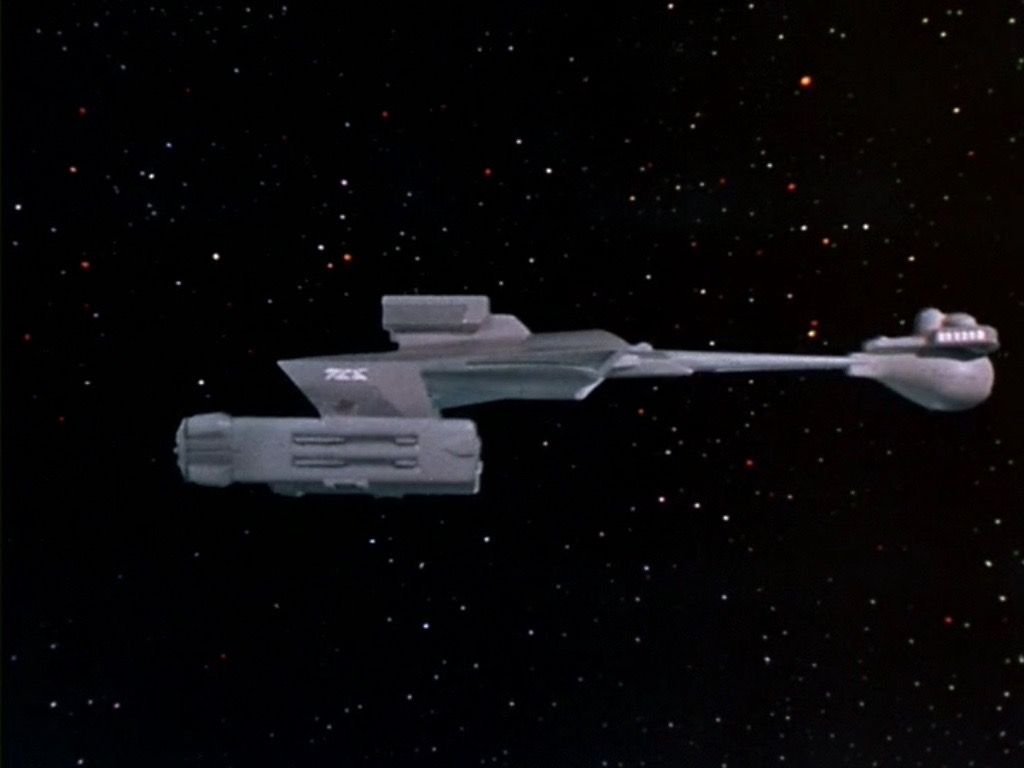 Yes, the ship on the left is the pretty terrible Klingon ship shown in Friday's Child. The appearance of the new Klingon ship in Elaan of Troyius is wonderful in comparison. Awesome, in fact. I've read that the new ship came about because a company that sold toy models paid for the creation of that production model of Klingon ship in exchange for the rights to sell the models. Anyway, back to the story...
 When he's dealing with Elaan, Kirk doesn't hold back. "Nobody's told you that you're an uncivilized savage, a vicious child in a woman's body, an arrogant monster!" Unfortunately, he also doesn't hold back when talking about her to Spock: "Mister Spock, the women on your planet are logical. That's the only planet in this galaxy that can make that claim." Sigh. Star Trek wasn't always forward thinking, especially in its treatment of women and it shows here.
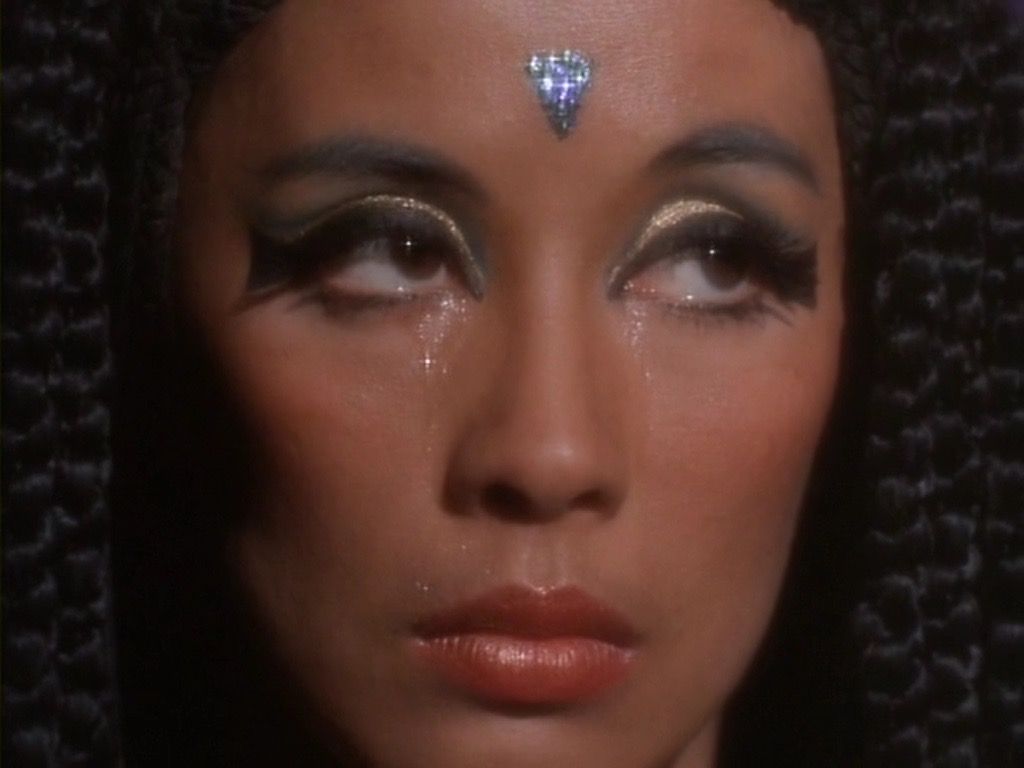
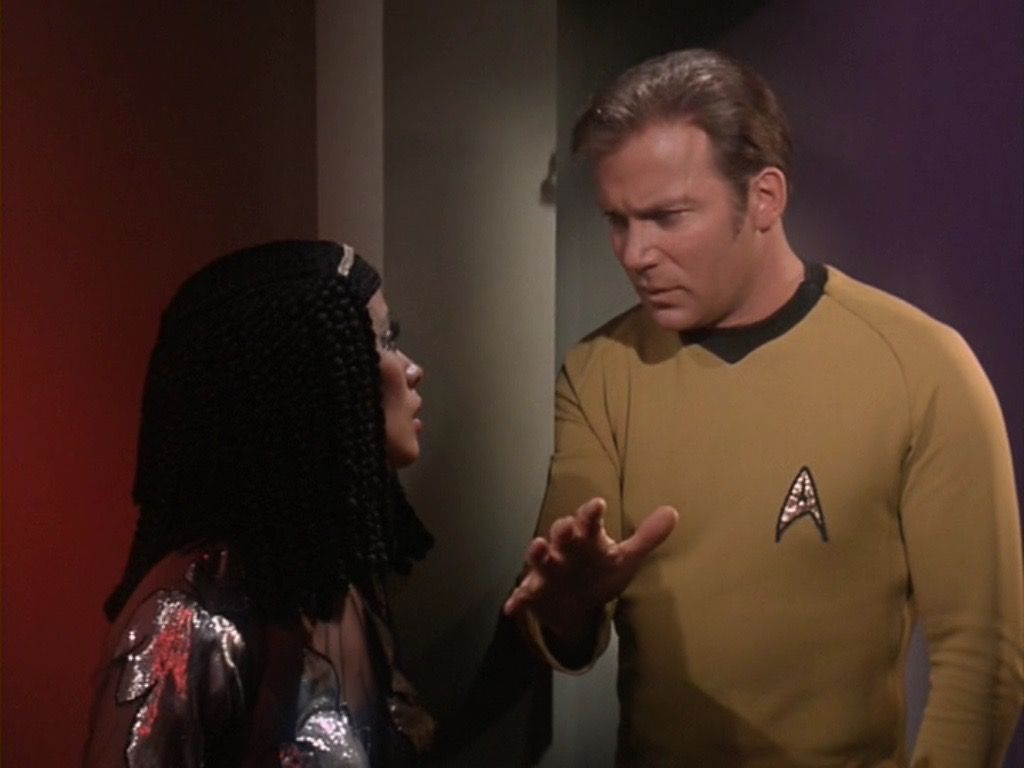 Alas, their conflict ultimately brings tears to Elaan's eyes and nobody thought to tell Kirk Ambassador [Rob] Petri's warning, "A man whose flesh is once touched by the tears of a woman of Elas has his heart enslaved forever." This isn't the biggest problem though. The Klingons are threatening and Scotty has discovered sabotage.

The anti-matter pods have been rigged to blow up the moment they go into warp drive and the entire dilithium crystal converter assembly is fused. That's bad. They're not going anywhere anytime soon, even with Scotty around to try to save the day.
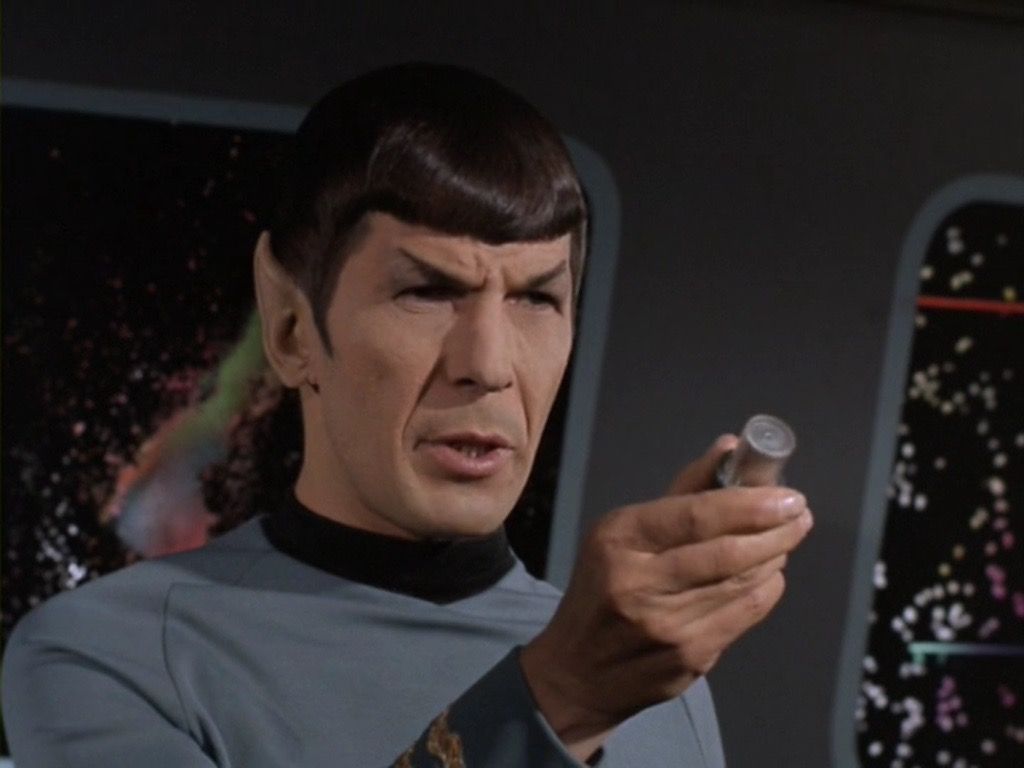
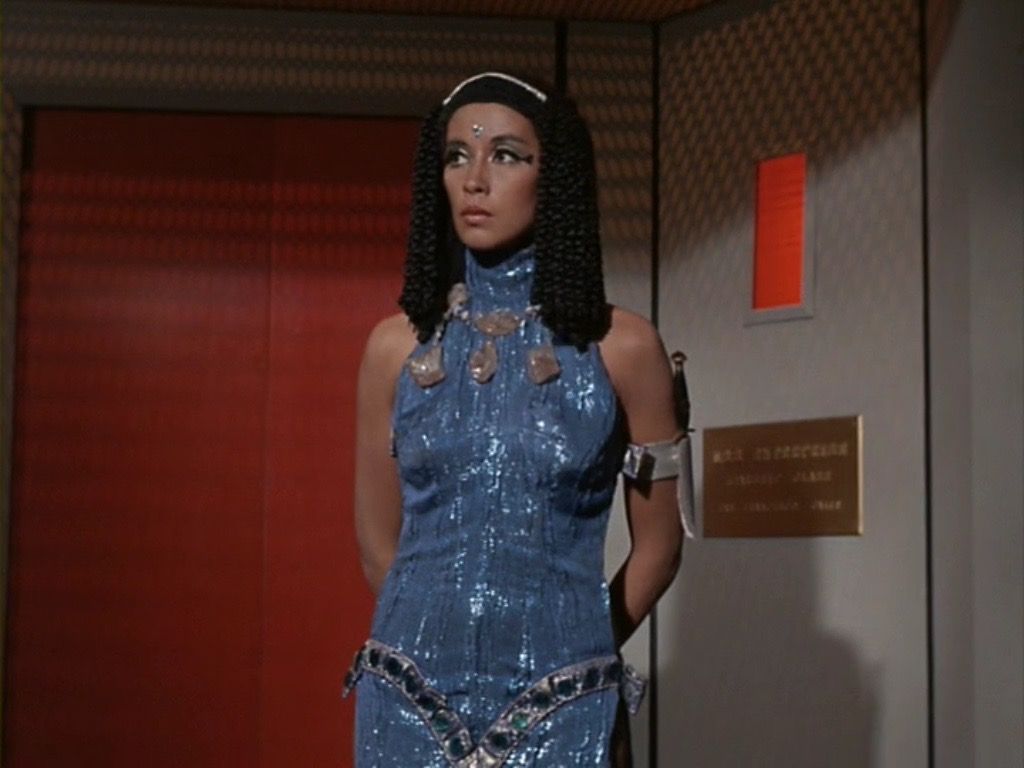 Just as the Klingons are closing in, Spock detects an unusual energy reading on the bridge and it is coming from Elaan! She's wearing a necklace of "common stones" which are none other than dilithium crystals. That explains why the Klingons are interested in this system. Thankfully, Spock and Scotty are able to make use of the cyrstals and the battle commences!

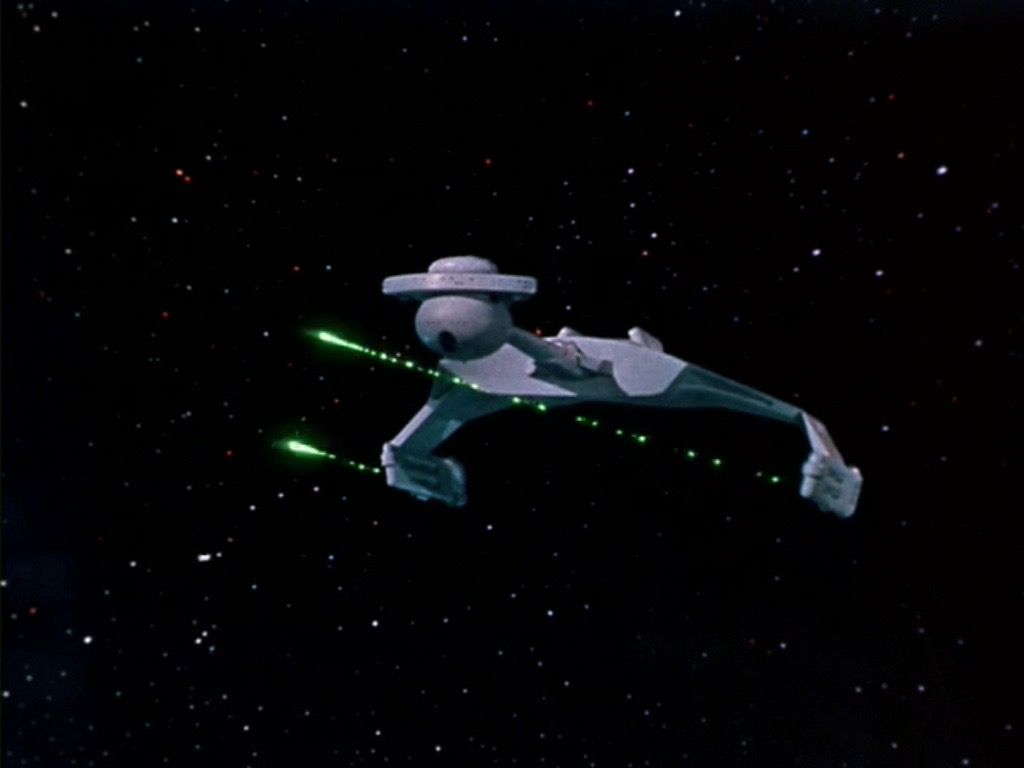 Kirk and the Enterprise damage the Klingon ship and Kirk surprises Elaan by letting it go without destroying it. Mercy, its what they do in the Federation.
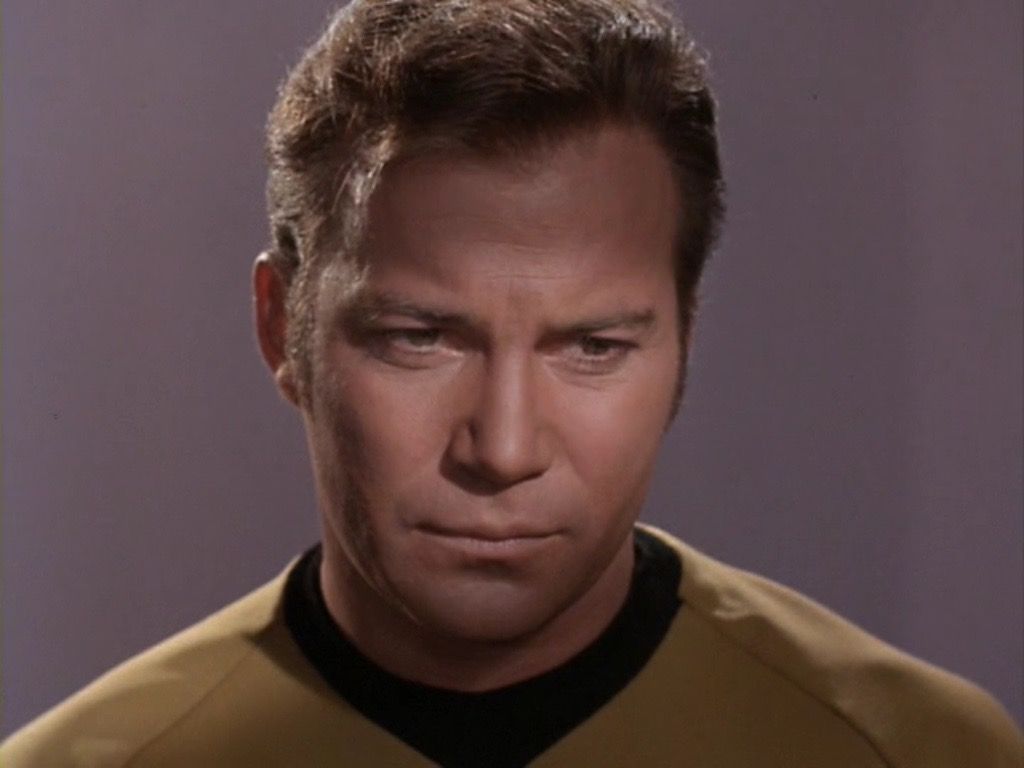
Yet the mission must be completed. The Enterprise proceeds to Troyius to deliver Elaan for her arranged marriage. But what of Kirk? He's in love with Elaan, right? In the end McCoy discovers a cure for the tears, but Spock informs him that the cure isn't needed, telling him "The antidote to a woman of Elas, Doctor, is a starship. The Enterprise infected the Captain long before the Dohlman did." That doesn't help Kirk in Requiem for Methuselah, does it? Oh well, it works here and that it good enough.
Elaan of Troyius has just enough of everything to be one of the better episodes for season three. One element that is just wonderful here was its musical score. Composer Fred Steiner delivered 31 minutes of mostly great action music that really, especially in combination with the new model of the Klingon Battle Cruiser, propels the episode forward. The level of excitement and drama here wouldn't be what it was without Steiner's great score. I'm very happy that to have this music in my collection, thanks to La-La Land Records complete release of all the music from classic Trek.
Elaan of Troyius gets a strong thumbs up from me.
Next up, The Paradise Syndrome.
Trek borrows from Shakespeare's The Taming of the Shrew in this season three episode. It has a few bumps, but otherwise is a good episode where we see a green-skinned alien that's not an exotic dancing girl, sabotage, green chicken, Kirk teaching manners and courtesy, dilithium crystals, and a space battle with (finally) a cool looking Klingon Battle Cruiser.
There's to be an arranged marriage that will bring peace to two neighboring planets and the Enterprise is to escort the Dohlman Elaan to the planet Troyius.
The task of instructing Elaan falls to Kirk, who must also keep a careful watch on the Klingon Battle Cruiser that is following them.
The Enterprise has had space battles with Klingons before and, interestingly enough, they were mostly not shown. For instance, in the excellent season one episode Errand of Mercy, which introduced the Klingons, we never see their ship even though there's an impending space battle with them. In season two's Friday's Child we finally see a Klingon ship of sorts.
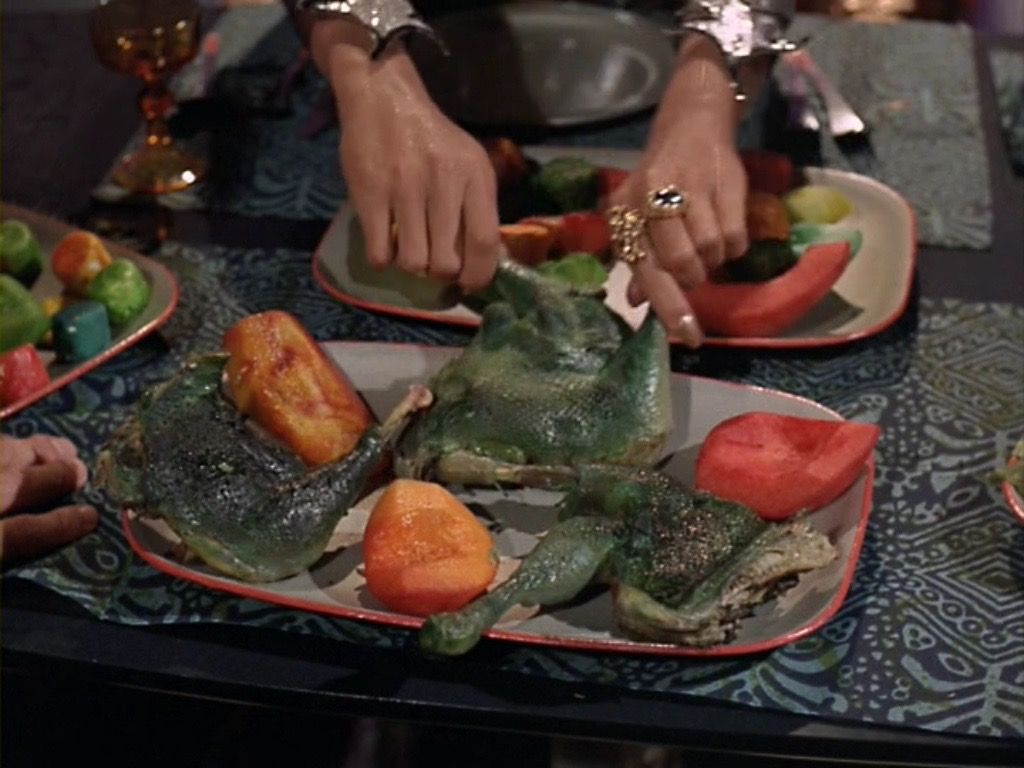
Mmmmmm. Green chicken, peaches and watermelon: It's what's for dinner.
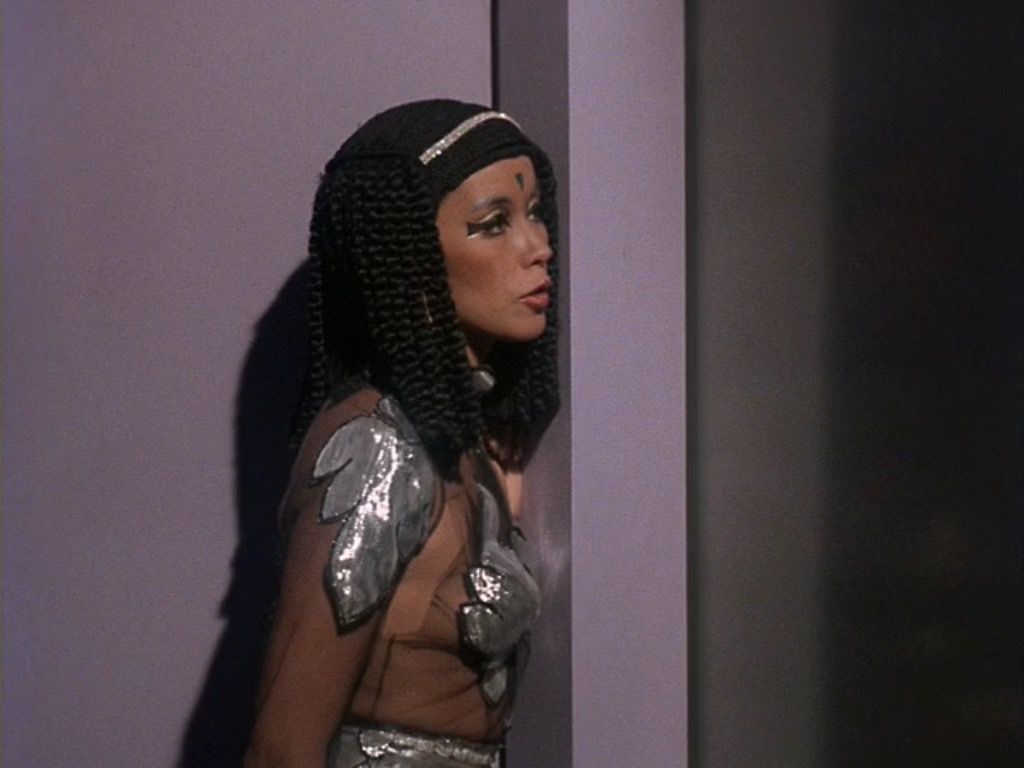
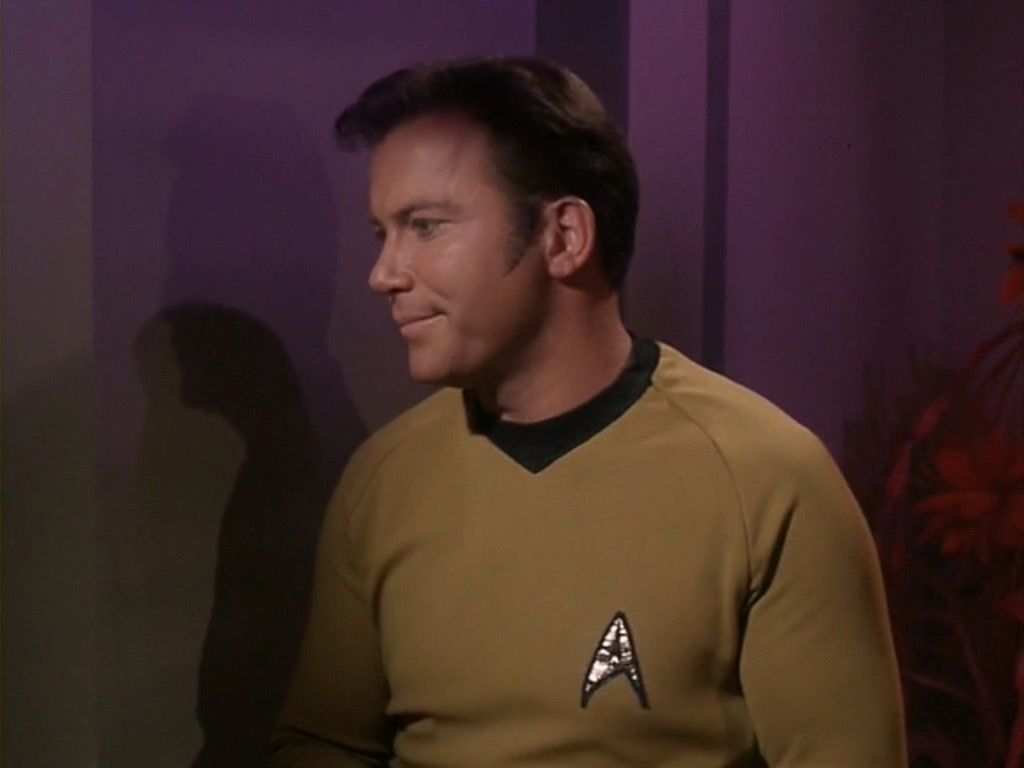
Kirk's instruction of Elaan doesn't go especially well, but at least he didn't get stabbed. Kirk threatens to spank her, calling her a spoiled brat. At one point she locks herself in next room and won't come out, saying, "If I have to stay here for ten light years, I will not be soiled by any contact with you." Ten light years?! Yes, Elaan indeed has a lot to learn. A light year is a unit of distance, not time, your Glory. Alas, some of my astronomy students can't seem to remember that either.
The anti-matter pods have been rigged to blow up the moment they go into warp drive and the entire dilithium crystal converter assembly is fused. That's bad. They're not going anywhere anytime soon, even with Scotty around to try to save the day.
Yet the mission must be completed. The Enterprise proceeds to Troyius to deliver Elaan for her arranged marriage. But what of Kirk? He's in love with Elaan, right? In the end McCoy discovers a cure for the tears, but Spock informs him that the cure isn't needed, telling him "The antidote to a woman of Elas, Doctor, is a starship. The Enterprise infected the Captain long before the Dohlman did." That doesn't help Kirk in Requiem for Methuselah, does it? Oh well, it works here and that it good enough.
Elaan of Troyius has just enough of everything to be one of the better episodes for season three. One element that is just wonderful here was its musical score. Composer Fred Steiner delivered 31 minutes of mostly great action music that really, especially in combination with the new model of the Klingon Battle Cruiser, propels the episode forward. The level of excitement and drama here wouldn't be what it was without Steiner's great score. I'm very happy that to have this music in my collection, thanks to La-La Land Records complete release of all the music from classic Trek.
Elaan of Troyius gets a strong thumbs up from me.
Next up, The Paradise Syndrome.
Saturday, June 25, 2016
City Lights from Space
Last night I gave a talk at Wavelength Brewing Company in Vista, California. They live-streamed the event through their Facebook page and you can watch it here:
Sunday, June 12, 2016
The Asteroids of Star Trek
I was recently re-watching Star Trek: The Motion Picture. There's a scene in the first half of the movie where the newly re-fitted Enterprise is having problems with its warp engines.

 When the crew tries to bring the ship to warp speed an instability in the warp engines instead creates a wormhole (and not the good kind like they had on DS9). While the ship is caught in the wormhole, they encounter and nearly collide with an asteroid.
This got me to thinking about:
a) how asteroids are portrayed in the Star Trek universe and
b) what asteroids are named for either Star Trek characters or those people who helped to create the series. It turns out that there are several of them.
The writers of Star Trek didn't always get their astronomy right. In classic Trek (which is mostly what I'll be talking about here) they encountered a few 'planetoids' (like the one in Metamorphosis and later Regula seen in Star Trek II: The Wrath of Khan). As near as I can figure, in Star Trek a 'planetoid' is something that astronomers today would call dwarf planet. It wasn't until the 3rd season's Paradise Syndrome (which I have yet to cover in my blog) that Star Trek gets good and close to an actual asteroid.

In the episode an asteroid (shown above) is on a collision course with a planet populated by Native Americans (!). The Enterprise is to deflect the asteroid before causes mayhem on the planet. Naturally, there are complications, but today I'm talking about asteroids.
The asteroid shown in the episode doesn't look anything like any real asteroid that has yet been seen up close with a spacecraft.

Of course the episode was produced in 1968 and the first spacecraft encounter with an asteroid wasn't until 1991, when the Galileo probe flew past asteroid 951 Gaspra (shown above). Asteroids come in several different types. Gaspra is a S-type asteroid (the most common), meaning that it is basically a big rock.
It is possible that the black, shiny asteroid shown in Paradise Syndrome represents a different type of asteroid though. At least some of the M-type asteroids are thought to be largely made of metals such as nickel and iron. What was shown in the episode could certainly have been one of these asteroids. No M-type asteroids have been visited by a spacecraft yet, so we don't have a close look at one. There are forward-looking groups who are considering how we might eventually mine M-type asteroids, but it will be a few years before we see one up close. When we finally do we'll know how well the 1960s effects team did.
As I mentioned earlier, there is an asteroid portrayed in the 1979 movie Star Trek: The Motion Picture. This of course was made more than a decade before the first spacecraft had an encounter with an asteroid. So how did they do?
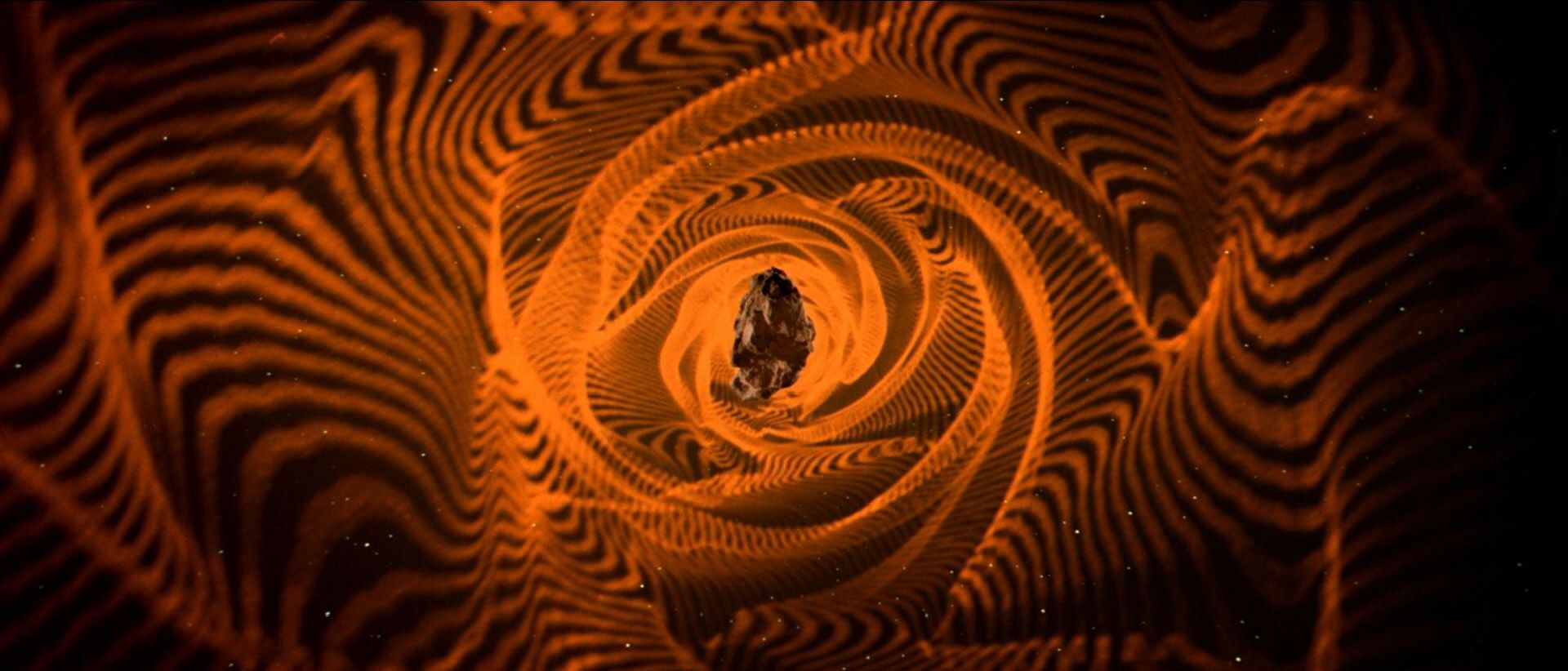 The movie gives two visualizations of the asteroid. In the view above, we see how it looked in the wormhole. There's more wormhole than asteroid here, so there isn't much detail that can be discerned. But the view shown on Chekov's targeting computer (below) gives a much better look.
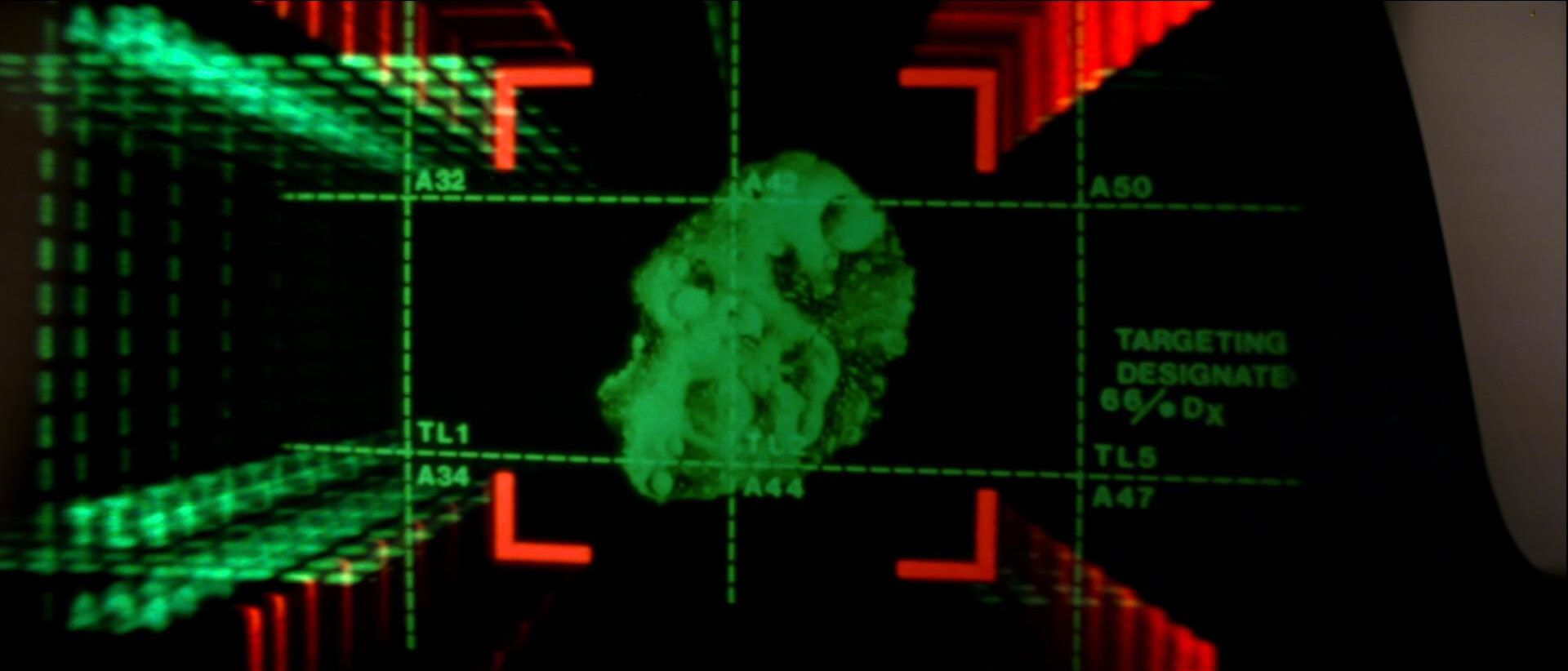 The effects team rendered a key feature that was later found on all the asteroids that have been seen by spacecraft - impact craters. These craters, like the ones on the Moon, form when smaller objects crash into larger ones. This collision process was very important in the early solar system, but I digress.

Compare the asteroid as shown in the movie (above) with this real-life asteroid (at right). That's the asteroid known as 243 Ida. Ida was photographed by the Galileo spacecraft in 1993. It too is an S-type asteroid.
If I stripped away the green and the targeting graphics from the movie asteroid, you'd see that two are very similar and that the Star Trek: TMP effects did a fine job of nailing down that small asteroids are both irregular in shape and are largely covered by impact craters of various sizes.
Don't think that the effects team was being especially prophetic though. The fact that small asteroids have an irregular shape and that they should be covered with craters was expected by astonomers. Still, they did a good job.
I don't recall any asteroid belts that were shown in the original series, but they certainly were in Star Trek: The Next Generation and in the other series that have followed (probably because everyone was better at special effects).
 Here's a shot from an episode of Star Trek: The Next Generation's season four episode Final Mission. Asteroids are everywhere. Effects teams know that audiences need something exciting to see, which is why
asteroid belts look so crazy dangerous on TV and in the movies. Naturally, we've not yet explored asteroid belts in other solar systems,
but in our own, the asteroids are very, very small compared to the vast
regions of space that separate them. So basically asteroid belts are nothing like what you see.
Here's a shot from an episode of Star Trek: The Next Generation's season four episode Final Mission. Asteroids are everywhere. Effects teams know that audiences need something exciting to see, which is why
asteroid belts look so crazy dangerous on TV and in the movies. Naturally, we've not yet explored asteroid belts in other solar systems,
but in our own, the asteroids are very, very small compared to the vast
regions of space that separate them. So basically asteroid belts are nothing like what you see.
Which brings me to our real asteroid belt and the worlds in it that have names associated with Star Trek.
 Both Leonard Nimoy and Mr. Spock have asteroids named for them. Well, sort of. It turns out that asteroid 2309 Mr. Spock was technically named for the cat of the astronomer who discovered the asteroid. And of course, the cat as named for Star Trek's Mr. Spock. 4864 Nimoy was named for the real Leonard Nimoy. The orbits of those two are shown above, looking down on the solar system, and below in a view from the side.
 As you can see 4864 Nimoy is only slightly tipped relative to the orbital planes of the major planets, but 2309 Mr. Spock is tipped nearly 11 degrees to their orbital plane.
Other Trek actors have been honored with asteroid names. They are:
7307 Takei was named for George Takei, who played Lt. Sulu.
68410 Nichols was named for Nichelle Nichols, who played Lt. Uhura.
So far, it looks like there is no asteroid named for William Shatner.
There is an asteroid named for Gene Roddenberry (4659 Roddenberry). 9777 Enterprise is named for my favorite starship.
 All of these are main belt asteroids, meaning that they orbit between the orbits of Mars and Jupiter.
Several writers from the original series also have asteroids named for them. They include:
10177 Ellison was named for Harlan Ellison (The City On The Edge Of Forever).
143622 RobertBloch was named for Robert Bloch (What Are Little Girls Made Of?, Catspaw, Wolf in the Fold).
186835 NormanSpinrad was named for Norman Spinrad (The Doomsday Machine).
In all cases these authors had the asteroids named for them because of their larger body of work and not because of their association with Star Trek, but because they were contributors to the show, I included them here. (For other science fiction authors that have had asteroids named for them see my post The Asteroids of Science Fiction from earlier this year.)
 Putting it all together, we have the plot above, but what about later incarnations of Star Trek? I've searched on the more famous actors and writers from the movies and TV shows and haven't turned up anyone else. I'm not saying that my list necessarily captures all of the people and characters from Star Trek that have asteroids named for them, but these are all the ones that I know about. There are some red herrings out there too. For instance, 178008 Picard was named for a French Engineer, not the fictional captain of the Enterprise.
If anyone knows of some that I've missed, I would love to hear about them in the comments.
I assembled the orbit diagram images from the plots available at the JPL Small-Body Database Browser and I used various sources (including the Minor Planet Center's Minor Planet Names: Alphabetical List) to compile this list.
This got me to thinking about:
a) how asteroids are portrayed in the Star Trek universe and
b) what asteroids are named for either Star Trek characters or those people who helped to create the series. It turns out that there are several of them.
The writers of Star Trek didn't always get their astronomy right. In classic Trek (which is mostly what I'll be talking about here) they encountered a few 'planetoids' (like the one in Metamorphosis and later Regula seen in Star Trek II: The Wrath of Khan). As near as I can figure, in Star Trek a 'planetoid' is something that astronomers today would call dwarf planet. It wasn't until the 3rd season's Paradise Syndrome (which I have yet to cover in my blog) that Star Trek gets good and close to an actual asteroid.
In the episode an asteroid (shown above) is on a collision course with a planet populated by Native Americans (!). The Enterprise is to deflect the asteroid before causes mayhem on the planet. Naturally, there are complications, but today I'm talking about asteroids.
The asteroid shown in the episode doesn't look anything like any real asteroid that has yet been seen up close with a spacecraft.
Of course the episode was produced in 1968 and the first spacecraft encounter with an asteroid wasn't until 1991, when the Galileo probe flew past asteroid 951 Gaspra (shown above). Asteroids come in several different types. Gaspra is a S-type asteroid (the most common), meaning that it is basically a big rock.
It is possible that the black, shiny asteroid shown in Paradise Syndrome represents a different type of asteroid though. At least some of the M-type asteroids are thought to be largely made of metals such as nickel and iron. What was shown in the episode could certainly have been one of these asteroids. No M-type asteroids have been visited by a spacecraft yet, so we don't have a close look at one. There are forward-looking groups who are considering how we might eventually mine M-type asteroids, but it will be a few years before we see one up close. When we finally do we'll know how well the 1960s effects team did.
As I mentioned earlier, there is an asteroid portrayed in the 1979 movie Star Trek: The Motion Picture. This of course was made more than a decade before the first spacecraft had an encounter with an asteroid. So how did they do?
Compare the asteroid as shown in the movie (above) with this real-life asteroid (at right). That's the asteroid known as 243 Ida. Ida was photographed by the Galileo spacecraft in 1993. It too is an S-type asteroid.
If I stripped away the green and the targeting graphics from the movie asteroid, you'd see that two are very similar and that the Star Trek: TMP effects did a fine job of nailing down that small asteroids are both irregular in shape and are largely covered by impact craters of various sizes.
Don't think that the effects team was being especially prophetic though. The fact that small asteroids have an irregular shape and that they should be covered with craters was expected by astonomers. Still, they did a good job.
I don't recall any asteroid belts that were shown in the original series, but they certainly were in Star Trek: The Next Generation and in the other series that have followed (probably because everyone was better at special effects).
Which brings me to our real asteroid belt and the worlds in it that have names associated with Star Trek.
Other Trek actors have been honored with asteroid names. They are:
7307 Takei was named for George Takei, who played Lt. Sulu.
68410 Nichols was named for Nichelle Nichols, who played Lt. Uhura.
So far, it looks like there is no asteroid named for William Shatner.
There is an asteroid named for Gene Roddenberry (4659 Roddenberry). 9777 Enterprise is named for my favorite starship.
Several writers from the original series also have asteroids named for them. They include:
10177 Ellison was named for Harlan Ellison (The City On The Edge Of Forever).
143622 RobertBloch was named for Robert Bloch (What Are Little Girls Made Of?, Catspaw, Wolf in the Fold).
186835 NormanSpinrad was named for Norman Spinrad (The Doomsday Machine).
In all cases these authors had the asteroids named for them because of their larger body of work and not because of their association with Star Trek, but because they were contributors to the show, I included them here. (For other science fiction authors that have had asteroids named for them see my post The Asteroids of Science Fiction from earlier this year.)
If anyone knows of some that I've missed, I would love to hear about them in the comments.
I assembled the orbit diagram images from the plots available at the JPL Small-Body Database Browser and I used various sources (including the Minor Planet Center's Minor Planet Names: Alphabetical List) to compile this list.
Jupiter, Pine Tree & Moon
Here's how Jupiter (at top) and the Moon looked Friday night from my back yard as they sort of framed a pine tree:
 The Moon was on the other side of Jupiter last night, but clouds blocked the view.
Friday, May 27, 2016
Pluto At Its Best
Last summer the New Horizons mission made its historic flyby of Pluto. Data from the spacecraft have been slowly beamed back to Earth and its still not all here yet. But what is here is an amazing array of images and other information that have revealed this world to be nothing short of spectacular.
Today NASA unveiled their highest resolution imagery of Pluto showing an amazing and diverse range of landscapes.
Have a look at their video which cuts across our solar system's most famous dwarf planet:
Here's a just a piece of the cut across Pluto, its what they labeled at the Pitted, hummocky Nitrogen ice plains:
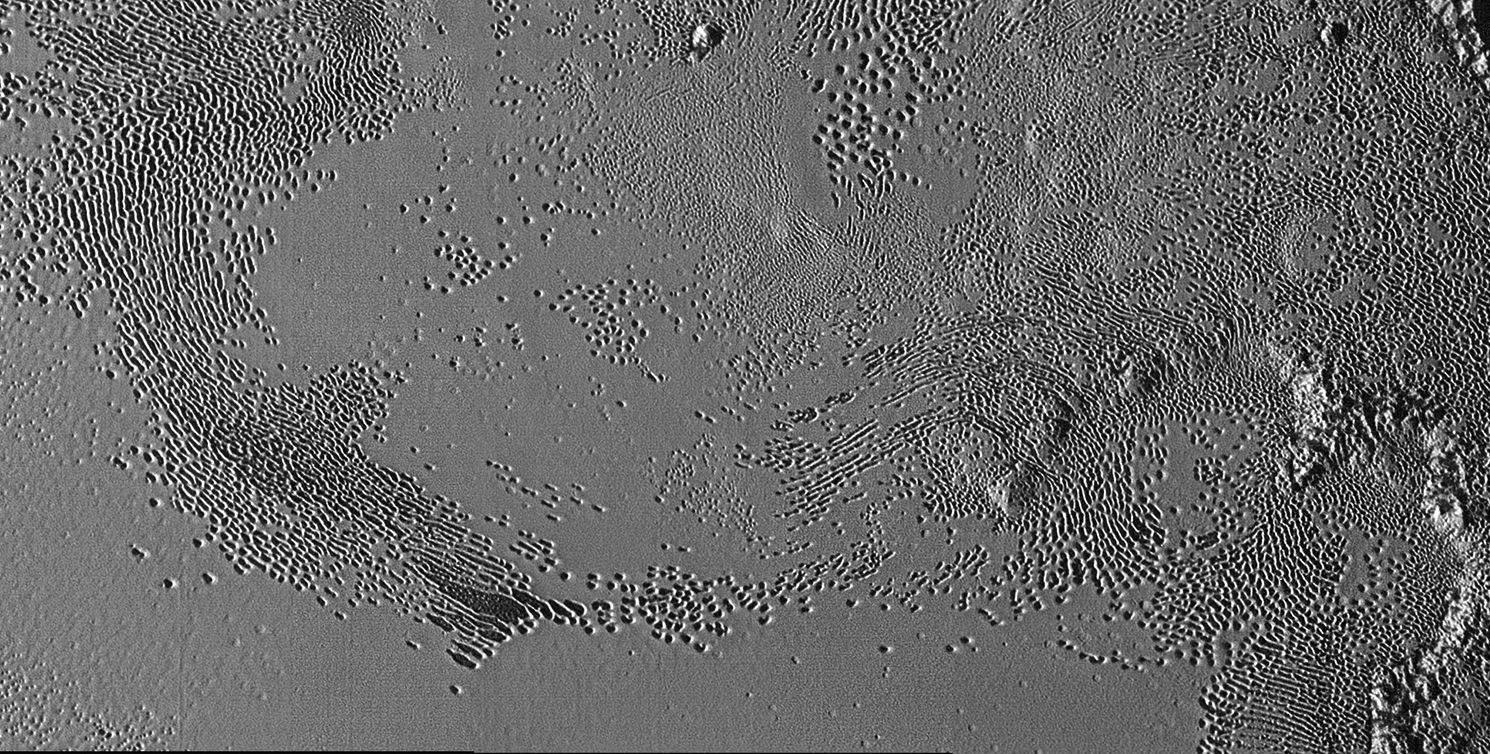
It's like nothing seen on any other surface in the solar system. (Note: I rotated the image.) The video goes too fast for my tastes, so it is worth the time to look at the full cut across Pluto. You can see the full image here. It's amazing.
Today NASA unveiled their highest resolution imagery of Pluto showing an amazing and diverse range of landscapes.
Have a look at their video which cuts across our solar system's most famous dwarf planet:
Here's a just a piece of the cut across Pluto, its what they labeled at the Pitted, hummocky Nitrogen ice plains:
It's like nothing seen on any other surface in the solar system. (Note: I rotated the image.) The video goes too fast for my tastes, so it is worth the time to look at the full cut across Pluto. You can see the full image here. It's amazing.

Subscribe to:
Posts (Atom)