Showing posts with label eclipse. Show all posts

Saturday, July 13, 2024

April 8th's 'Smart' Total Solar Eclipse

This post comes about three months later than it should but, as they say, better late than never. I had an amazing trip to Hamilton, Texas to witness the total solar eclipse. I did my best to both capture the eclipse and to travel light. The photo is me with my Unistellar Odyssey Pro telescope and a DSLR camera at left.

Image of a man standing outside under a blue sky dotted with clouds. With him is a small telescope on a tripod and a DSLR camera on a tripod. 
 
The Odyssey Pro is Unistellar's newest 'smart' telescope. It's a small lightweight telescope, with a primary mirror just  3 1/3", but it takes super images. Last fall Unistellar improved their software to make solar observing much better but this was going to be the first time anyone had tried using a 'smart' telescope for observing a total solar eclipse. So how did it do? 

All-in-all, it did pretty well. 
image of a partially eclipsed Sun, with sunspots.

Thankfully, during the first half of the eclipse the weather was mostly cloudless. The telescope had no trouble finding, focusing (it has auto focus) and tracking on the Sun. But as the eclipse progressed and the Sun began to take on more of a crescent appearance the tracking wasn't very good and I had to manually correct the tracking to keep the Sun in view. 

Image the Sun being mostly eclipsed by the Moon so that it looks like a yellow crescent.

My biggest concern was totality. How would the telescope and its software handle seeing the Sun when the Sun didn't look like it normally does? Would the exposures be okay? Color was a big concern too. As I have mentioned before the color that the Unistellar telescopes and app give when imaging the Sun is artificial. The telescope's sensor sees farther into the infrared than our eyes do and that adds extra red to the image making the uncorrected image look sort of lavender in color. The app changes the color pallet to give the Sun a more pleasing yellow color. How would it look during totality?

Yellow. Very yellow.

Image of a totally eclipsed Sun showing the inner corona and solar prominences. The view has a yellow cast to it.

Thankfully, this yellow color cast was easy to correct in Photoshop and I was able to get images like the two below. 

A color-corrected view of the totally eclipsed Sun showing a white inner corona and several red prominences.

A full-disc image of the totally eclipsed Sun showing rer prominences, especially at bottom and right.

Visually, the eclipse was amazing. Ethereal, even. The large red prominence seen at the bottom of the image above was very easy to see with unaided eyes and the corona was fantastic. 

There was no way for the Odyssey telescope to capture much of the Sun's corona as its field-of-view is far too small. That's why I brought my DSLR. 

Image of a totally eclipsed Sun showing the solar corona.

I have now seen two total solar eclipses and I don't really feel that any image can adequately capture the beauty of the corona, but I am happy with this image.

After totality, I was so euphoric that it was difficult to remember to keep taking images of the Sun to complete the time-lapse sequence I was shooting, but then the clouds rolled in and it no longer mattered. Still, I was happy to get the entire first half of the eclipse plus totality and that's all that mattered. 

I would rate the experience as a total success. Using a 'smart' telescope allowed me to travel with far less gear than most people who photographed the eclipse and I am happy with my results. The next total tolar eclipse isn't until 2026 and I am sure that by then the technology will be even better.

Saturday, February 10, 2024

Disco Sunspots!

 Back in October I posted about using a disco ball to observe a solar eclipse. It turns out that you can also use a disco ball to safely observe sunspots too. Here's how I did so earlier today.

Really all you need is a disco ball, a place to secure it in the sunlight and a shadowed area to project the image of the Sun. Here I have my disco ball sitting on a tripod for a Unistellar telescope. I aligned the disco ball so that it reflected an image of the Sun into my house and nearly 70 feet down a dark hallway on to a sheet of white paper. Here's the result:

It's not a great image, but you should notice a definite gray smudge-like area on the projected image of the Sun. That's a big sunspot that is visible on the Sun today. I also imaged the Sun with a Unistellar Odyssey Pro telescope and solar filter. I got this image which I rotated to match the orientation of the projected image above.

As you can see, that's the same sunspot group in both images. This is another confirmation that a disco ball is an excellent tool for safely observing the Sun.


Friday, October 20, 2023

Solar Eclipse!

On October 14, 2023 along a line from Oregon through Texas there was an annular eclipse. The rest of the continental U.S. got to see a nice partial solar eclipse. 

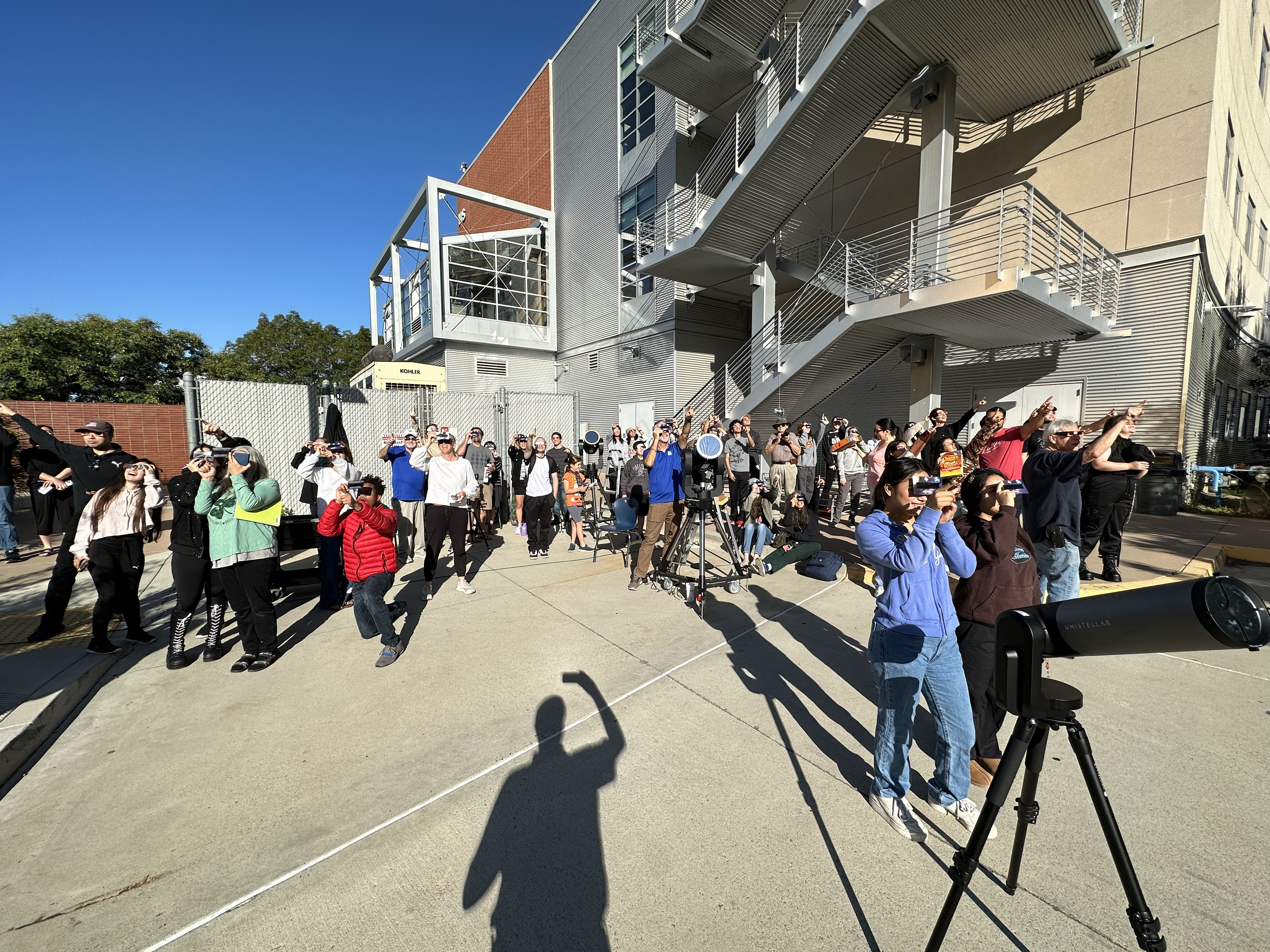
I observed the partial eclipse along with about 50 others at Palomar College where I teach astronomy.

The eclipse crowd at Palomar College (that's my shadow in front)

As you can see from the photo above we had perfect weather and the eclipse did not disappoint. 

Here's a photo taken when the Moon had maximum coverage over the Sun from our vantage point:

Image captured using a Unistellar eQuinox 2 telescope

Thanks to the dedication of Palomar student Tomas Chester we were able to capture a time-lapse video of the entire event. Here's what it looked like: 

About two weeks before the eclipse I learned of a very cool outreach tool that helps to make eclipse viewing safe and fun - a disco ball. (See the paper: Why every observatory needs a disco ball). I immediately purchased a disco ball and set it up on the day of the event.

Above left is a standard disco ball. Each of the mirrors acts like a pinhole camera and reflects an image of the sun. The image on the right shows many images of the partially eclipsed Sun projected by the disco ball during the eclipse. It was very popular with our crowd and gave an almost magical view of the event. I highly recommend using a disco ball for every eclipse outreach event.

This eclipse was sort of a preview for an even better one - a total solar eclipse that will take place on April 8, 2024. Weather permitting it will be visible along a path from Mexico, up through central Texas and up toward the northeast U.S. and into Canada. I plan on observing that one and I will bring my disco ball with me.

Saturday, August 12, 2017

27 1/2 Songs For Your Solar Eclipse Playlist

The August 21st solar eclipse will soon be here and I am preparing for it in a variety of ways. My camera and eye protection (including solar binoculars) are all ready and I'm just finishing up on one final thing, my somewhat eccentric music playlist to get ready for the eclipse.

Since it has been far too long since I've made a blog post, I thought I'd post it here, along with a few comments for each song.

1) We start off with Heaven and Hell by Vangelis. This was the theme music for Carl Sagan's classic TV series Cosmos. It always makes me think of voyaging through space and time.


2) Solar eclipses are all about an alignment of the Sun and Moon and clear weather is essential to see and enjoy the experience. On the day of the eclipse I'll be getting an early start and Bruce Springsteen's Waitin' on a Sunny Day is a good title for what I'm hoping to have.


3) I follow that up with Here Comes the Sun by The Beatles:


4) While the eclipse is a pretty unique event, I'm keeping the Sun and clear skies theme going, so I follow it up with Another Day of Sun from the La La Land soundtrack:


5) That brings me back to The Beatles and Good Day Sunshine, as the song captures exactly the kind of emotions I hope to have during the eclipse:


6) One more from The Beatles, I'll Follow the Sun:


7) Here's the first of two Carly Simon songs (I'll bet you can guess the other one), Touched by the Sun:


8) Sticking with some more pre-eclipse references to the Sun, next up is Elton John's Don't Let the Sun Go Down on Me:


9) Eclipses are not just about the Sun. The Moon ultimately plays a central role in blocking the Sun's rays, an event the has for centuries been steeped in fear and superstition. In spite of its reference to "nasty weather," Bad Moon Rising by Credence Clearwater Revival makes my list:


10) Jonothon Coulton's Always the Moon is a beautiful creation myth song about love and the Moon:


11) Keeping the 'Moon' theme going, the next piece is an instrumental one, William Ackerman's Conferring With the Moon:


12) Solar eclipses can only occur when the Moon is in its "new" phase. This year's solar eclipse happens on a Monday, so Duran Duran's New Moon on Monday is a natural choice:


13) Another 'new moon' song, New Blue Moon by the Traveling Wilburys:


14) Moving toward the actual eclipse,and the music to celebrate it, we come to the grandmother of eclipse songs, Carly Simon's You're So Vain:


15) It gets dark during a total solar eclipse and in the past many people wondered if the Sun really was going away, so Neil Diamond's The Sun Ain't Gonna Shine Anymore is an appropriate choice:


16) Bill Withers wonderful Ain't No Sunshine keeps that idea going:


17) I follow that up with Invisible Sun by The Police:


18) Invisible Sun is a dark song, but total solar eclipses should be celebrated, so I begin the celebration with Moondance by Van Morrison:


19) and follow that up with another song by Bruce Springsteen, Dancing in the Dark:


20) There wont be any light from the Moon during the eclipse, but this still works for me, Dancing in the Moonlight by King Harvest:


21) That's followed up by a song that's actually about stargazing, Tom Petty's The Dark of the Sun:


22) I'm not sure if this is a great fit or not, but next up is Black Hole Sun by Soundgarden:


23) Love it or hate it, Bonnie Tyler's Total Eclipse of the Heart has to be played at least one for the solar eclipse, doesn't it?


23 1/2) Actually, I prefer this version of Total Eclipse of the Heart, as it is actually about eclipses (and since it is the same song, it's the 1/2 song in the title of this post):


24) Another almost required choice, Pink Floyd's Eclipse from their Dark Side of the Moon album:


25) Okay, this is what used to be called a "deep cut." The Moon's A Window to Heaven from the soundtrack to Star Trek V. Yes, really.


26) If all goes well with your eclipse viewing at the end of the event you'll be overjoyed. I am hoping that Katrina & The Waves' Walking on Sunshine accurately describes how I'll be feeling at the end of the solar eclipse:


27) After the solar eclipse is over the Moon will leave it's new phase and soon return as a thin sliver in the evening skies, so I'll end this with KT Tunstall's Crescent Moon:


There are lots of other songs about the Sun and Moon that I could have included and maybe I missed some obvious choices, but

Monday, September 28, 2015

Lunar Eclipse 2.0

We had a wonderful sky show last night. Was it a Super Moon? A Blood Moon? Nah, it was just your basic (but quite beautiful) total lunar eclipse. Our second of 2015. I enjoyed the event with a bunch of college astronomy students and members of the general public at an observing session last night.
Way out west here in California (where I now reside) the eclipse had already begun at moonrise. It was a nice sight seeing the Moon rise in the east already partially eclipsed, but the real show began as darkness fell and the Moon advanced further into Earth's shadow.
Here it is, nearly total, through a thin layer of cirrus clouds.
Ah, totality.

Here are some people in silhouette seen against the city lights of San Marcos and Vista. Their glow illuminates the cirrus clouds. The Big Dipper can be seen through the clouds. With all this this light pollution it is hard to imagine that the Milky Way was visible from our observing site, but it was.

Saturday, April 4, 2015

Lunar Eclipse

This morning was the third in a series of recent lunar eclipses visible from North America. The first was April 15, 2014 and the second October 8, 2014. I missed the first two completely. I was on travel for the first attending a sea turtle symposium in New Orleans where it was rainy and cloudy. I was home for the second one, but it was uncharacteristically cloudy in Tucson, so no eclipse.
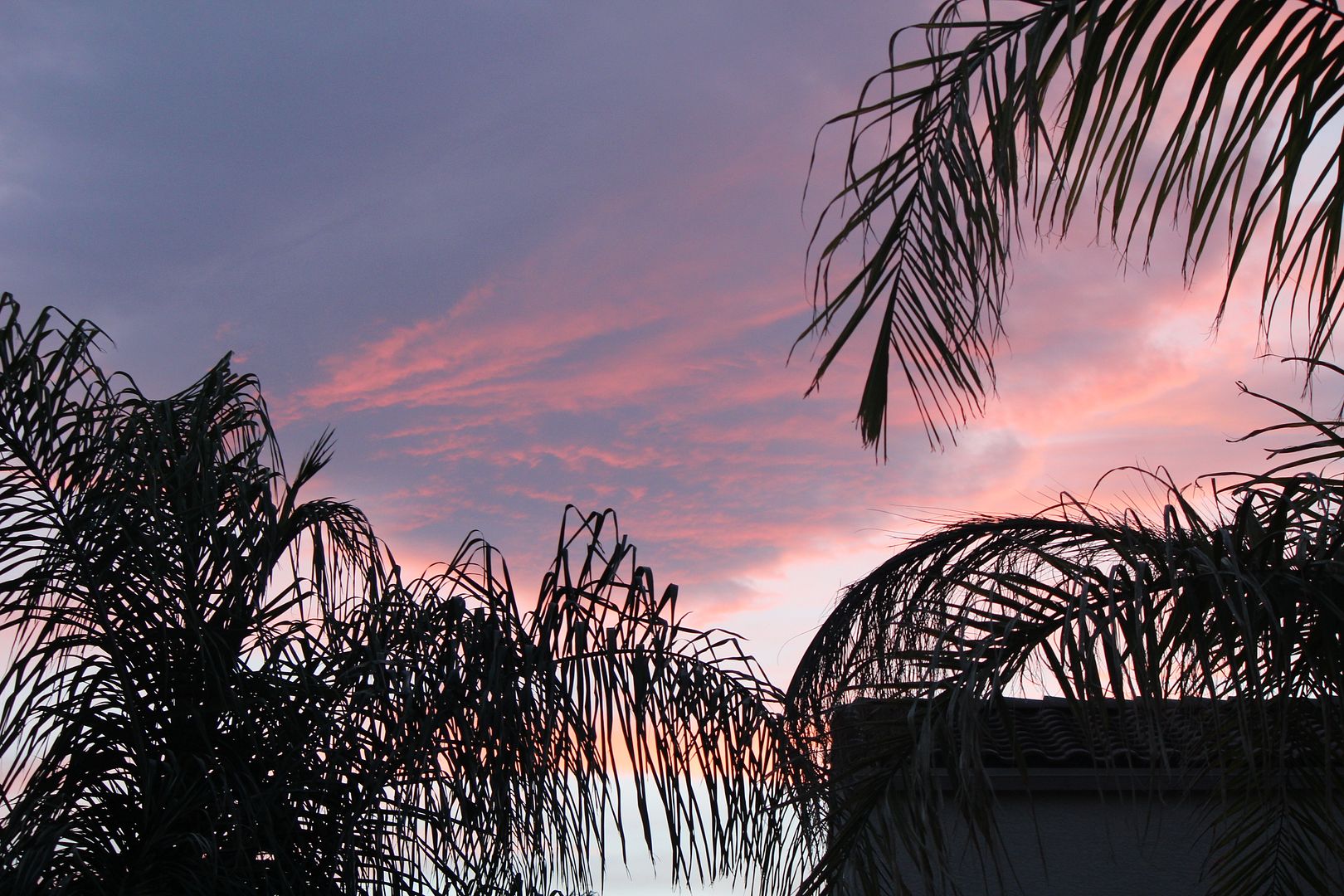
Yesterday afternoon and evening I was pretty worried about this one as the skies were cloudy. It made for a nice sunset, but would they blot out the eclipse? Thankfully, no.
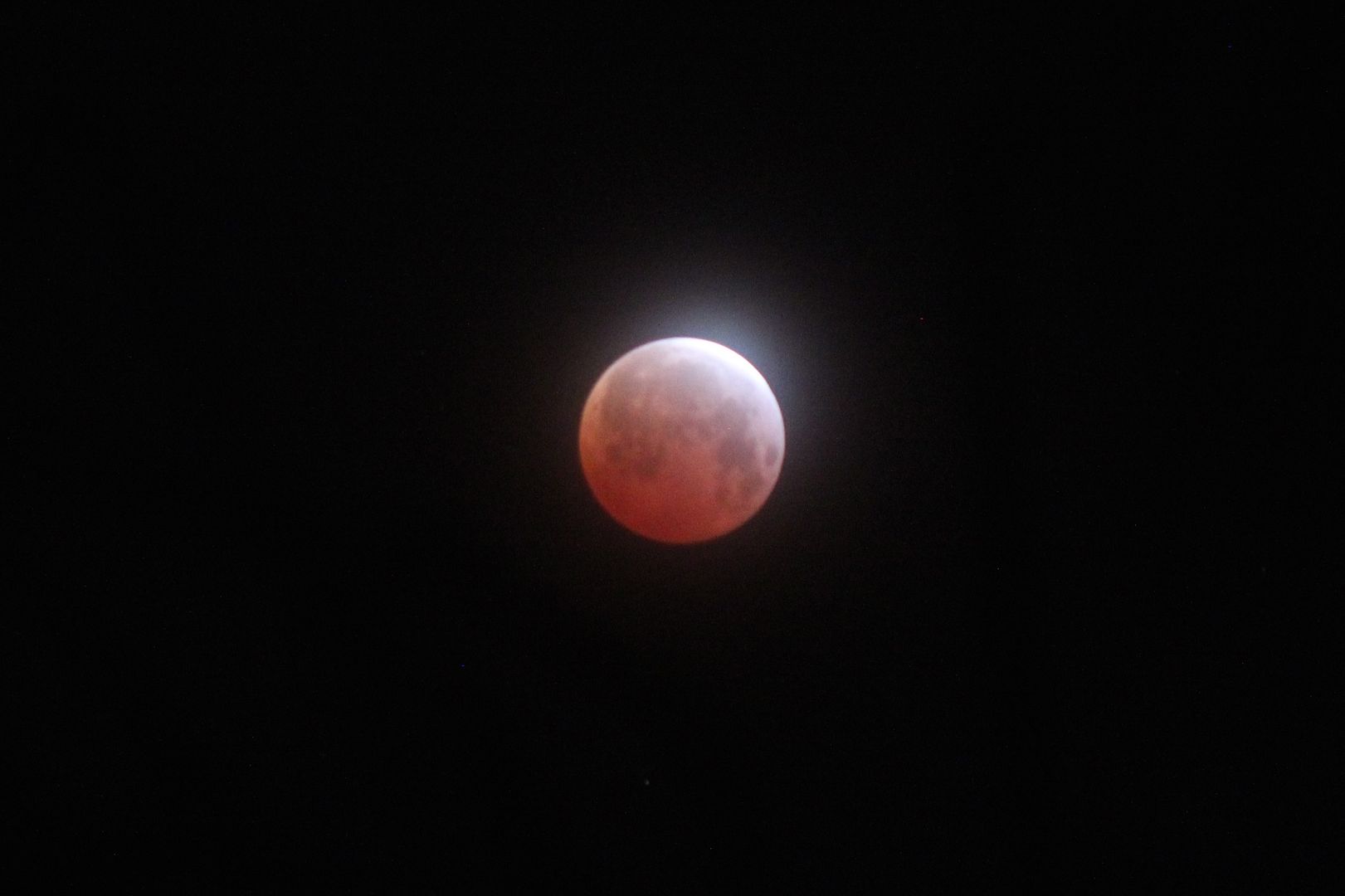
Canon T31, 250mm lens (cropped), 1.6 sec., f/4 ISO 3200
There were clouds, but not enough to eclipse the eclipse.

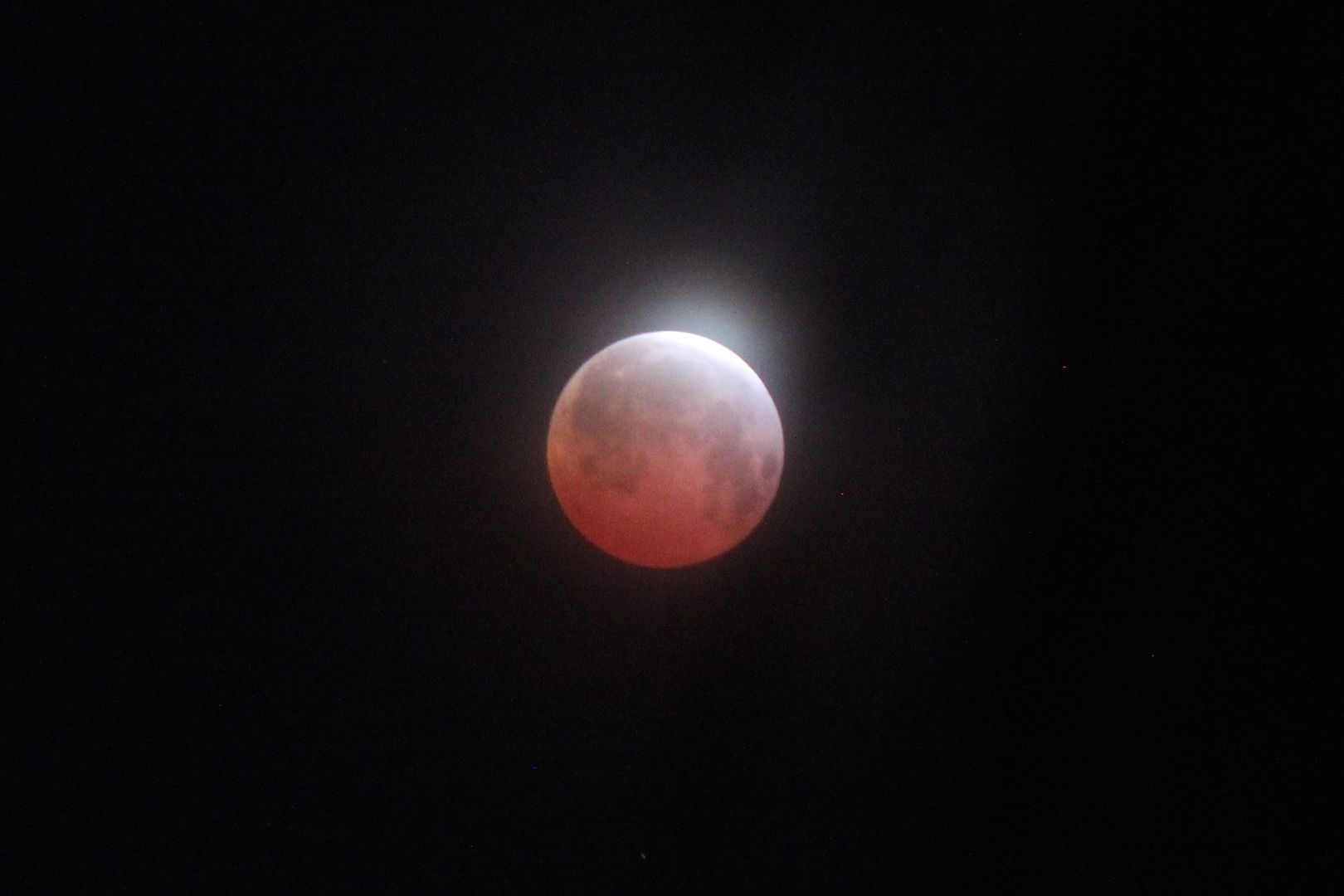
During a total lunar eclipse the moon moves into Earth's shadow. This particular eclipse was just barely total and it didn't look completely total, with there being a bright area visible the whole time.
Canon T31, 250mm lens (cropped), 2 sec., f/4 ISO 3200
Still, it was a nice show. If you missed it, there's one more total lunar eclipse in this series. It will be on September 27, 2015.

Sunday, March 29, 2015

Batman Astronomy

I've been a fan of the 1960s Batman TV show since it first appeared when I was a wee, wee lad. I can't remember much about watching it back then other than the tremendous amount of excitement that I felt for the show.
Except for seeing the 1966 Batman movie, I've pretty much avoided the show as an adult, but now that the whole series is out on disc I'm watching it again.
With no superpowers, science and engineering were certainly important to Batman. Yes, the science and inventions were campy, but they were central to the story lines and Batman's ability to solve crimes. Even though science and engineering important to Gotham City's supervillains too, it was portrayed in a very positive way. I wonder how much of an influence the show had on me as a child in making science so important to me. Certainly, there were other influences too -- the space program, my supportive parents, Star Trek.
In my re-watch I was pleasantly surprised to find some astronomy in the show. Season One's Zelda the Great had Dick Grason and Bruce Wayne observing Saturn, giving us this exchange:
Dick: "Wow, the rings of Saturn. This is sure some fun, Bruce."

Bruce: "Astronomy is more than mere fun, Dick. . . It helps give us a sense of proportion. Reminds us how little we are really. People tend to forget that sometimes."
Indeed. Nicely said, Bruce.
Moments later they see the Batsignal shining up on the clouds, which should make the audience wonder how Bruce and Dick were able to see Saturn at all, but I digress.
In Season Two's Hot Off The Griddle Dick and Bruce are again at the telescope, this time to observe the Sun in preparation for a total solar eclipse that will occur the next day.
It is an interesting array of telescopes. At right is a tube for what looks like an unfiltered refractor. In the middle is another refractor telescope -- this one clearly has some something that looks like a solar filter on it. Take a look at the one at left, the telescope that Dick is looking through. That's a Newtonian reflecting telescope. Alas, it is currently pointed at Dick's left hand. Yeah, it is pointed the wrong way. Oh, well. They can't get them all right.

Interestingly enough, the total solar eclipse was a major plot point for this episode. At its conclusion Catwoman has captured Batman and Robin and put them in this, the most awesome device to kill the Dynamic Duo ever:
As the episode ends, Batman and Robin are about to be cooked (Catwoman even had them coated in butter!) by sunlight concentrated by two giant magnifying glasses. She was apparently unaware of the total solar eclipse, which reached totality just after she left. During that temporary blockage of sunlight, Batman and Robin were able to use their feet to carefully re-position the magnifying glasses so that when the sunlight returned it would burn through one of straps holding down their wrists.

Well done, Caped Crusaders! It's fun stuff.

So far, I'm only halfway through watching the series and can't wait to see what other fun it brings.

Thursday, October 23, 2014

Partial Solar Eclipse!

Unlike the lunar eclipse of two weeks ago, we had perfect weather for today's partial solar eclipse. I managed to take a few photos using my DSLR with its 250mm lens and a handheld solar filter. The shots didn't turn out too bad. The view was greatly improved by the presence of the gigantic sunspot that is on the Earth-facing side of the Sun right now.

Saturday, September 27, 2014

Take A Look Out There, Planets Everywhere

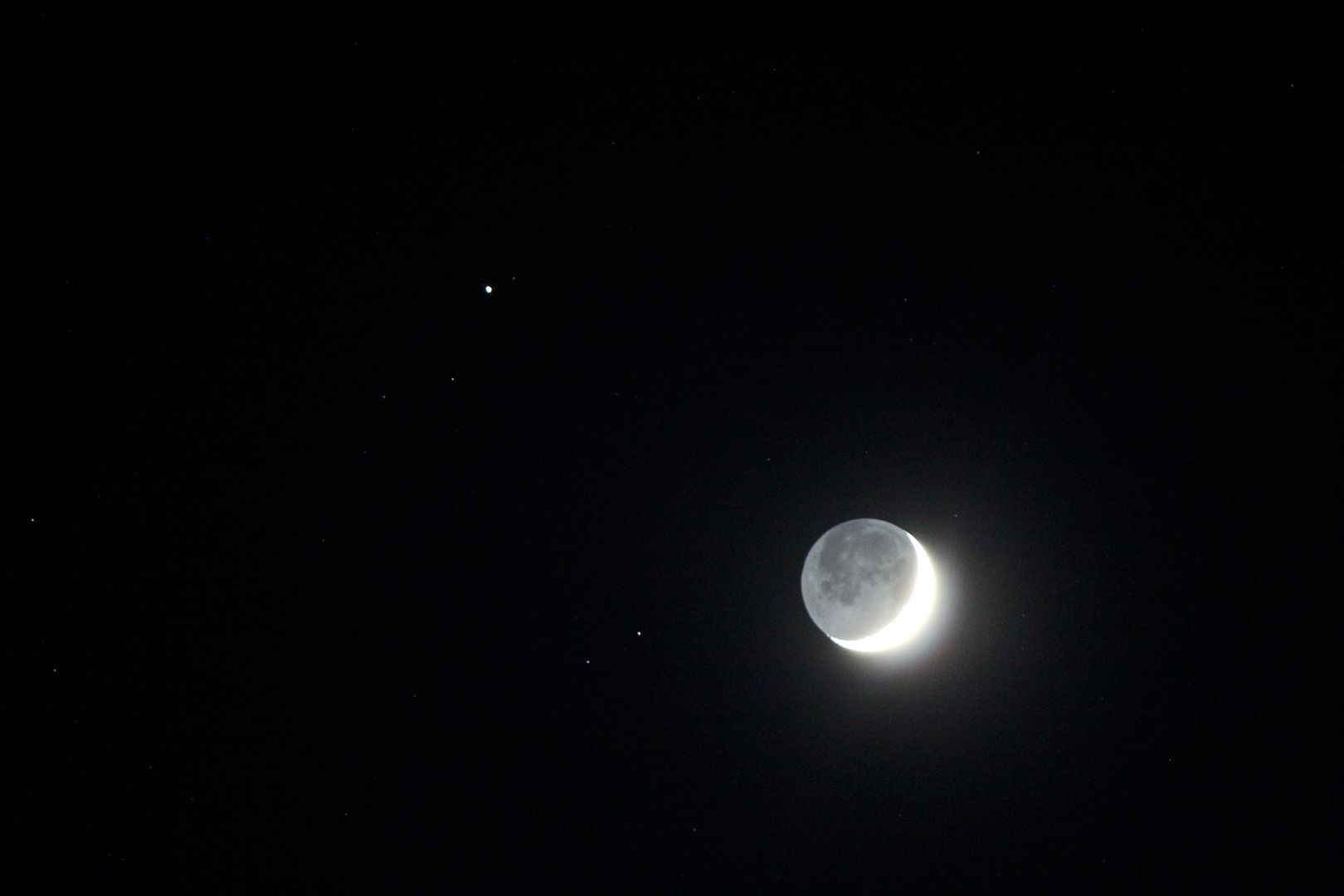
The Moon has returned to the evening sky. Tonight it is close to the planet Saturn. Here's how they looked to my camera:
Canon 3Ti 1 second, 250mm ISO 3200 f/5.6
That's Saturn to the upper left. The fainter Nu Librae is just left of the Moon. The exposure here was long enough to bring out the earthshine - where the reflected light of the daytime Earth illuminates the portion of the moon where the sun has not yet risen.

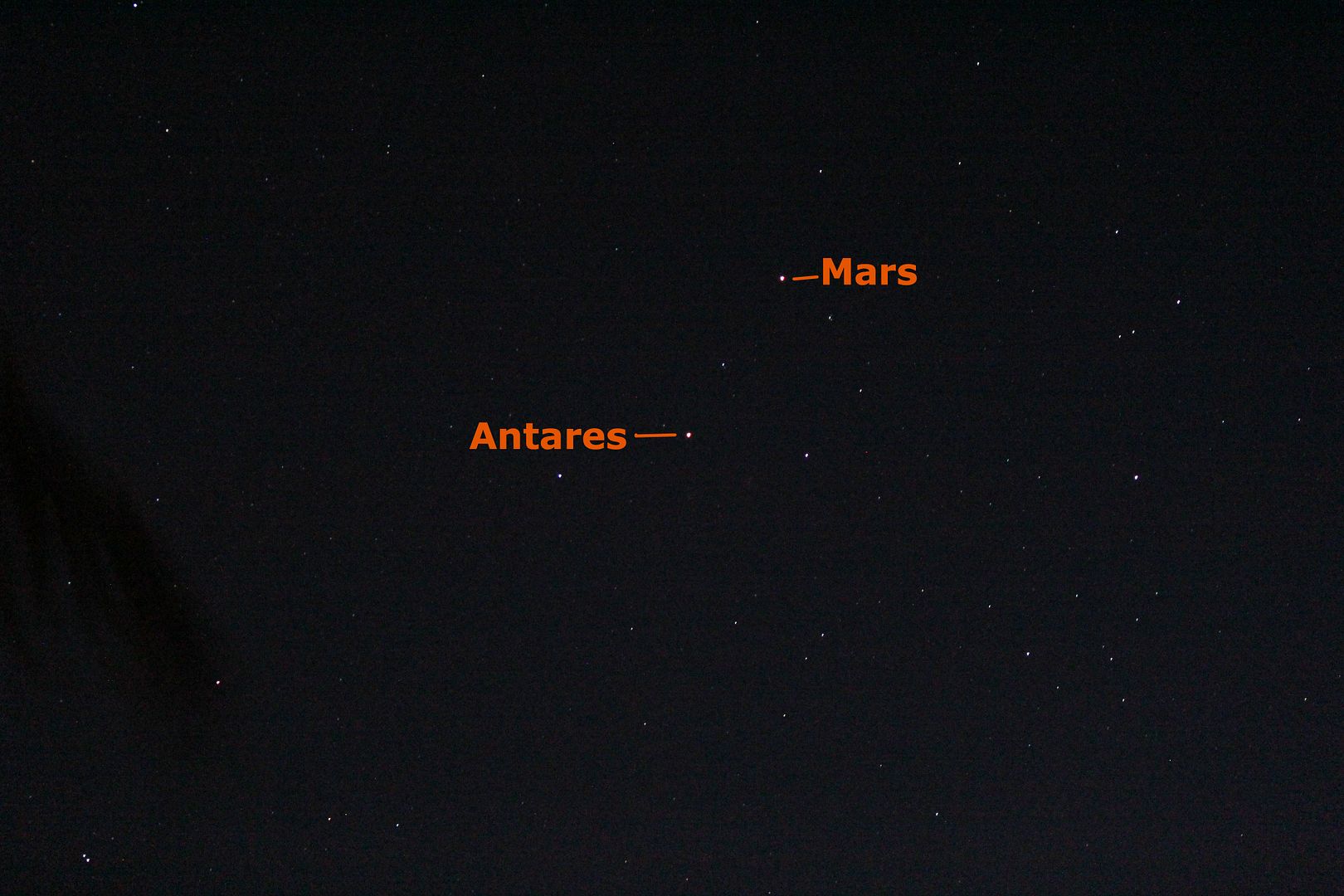
By tomorrow night the moon will be on the other side of Saturn and heading towards the red planet Mars. Mars is currently is close in the sky to the red supergiant star Antares.
Mars and Antares are of similar brightness and color, so much so that the name Antares means 'rival of Mars'. In the sky Mars is now moving gradually eastward relative to Antares. They are in the southwest sky in the early evening. Take a look and see if you can notice them getting farther apart as the nights advance.

The moon will swing to the other side of them by the 29th.

Bright Jupiter doesn't rise in the east until just after 2 am, but if you want to catch another planet you might consider waiting until the early morning hours of October 8th. There will be a total lunar eclipse that night and the planet Uranus will be relatively close to the moon. Uranus is almost as bright as Nu Librae and should be visible during the total phase of the eclipse. You'll need dark skies that are relatively free from light pollution to see Uranus, but if you are heading out to enjoy the lunar eclipse, it is worth seeing if you can spot our solar system's seventh planet.

I'll have more on the October 8 total lunar eclipse and the partial solar eclipse that will follow 2 weeks after that in a future blog post.

Sunday, December 11, 2011

Total Lunar Eclipse December 10, 2011

Here are a few of my photos from yesterday morning's total lunar eclipse. A lunar eclipse occurs when the Sun and Moon are directly opposite of each other and the Moon passes through Earth's Shadow.

From Tucson, AZ the eclipse began in darkness but peaked as the Moon was slipping below the horizon. This was as the Sun was rising so the dramatic color of a total lunar eclipse was lost in the growing brightness of the twilight sky. Still, it was an enjoyable show.

5:53 a.m. MST
6:27 a.m. MST
Partially Eclipsed Moon over houses 6:49 a.m. MST
Moon disappearing below nearby hills 7:08 a.m. MST
The next total lunar eclipse for the Americas will be in April, 2014.